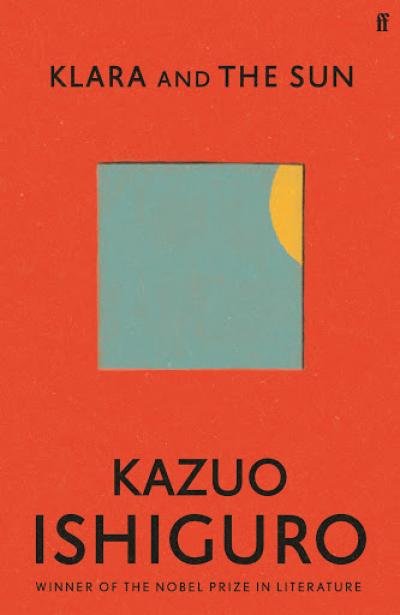
Unsettling, unremitting and psychologically stark, Klara and the Sun has all the hallmarks of a traditional Ishiguro novel. Dealing with his familiar themes of loss and love and the question of what makes us human, the book follows the "life" of an Artificial Friend (AF) called Klara, taken from her store of robot compatriots and left to navigate the complex world of human emotions. These AFs are companions for the children of this world, there throughout their infancy and then discarded as they reach maturity. Set against this background, the AFs' devotion to their children points to the cruelty of their human masters.
Klara is an unwordly robot, differentiated from her brothers and sisters by her heightened ability to discern emotion and process the world around her. She watches the street from her store, computing the outside intuitively and, at times, a little strangely. The sun is her benevolent friend, bestowing energy on the AFs who are run, at least in part, on solar power. Then, finally, Klara is chosen, by a mother and her daughter, Josie, who is suffering from an unnamed malady. Taken to their house to become a friend to Josie, Klara has to learn the emotional pleasure and pain of living in a human family.
 As in Never Let Me Go (2005), Ishiguro’s bestselling dystopia about harvesting organs from human clone communities, Klara and the Sun opens with a sense of anxiety – there is some essential mystery yet to be revealed, a hook that pulls the reader through the story. But there is no real moment of exposition: the book slowly weaves in each new strand and leaves some puzzles unsolved.
Klara is highly intuitive, but there is a deceitful quality to being human, deftly explored by Ishiguro in her relationships with her owners and those around her. Each character’s actions elegantly demonstrate that no one is wholly good or bad; each is shaped by their past and will be changed by the future. Klara, however, remains unchanged.
Yet for all the novel’s suspense, its big climactic moment falls a little flat. Klara believes she has the solution to Josie's illness, but instead of this marking a glorious moment of positive change, the act is over quickly and secretively. With its completion, everything else begins to crumble. All of the players are revealed as liars in their own way, either to themselves or others. Klara’s grand plans are just that.
Still, there is a larger and more curious occurrence at the end of Klara and the Sun (which I won’t ruin for you) which shows that Klara’s naivety and pure belief might be stronger than the rational and manipulative human world. Klara becomes a way for Ishiguro to examine the human heart and compare it with a mechanical one, unpicking the means by which we tell ourselves that we are human. At times, she is more "feeling" than the living, breathing characters, certainly more honest and true to herself. She watches them and learns from them, but her feelings and thoughts are clearly her own.
If not always gripping, Klara and the Sun is a sweet and wistful depiction of a truly devoted relationship between a robot and her owner, one that shows the deep flaws of the human heart.
- Klara and the Sun by Kazuo Ishiguro (Faber & Faber, £20.00)
- Read more book reviews and features on theartsdesk