Many readers and writers think of epistolary novels as old-fashioned, just as letter writing itself can seem a bit quaint nowadays. The genre became popular during the 18th and 19th centuries following the success of Samuel Richardson’s Clarissa (1749) and of later Gothic novels like Mary Shelley’s Frankenstein (1818) and Bram Stoker’s Dracula (1897).
Unsurprisingly, however, it began to fizzle out after the invention of the telephone. In 1984, the Italian writer Natalia Ginzburg published her epistolary novel The City and the House (La città e la casa), and the action, such as it is, appears to be set during that same pre-internet era. Her characters lack the recourse to emails or text messages or social media, but are aware of the existence of landlines.
Yet the novel is polyphonic rather than telephonic, and several correspondents go out of their way to explain why they haven’t just picked up the phone and dialled the other’s number. “Don’t phone me and I won’t phone you,” Giuseppe writes to his former lover Lucrezia. “I don’t want to hear your voice, nor do I want you to hear mine. I prefer this sheet of paper.”
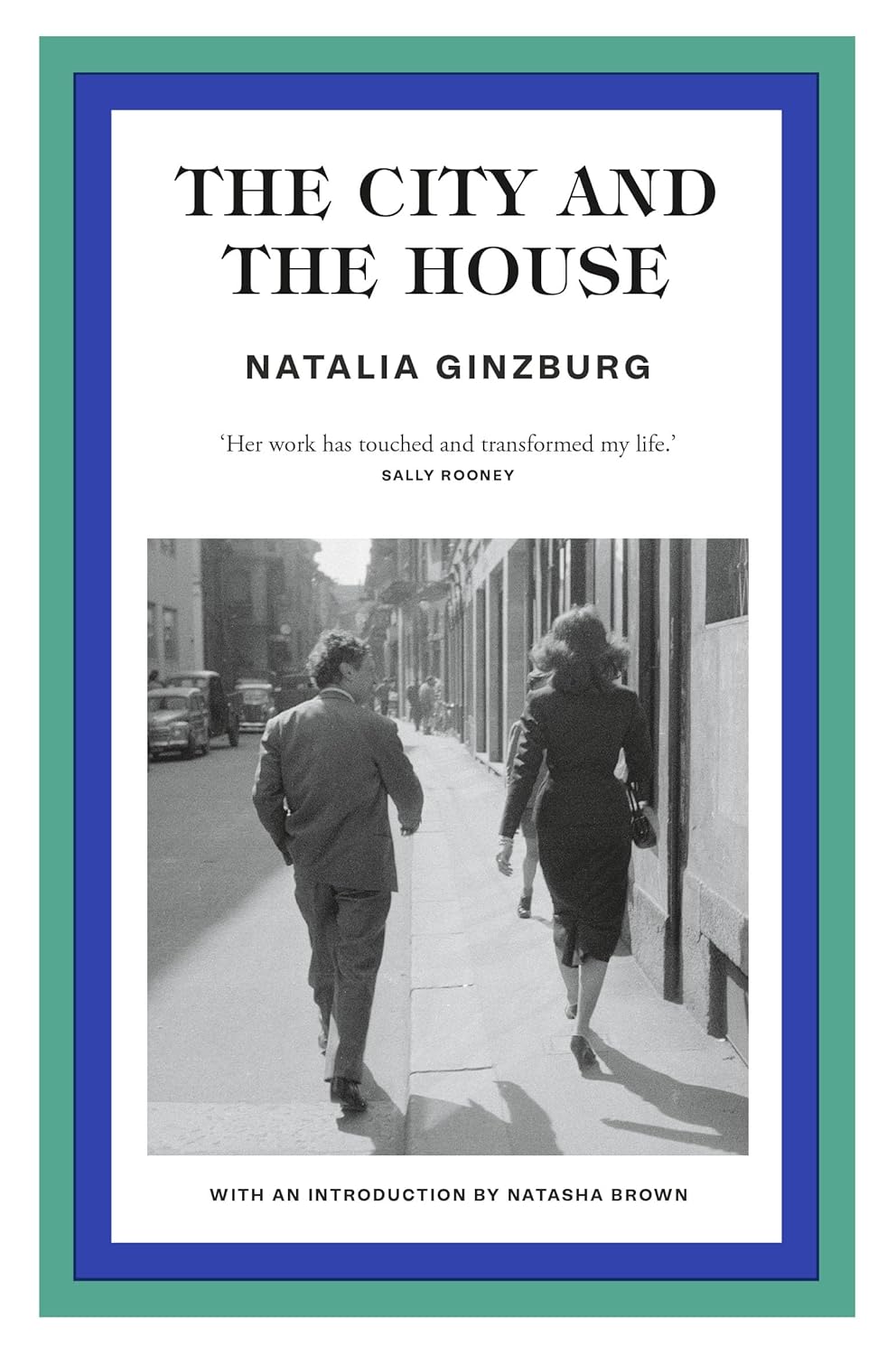 As with Ginzburg’s masterpiece All Our Yesterdays (1952), a powerful novel set against the background of World War Two, The City and the House is an ensemble piece focusing on a family and group of friends, in this case as they react to Giuseppe’s emigration from Italy to the United States. “We all miss you very much and remember how you read Plato’s Dialogues to us,” writes Lucrezia, hinting perhaps that she (and Ginzburg) consider Socratic discourse to be an early example of polyphony in literature.
There is no actual dialogue, in the sense of direct speech, in The City and the House. Instead, the letters consisting of short sentences written in everyday language translated into English by Dick Davis, resemble a Greek chorus or vernacular commentary on events taking place just offstage.
The city in question is Rome, the hub of Italian life and culture, and the house is Le Margherite, a lost paradise in the country where Lucrezia and her husband Piero used to hold weekend gatherings until her infidelities broke up the marriage.
Hook-ups and break-ups and other humdrum events keep the Italian postal service busy, but there is also occasionally a shocking bit of news, such as a murder or the death of a baby.
In fact, Ginzburg’s novel is actually a tale of two cities – and of several houses. Most of the letters are written to, from and about Giuseppe, the depressed middle-aged journalist who sells his apartment in Rome and moves to Princeton where his brother Ferruccio lectures in biology. When the brother dies, Giuseppe marries his widow Anne Marie, who also dies but not before Giuseppe has fallen in love with her daughter Chantal, a single mother, whose ex-husband Danny soon becomes his best friend in America.
Meanwhile, back in Rome, Giuseppe’s 25-year-old gay son, Alberico, starts renting a flat below Giuseppe’s best Italian friend, Egisto, who reports back (as does Giuseppe’s cousin Roberta) on the menage à trois once Alberico’s boyfriend Salvatore and an unattached but pregnant woman called Nadia move in.
As with earlier polyphonic epistolary novels like Clarissa or Dracula, the main plot engine in The City and the House is discrepancy of awareness – that is, a difference in awareness of what is going on, not only between one letter writer and another but also between the various correspondents and the reader for whom the printed text seems to exist diegetically within the lives of the characters. It’s the epistolary novel as conjuring trick, and Ginzburg handles it with aplomb.
- The City and the House by Natalia Ginzburg (Daunt Books, £10.99)
- More book reviews on theartsdesk