

Clearly it takes peculiar circumstances for some of us to hear the Academy of St Martin in the Fields within its eponymous church – that’s a first for me. The lure was considerable. Quite apart from the relative dearth of live events in London, the programme was of the imaginative kind more ensembles should be thinking about: three solos by a German, a Frenchman and a Scot resonating between each other, followed by the addition of increasingly larger groups of players, a kind of paradigm for lockdown and thereafter.
Three Orpheuses (Orphei?) led the way in to meditative depths while straggling groups of Covidiots from the Trafalgar Square ‘protest’ stumbled noisily away outside (most had already moved on to Hyde Park). The pity came first, Will Schofield going straight to the heart of the matter with the mourning-space of Bach’s Sarabande from the Fifth Cello Suite. 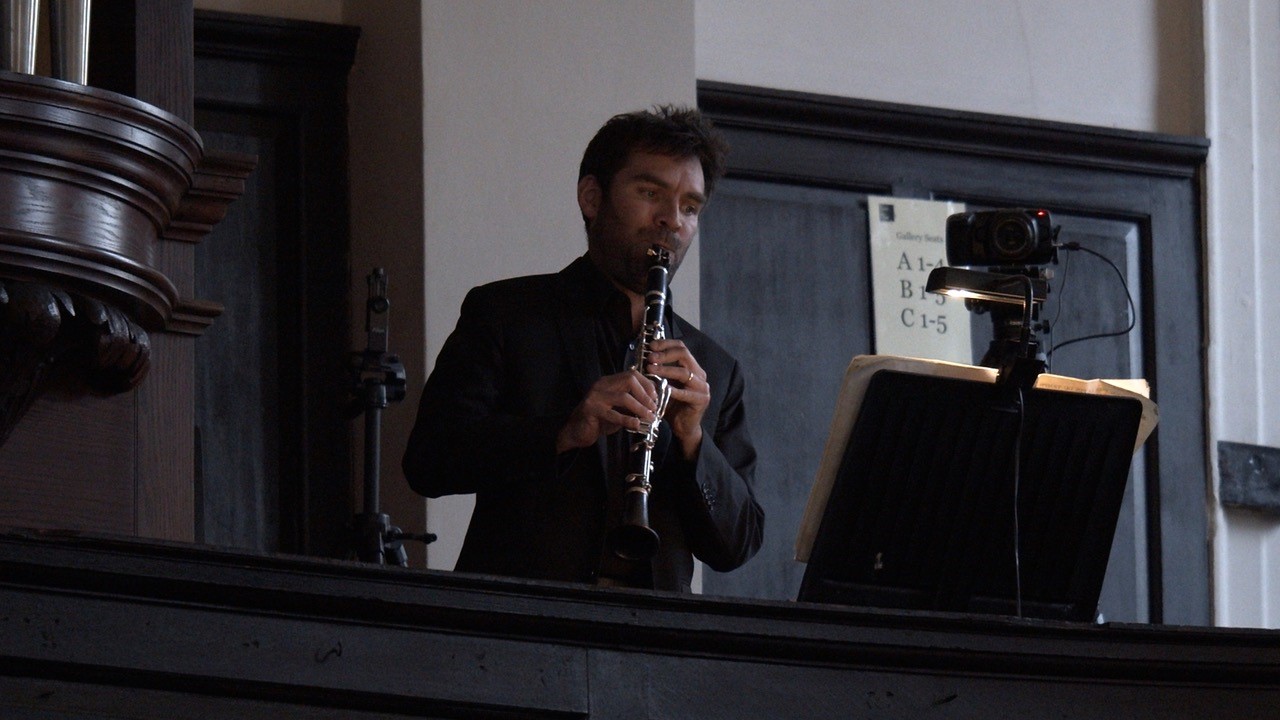 Clarinettist Thomas Lessels answered it from the organ gallery (pictured below) with tritones and other disturbing intervals in Messiaen’s "Abime des oiseaux"(Abyss of birds) from the Quartet for the End of Time; St Martin’s acoustics helped make stunning work of the swells on single notes from ppp to fff.
The third in this compellingly interconnected trilogy came from Stephen Stirling, pulling plainsongs of praise out of the hat in the horn interlude from MacMillan’s Since it was the day of Preparation... Joyful high frequencies almost blinded us, if you’ll forgive the mixing of the senses, in the first ensemble piece, Bach’s Fourth Brandenburg Concerto. Within the vibrant dances of the outer movements, flautist Michael Cox (pictured below with second flautist Sarah Newbould) and leader Tomo Keller found a freedom on the edge of risk; it worked. 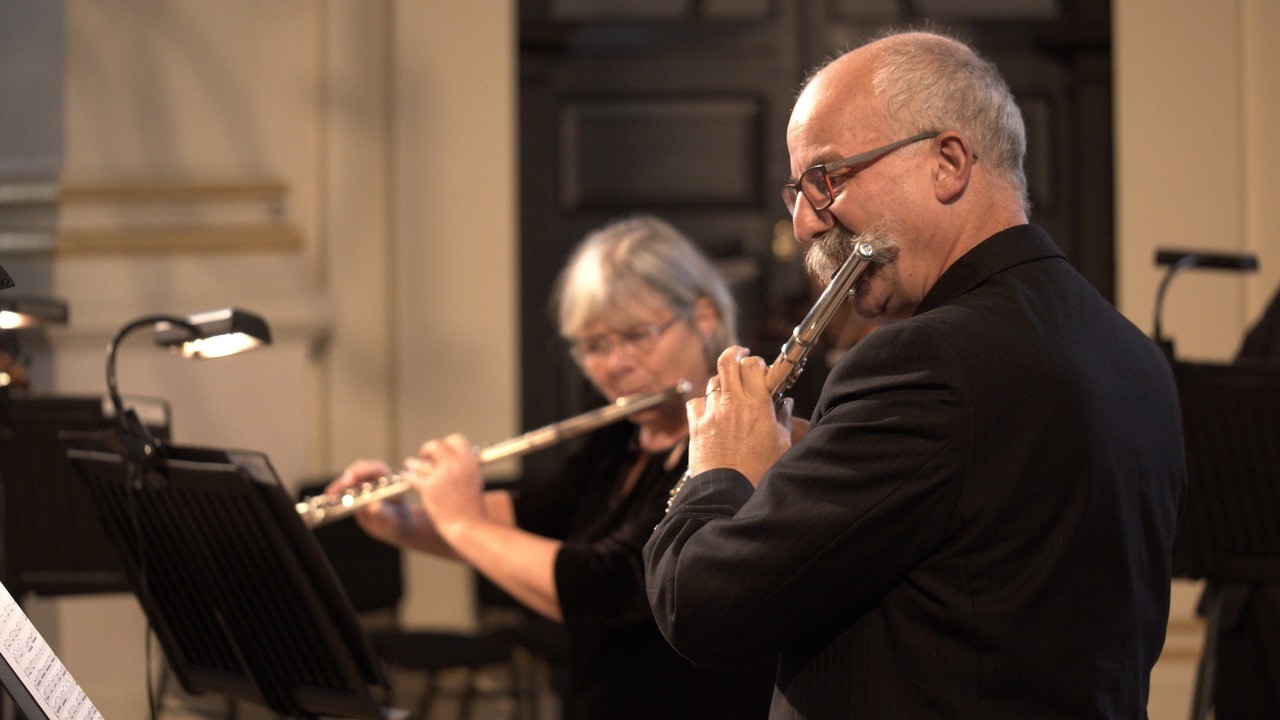 In terms of a full programme without interval, Copland’s Quiet City felt a bit like a number too far for some of us in the live audience; online, you can pause when you want. And in any case its pertinence was as strong as when the BBC Symphony Orchestra featured it in their First Night of the Proms, though quite different in feel; there, projecting into the void, here once again establishing calm against the odd police siren and other noises outside. Again the soundspace worked beautifully for trumpeter Alan Thomas and cor anglais player Rachel Ingleton. Mozart’s Symphony No. 29 resumed the dancing strain of the Bach, Keller’s strong leadership keeping the adrenalin rush of the finale focused in its brilliance. You couldn’t help but be lifted out of any introspection by this journey from thoughtful semi-darkness into blazing light.











