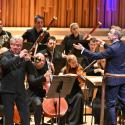
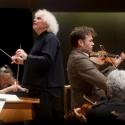
Sir Adrian Boult laid the foundations for its revival, more recently Sir Mark Elder found astonishing illumination within it, and now a third knight of the realm - Sir Andrew Davis (the latest recipient of the Elgar Medal) - chivalrously stamps his authority on it and brings it in from the cold.
Elgar’s The Apostles is both typical and startlingly untypical of the composer. So much about its retelling of the gospels is spare and concentrated, so much is understated with that peculiarly English air of dispassion that until you grow accepting of its stately pace you crave the urgency and theatricality of the infinitely more popular The Dream of Gerontius (which Davis gave us so memorably a week ago). But then come the surprises - and alongside many tiny revelations there are moments so glorious in their affirmation that in the presence of their greatness you are in no doubt that they represent the very best of what Elgar had within him. The Apostles’ time has come.
The composer seems to harness all the light source in the universe and concentrate it into one crowning note
The sumptuous allusion to plainchant in the opening bars - and how beautifully Davis and the BBC Symphony Orchestra set it down - portends a great fresco indeed and with the calling of the apostles and the coming of the dawn and the “Morning Psalm” Elgar has first the cor anglais and then the shofar (on this occasion less the raucous ram’s horn, more discreetly trumpet-toned in its solos) lend primitive colours to the emerging sunrise. The first big climax floods the stage with light in a such a way as to mirror the Ascension at the close of the piece. Elgar has that in view from the start - and you feel it.
Of his cast of characters, the more fallible among them - Mary Magdalene and Judas - get the most dramatic music. The Fantasy within the section “In the Tower of Magdala” is like nothing else in Elgar and Sarah Connolly found an inwardness in her remorse that put her, in every sense, at the eye of the storm. Brindley Sherratt’s Judas skilfully mixed cynicism, covetousness, shame and despair and Davis really nailed the monstrous black chord that precedes Judas's descent into oblivion. How chillingly Sherratt’s final note evoked impenetrable darkness.
 The other soloists were pitch-perfect, too: Nicole Cabell’s effortless soprano always a beacon on the top line (Cabell pictured right), Paul Groves's vividly “present” narrator, and Gerald Finley’s fervour as the vocally assertive but weak-willed Peter. Jacques Imbrailo’s Jesus effected a simply directness, deliberately eschewing superfluous colourations to keep the words and their conviction absolutely clear.
The drama of the Christ’s Passion according to Elgar is all in the beholding of not just those involved but all bystanders. The BBC Symphony Chorus, in fine, resolute voice, became the voice of us all and in such moments as Jesus's proclamation that he will build his church upon the rock of his disciples' belief, Elgar builds a chorus of thrilling affirmation.
But not even that can prepare us for the music that begins so gently “At the Sepulchre” on Easter Sunday and so inexorably builds through the repeated Alleluias of the Mystic Chorus to the truly wondrous climax of The Ascension, where Elgar seems to harness all the light source in the universe and concentrate it into one crowning note - a corona of sound - from the choral sopranos. What follows is divine in every sense, with the final Alleluias festooned in swooning phrases from the BBC Symphony violins which I think alone earned Davis his Elgar Medal.
- This review also appears on Edward Seckerson's website