Expectations ran high for this recital, Brahms from an all-star piano trio of Emanuel Ax, Leonidas Kavakos and Yo-Yo Ma. The group has recently recorded the three Brahms piano trios for Sony, and this concert was part of a promotional tour of the US and Europe. The high-profile event also served to open the Barbican season. The performance certainly lived up to its billing, with exemplary performances from all three, and fine ensemble between them.
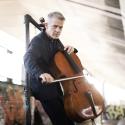
A group made up of three concert soloists begs the question of who will lead proceedings. The answer here was quite clearly Yo-Yo Ma. He is the most energetic of the three, and the most mobile. He listens carefully to his colleagues, but rarely defers to them. When he plays arpeggios across the strings, he angles the neck of the cello away from his body, and when he plays open-string pedals, he removes his left hand completely: big gestures, especially here.
Kavakos, by contrast, seems uncomfortable performing seated, no doubt more used to standing. He sits hunched over the violin, the stand set at a distance because of his long legs. But his playing is free and elegant, with all the precision of his solo work, if less of the bravura.
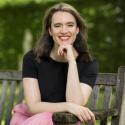
Emanuel Ax takes it all in his stride. There is little overt virtuosity in Brahms’s piano parts, but the pianist is kept busy. Ax makes the most of his occasional flourishes, but then quickly merges back into the texture. The delicacy of Ax’s touch was demonstrated by the ease with which he blended into the small ensemble, but careful listening revealed an elegant legato and pristine, bell-like touch. 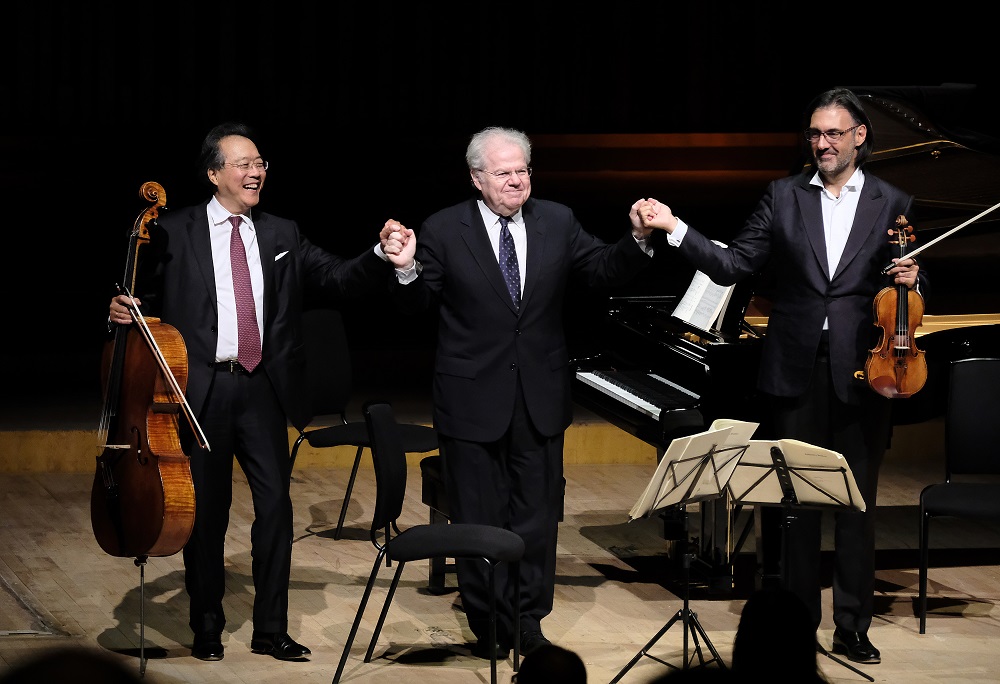 Diverging personalities, then, but the superlative musicianship of all three ensured a unity of intent. The programme opened with the Second Piano Trio, the most homogenous of the three. Violin and cello often run in octaves, and the unity of Kavakos and Ma here was breathtaking. Not only was the tuning exactly together, but so too was the bowing, phrasing, even the vibrato. The group made the most of Brahms’s varied colours and textures, yet retained a continuity across each of the movements. The finales of the Second and Third Trios both contain quiet, reflective episodes, presented here in sombre, burnished tones. Yet the momentum was never abandoned, and the swift transitions back to the main material always felt seamless.
The second half was devoted to the First Piano Trio, the revised 1889 version. Of the three, this is the most soloistic, allowing each of the players many moments to shine. The opening, for example, is a long cello solo, over gently rolling piano accompaniment. Ma took the opportunity to set the tone for the entire work – lyrical and strident, but always controlled. Later sections play the violin off the cello in imitative counterpoint and shared phrases, allowing Kavakos to demonstrate his more nimble passagework and delicate articulation. The group also brought greater contrast to the inner movements, the scurrying Scherzo animated by Ma’s lightly repeating semiquavers and Ax’s delicate but always focussed touch. The Adagio, by contrast, was expansive, the phrasing broad, almost symphonic. And the finale was another brisk dance, the textures light and clear, and supported by the exemplary virtuosity of all three players. By now it had become easy to forget the group’s sheer technical proficiency – evidence, if any were needed, of how naturally the skills of these concert soloists transfer to the recital platform.