

#Beethoven250 is in full swing at the Barbican. Like most venues, they are keen to show a different side to the composer in his jubilee year. And the oratorio Christ on the Mount of Olives ticks all sorts of anniversary boxes. The work is utterly obscure - not a single one of the musicians this evening had performed it before - but it’s large-scale and ambitious, with plenty of opportunities to shine, especially for the chorus and soloists. It was paired with Berg’s Violin Concerto, played by Lisa Batiashvili, an equally virtuosic performance, though of a more subdued work. An ideal balance.
The concert was part of an LSO Discovery Day, which began with an open rehearsal. This was a good opportunity for a preview of the Beethoven, given the scarcity of performances, and also for a grand choral rendition of Happy Birthday to You: It was Rattle’s 65th. The day continued with an afternoon talk, by Stephen Johnson. An unenviable task for him, coming up with something new to say about the composer, but he provided some original insights. Beethoven’s greatest works, Johnson argued, are filled with contradictions, and stereotypes of his heroic or Romantic expression simplify his message and overlook deeper complexities.
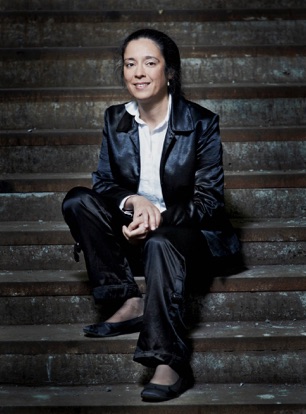 Unfortunately, that isn’t really true of the oratorio we had come to hear, but was better illustrated by the two works played live at the talk, the Op. 90 Piano Sonata, performed by Sophia Rahman (pictured right by Kaupo Kikkas), and the Op. 102/2 Cello Sonata, with Rahman accompanying the LSO’s Rebecca Gilliver. Both were fine performances, and the slow movement of the Cello Sonata was the highlight, with Gilliver giving tragic intensity to Beethoven’s complex but intensely expressive melody.
Lisa Batiashvili took a different approach to the similarly mournful Berg Concerto. Her tone is rich but strident, and she played much of the concerto, including the opening solo, without vibrato, the sound bare, even confrontational. As the textures grew, she warmed her sound, and began shaping phrases more generously, yet the austerity was still felt. Batiashvili’s tempos were more fluid than they seemed, and most of the rehearsal time for the concerto was devoted to ensuring that the orchestra, and Rattle, followed her phrasing. At phrase endings, she would often hold back, the already tenuous beat now suspended, just momentarily, before the music resumed, a pensive and elegantly reticent effect.
Christ on the Mount of Olives dates from 1803, so it’s middle period Beethoven, written just before the Eroica. It opens with an orchestral introduction, the tone set by unaccompanied trombones—the trombone section were on top form here, as they were in the Berg. Beethoven wrote the work fast, in just a couple of weeks, and the orchestral writing, while atmospheric, lacks sophistication. But Rattle made no excuses for it, finding musical potential in every line. That solid but vibrant sound that he draws from the LSO strings was particularly valuable here, as was the careful blending of the woodwind voices.
 The work is scored for three vocal soloists, Christ (tenor Pavol Breslik), a seraph (soprano Elsa Dreisig, pictured left by Ólafur Steinar Gestsson) and Peter (bass David Soar). Peter is a small role, just one aria and one ensemble, which Soar delivered with a rich, resonant tone. The other two solo parts are highly virtuosic, the demands both technical and expressive. Fortunately, both of the young singers were up to the challenge. Breslik, though Slovakian, sings in an Italianate bel canto style, which proved surprisingly appropriate here. Beethoven takes a humanistic approach to the suffering of Christ, who laments his fate extensively in successive arias. But Breslik brought genuine emotion to each of these, pleasing tone, and remarkable projection, even in the many high and quiet passages. Dreisig, too, has an agile and attractive voice. Her tone is pure, but also has a focussed intensity. Beethoven writes soprano lines that often end in high, elaborately ornamented cadences, and Dreisig was always secure, even at the highest altitude.
Excellent work, too, from the LSO Chorus. The choral writing is demanding, and often fast. The gentlemen get the most work, acting as the guards who arrest Jesus, but there is also a triumphant conclusion, a bright angelic chorus. As ever, Rattle made no concessions, often driving the tempos, but the choral textures never suffered, the text and the contrapuntal lines always clear.
The sheer difficulties in performing Christ on the Mount of Olives must be a contributing factor in its current neglect, but here made the work an ideal showcase for the sheer calibre of vocal talent assembled. It is well worth investigating if you get the chance – there is a repeat performance on Thursday 13 February, and plans to release a recording on the LSO Live label.











