

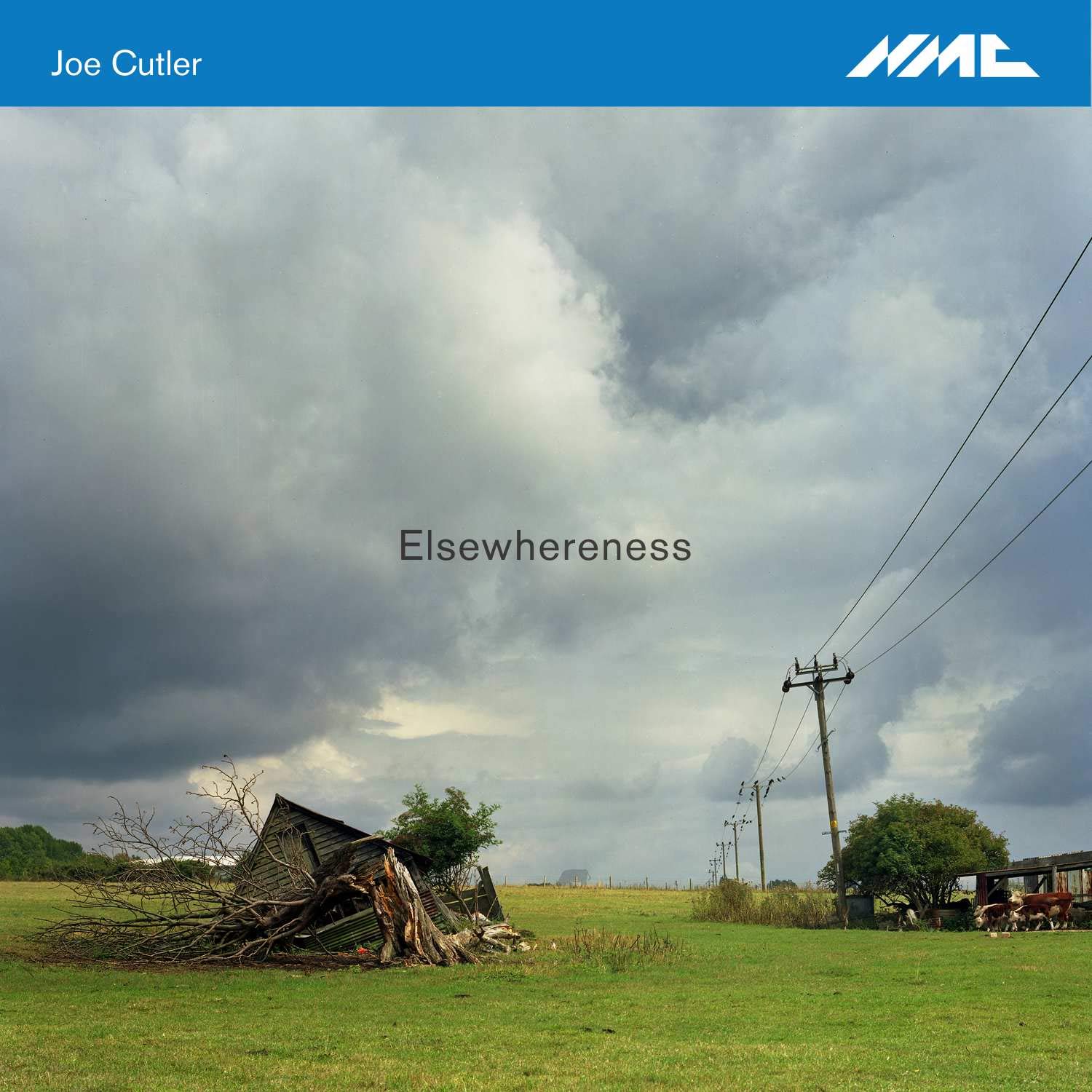
 Joe Cutler: Elsewhereness (NMC)
The titles drew me in. Karembeu’s Guide to the Complete Defensive Midfielder is a great name for a piece, Joe Cutler tangentially inspired by the great French footballer’s passing skills to create a brilliant ten-minute work for saxophone and jazz group. Players jostle, separate and regroup before a solemn, imposing coda. And, having just read about actor Dominic West’s performance in BBC1’s Les Miserables, it's cool to learn that Cutler's Irish-tinged piano trio McNulty does actually have links to West’s troubled character in The Wire. The music’s fluidity of style and shifting identities never become wearing: one of Cutler’s strengths is his timing, both comedic and musical. The works on this enjoyable NMC anthology are all neatly proportioned, Cutler knowing exactly how much mileage he can extract from his ideas.
The title work, Elsewhereness, is a nine-minute orchestral piece written for the opening of the Royal Birmingham Conservatoire's new building (where Cutler is Head of Composition). Its energy recalls Britten's similarly themed The Building of the House, Cutler's clanging anvils and shifting rhythms suggesting construction in progress. The Conservatoire's orchestra is conducted here by Mirga Gražinytė-Tyla, though her name is modestly hidden away in the small print. Sikorski B is a homage to the Polish composer Tomasz Sikorski scored for saxophone, percussion and piano, and the five Akhmatova Fragments are potent musical nuggets, superbly sung by soprano Sarah Leonard. Nervous newcomers should start with Cutler's For Frederic Lagnau, its unpredictable seven minutes bursting with killer tunes.
 Elgar: The Wand of Youth Suites, Nursery Suite, Salut d’amour, Chanson de nuit Hallé Orchestra/Sir Mark Elder (Hallé)
While Elgar’s two symphonies and Gerontius can leave me a little nonplussed, his shorter pieces always hit the spot. How can anyone not enjoy Cockaigne or In the South? Sir Mark Elder’s ongoing Hallé Elgar series really hits its stride here. The two Wand of Youth suites are charmers, each movement based on music written in Elgar’s youth. He described them as “trifles; poor things but mine own boyish thoughts.” But what the mature composer does with his source material is terrific. Suite No 1’s overture fizzes here, and Elder finds magic in the “Slumber Scene”. The little march which opens the second suite is paced to perfection, and “The Little Bells” is taken daringly fast. Best is “The Wild Bears”, one of the jolliest minor key pieces I know. The Hallé horns deserve a shoutout.
Elgar's Nursery Suite was completed as late as 1930, prompted by the birth of Princess Margaret. In eight short movements, it's a neat summation of Elgar's skills. There's some glorious string writing in “The Sad Doll” and “Dreaming”, and Andrew Burn’s sleeve note suggests that Lyn Fletcher’s extended solo in the final section is Elgar's farewell to his favourite instrument. Oddest is “The Wagon Passes”, 100 seconds of ostinato and just a scrap of melody, becoming ominously loud before fading away. Wonderfully played here, and we also get the Chanson de nuit and Salut d’amour thrown in. Lovely rich sound – a must have.
 Septura: Elgar, Finzi, Parry, Walton – music for brass septet 6 (Naxos)
On paper, some transcriptions shouldn't work at all. London-based brass septet Septura recklessly tackle two substantial string works on their latest disc, and they triumph – presumably because player-arrangers Matthew Knight and Simon Cox know exactly what their players are capable of and don't dumb anything down. Elgar's Serenade for Strings sounds here like idiomatic brass music. Tuba and trombones provide suitably well-defined bass lines, and Septura's three trumpets excel in Elgar's higher writing – listen to Huw Morgan’s unobtrusive, astonishing high note on Eb trumpet at the close of the work. Simon Cox’s arrangement of Walton's Sonata for String Orchestra (expanded from his String Quartet No 2) is phenomenal, a substantial chamber symphony lasting nearly 30 minutes. The unanimity of attack in the faster movements is exhilarating; I defy anyone to listen to the second movement without grinning.
Four of Parry’s Songs of Farewell play out at a lower voltage, though that's down to Parry rather than the performances; shorn of words they lose much of their impact. Finzi’s God is gone up fares better, as do two miniatures for strings. Buy this for the Elgar and Walton. Sumptuous recorded sound, and it's at budget price.











