

Bent Sørensen has christened his new harpsichord concerto Sei Anime: “six souls”. The six concise movements, written for Mahan Esfahani and a chamber-sized orchestra, are modelled, apparently, on the dance movements of a Bach keyboard suite. But as Sørensen explained from the stage – standing next to Esfahani’s gleaming black harpsichord – two further anecdotes explain the name. It’s borrowed from a range of French womenswear, seen in a Copenhagen shop: the audience laughed.
But it’s also derived from a mis-spelling on the manuscript of JS Bach’s six partitas and sonatas for unaccompanied violin. Bach, writing shortly after the death of his wife, presumably meant to put “Sei Soli”: six solos. In fact, he wrote “Sei Solo” – translatable, literally, as “I am alone”.
It was hard to shake that second idea throughout the UK premiere of this exquisite, often hauntingly sad work. Just as Sørensen concealed a serious anecdote behind a playful one, the concerto itself seems to hide a free-floating melancholy beneath an exterior of refined and sometimes brilliant colour. The first movement emerges from keening, blurred woodwind phrases; sighing veils of string tone drift and coalesce in a slow movement (placed third) which Sørensen (pictured below) describes as a sort of sarabande. A percussionist draws a sudden, rusty creak from a gong, and a strangely luminous haze shimmers briefly at the heart of the orchestra. It takes a moment for you to realise that the players have put down their instruments and are simply humming: instrumental wizardry has given way to the most basic (because wordless) form of human expression.
Rightly or wrongly, you expect a modern harpsichord concerto to move with a certain reserve – for the orchestra to tiptoe, to some extent, around its solo instrument. Not that this need necessarily be the case with an artist of Esfahani’s range and personality, or a conductor as sensitive and alert as Ludovic Morlot. But what was striking here was the extent to which that reserve – conscious or otherwise – became part of Sørensen’s imaginative scheme. It was a feature, not a bug: the idea of lonely or isolated souls contained within each of these short, ravishingly realised miniatures, seemed implicit in writing that felt consciously restrained in its range of volume and sonority.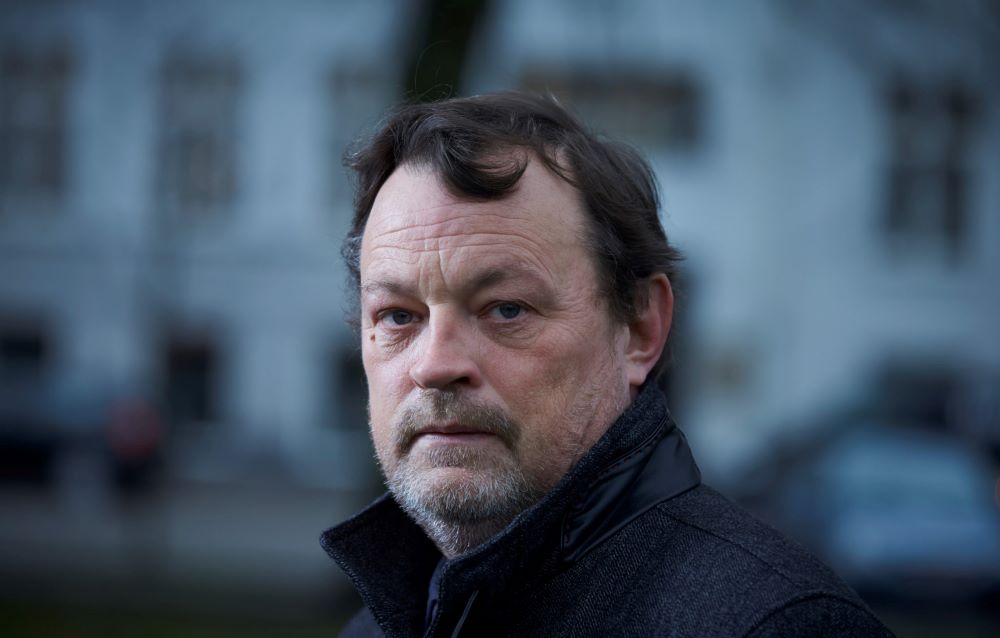 That very restraint gave the concerto much of its emotional charge and, you suspect, informed the harpsichord writing – which had its share of virtuoso flourishes (Esfahani reached inside his instrument to draw sweeping glissandi across its strings), but overall, seemed focused more on its performer’s questioning intelligence than on anything as predictable as mere display. Esfahani worried away at fragments of bristling mock-baroque passagework, set in opposition to the orchestra’s kaleidoscopic shifts. Or he suddenly locked onto a trumpet or woodwind phrase, giving a weird, brittle phosphorescence to the overall sonority. A scherzo and a fughetta glittered and bustled: in the finale, squealing trumpets, like predatory seabirds, seemed briefly to have the upper hand, leaving Esfahani’s last word – a descent onto an unaccompanied final note – to feel all the more conclusive. The pathos, and the inevitability, spoke for themselves, but it’s very clear that Sei Anime would need several hearings – ideally in a performance as fine as this one – before it begins to yield up its deepest secrets.
Esfahani returned after the interval with CPE Bach’s D major keyboard concerto Wq18, and the audience’s response suddenly lifted from polite bewilderment to the kind of unabashed enthusiasm – complete with whoops and cheers – that dear old Emmanuel probably last encountered back in Potsdam round about the time Frederick the Great annexed Silesia. Esfahani gilded Bach’s writing in sumptuous colours, with sweet-toned melodies unfurling over angular, black-and bronze left-hand figuration, plus occasional, teasing little tugs at the tempo to assert (as appropriate) a phrase’s subversive potential or aristocratic swagger.
The finale was like a discharge of bottled lightning: buzzing with energy even as it rocketed forwards, powered by its own rhythmic verve. With Morlot keeping things crisply in line, the CBSO sounded like they were thoroughly enjoying the sensation of playing as a chamber orchestra, and that held good throughout the opening and closing items of the concert. Stravinsky’s Pulcinella suite was athletic in bold primary colours, lightened by deadpan solos from trombonist Richard Watkin and bass player Anthony Alcock. Ravel’s Le Tombeau de Couperin opened the evening in a marvellously lyrical performance whose deepening shadows and diaphanous woodwinds pointed the way – though we didn’t yet know it – to Sørensen’s ghostly enchantments.











