

My first time back in a concert hall since March was also, more significantly, the first time back for last night’s Wigmore Hall performers, guitarist Miloš Karadaglić and saxophonist Jess Gillam. Their pleasure in playing live again was palpable – in introducing the encore Miloš said “without an audience we are nothing” – but playing to a one-fifth-full hall must have felt unusual for these two big stars of what used to be called “crossover” music.
I had never heard the sax-guitar combination before, and beforehand I had wondered about balance, pitting one of the loudest of instruments against perhaps the quietest. But against the unamplified guitar, Gillam’s ability to coax the quietest, barely audible sounds from her soprano sax obviated that as an issue. In particular her sustaining of the last notes of pieces to their very full extent was entrancing.I was also curious about repertoire, and again here was pleasantly surprised. They have both appeared on each other’s albums and mined those for material, from Dowland’s "Flow My Tears" to Miloš (he is billed under his first name only) soloing on Takemitsu’s arrangement of "Over the Rainbow," which was couched as a tribute to the NHS. 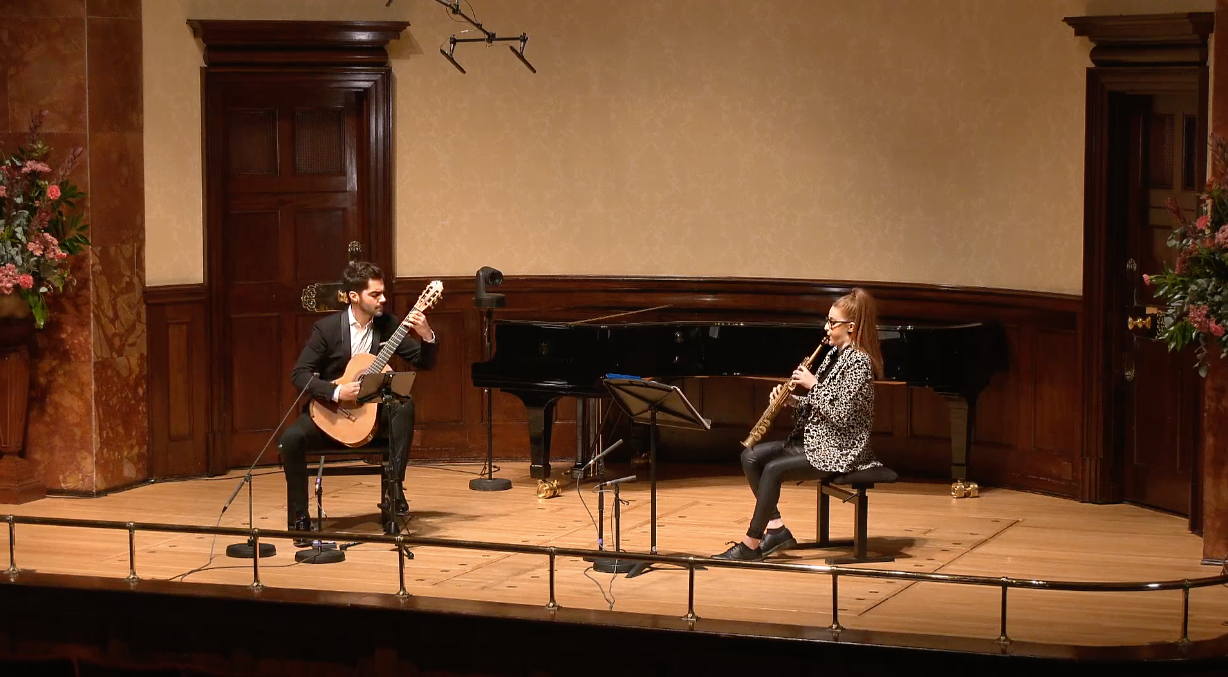 There was also music by Villa-Lobos, Falla and Piazzolla that explored idiomatic guitar writing to the full – and it is an instrument that needs a sympathetic and informed composer. The Falla dance from The Three-Cornered Hat had a fiery, impassioned style owing to the flamenco tradition and Miloš had a lot of fun hamming it up, but the Seven Spanish Popular Songs had much more range, Gillam now dreamy and elusive, now genial and charming, but always captivating.
The longer final piece was Piazzolla’s Histoire du Tango from 1985, surveying tango at different points in its development. Piazzolla can sometimes feel like his is writing by numbers, slipping into familiar chord sequences and melodic tropes. But here his structures were more developed, the character of each movement clearly defined and Gillam in particular found a range of sounds to tell the story, from flashing scales, to pure singing tone, to a smoky, sophisticated timbre in the middle movement. There was always a feeling of duet between the players, not soloist and accompaniment – Miloš described Gillam as his younger sister – and there was a playfulness about their musical interaction. 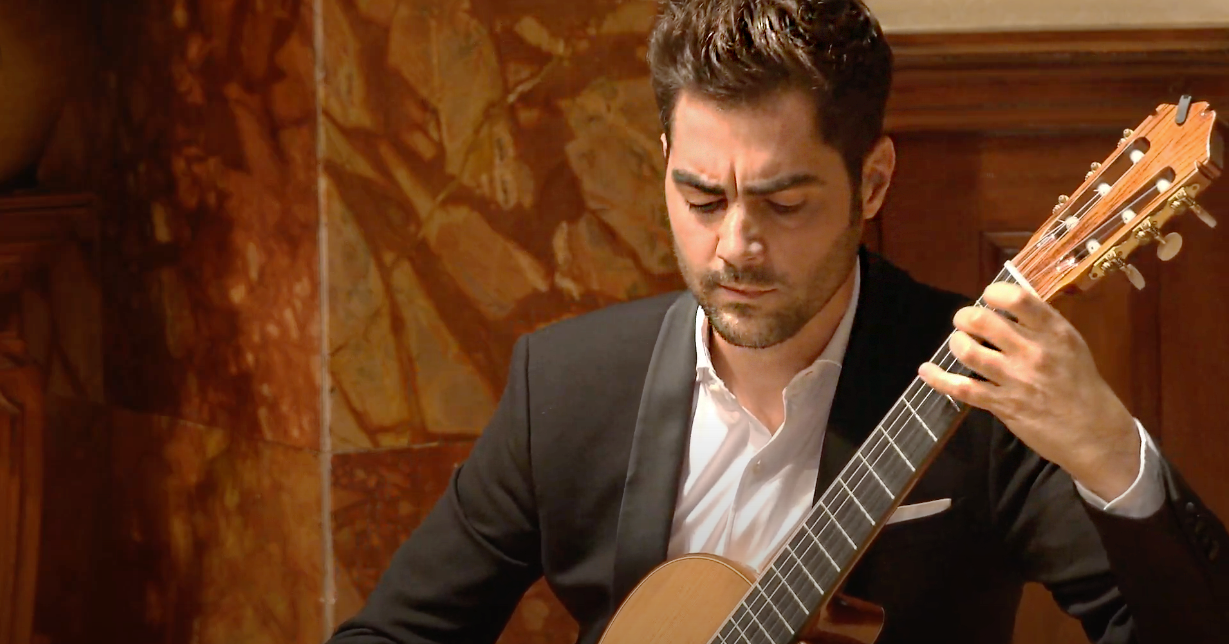 But for me the best moments were the simplest, two movements where Jess Gillam played alone: first a Philip Glass melody from 1995 that stripped away all the familiar arpeggios for a musical line of the utmost simplicity, and Meredith Monk’s Early Morning Melody, similarly restrained and pared-back. These were an opportunity for Gillam to show that all the hype around her burgeoning career is not misplaced and she is a performer who can hypnotise a room with the beauty of her sound and her musical sensitivity.











