

Last Monday my colleague Boyd Tonkin was delighted by the Kaleidoscope Chamber Collective’s playing at Hatfield House – and on Thursday it was my turn to be impressed by their colourful Wigmore Hall recital, which featured the marvellous clarinettist Carlos Ferreira in Bartók and Brahms.
In Bartók’s Contrasts, Ferreira (pictured below) was following in the footsteps of Benny Goodman, who co-commissioned the piece in 1938. There are distinctively Goodmanesque moments in which Bartók channels the recently deceased George Gershwin, and Ferreira found a rich and resonant American accent for these bits. Elsewhere it was all about Bartók’s trademark mercurial switches of character and mood, outbursts on the clarinet, sardonic commentary from the piano (Tom Poster) a furious violin cadenza by Elena Urioste. By the final movement Gershwin is forgotten and it’s all about Hungary, Poster playing the part of a would-be cimbalom, the clarinet and violin whirling and jittering, the whole thing manic and wonderful.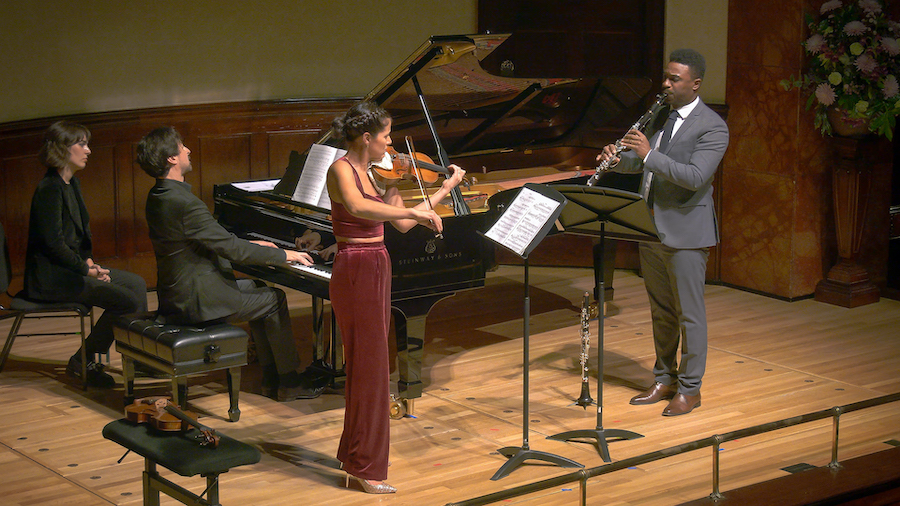 Dora Pejačević’s Piano Quartet in D minor from 1908 was also on the programme Boyd covered, and like him I found it very enjoyable, after a first few minutes when I feared it might just be some second-hand Brahms. But the slow movement, with its echoes of Elgar and the Edwardian parlour song, was magical and rapt. It is unashamedly sentimental, which vein the players indulged just enough, while still taking the music seriously: it made for captivating listening.
After the interval Carlos Ferreira was back for Brahms’s late Clarinet Quintet, a big-boned masterpiece, presented with humility and splendidly collegiate playing. Although the clarinet is at the heart of things – and Ferreira’s playing was fluent and warm – a lot of the pleasure was in the interplay of the lower parts, Laura van der Heijden’s perky cello lines interweaving with Rosalind Ventris’s viola and Melissa White’s violin. Elena Urioste’s solo in the second movement had almost religious overtones, but my favourite passage was the very end, where the younger Brahms would have had pounding double octaves and flying arpeggios, but the valetudinarian composer opted for a poised and hushed final moments, played here with the utmost stillness and restraint.











