

We could probably spend all day pondering what makes a great musical partnership. Is it long experience, special sensitivity, a shared sense of humour? We’d get nowhere, though because there is, genuinely, something about it that can't be explained. It’s like a good marriage: it just works, and if you could analyse precisely why, there’d likely be something wrong. Katya Apekisheva and Charles Owen are that most unusual of ensembles, a piano duo; and their London Piano Festival launched its third and longest season yet – five days this time – with a concert celebrating their remarkable playing.
The programme was as ingenious as the musicianship. Apekisheva and Owen often present a first half featuring each in solo repertoire and perform two-piano music after the interval. This time, the repertoire travelled from the purest, stillest Schubert (three of the Moments musicaux) to Milhaud’s irresistible jazz-age Scaramouche. Apekisheva went first, with the Schubert, Granados’s "Quejas, o La Maja y el ruiseñor" (Laments, or The Maiden and the Nightingale) from Goyescas, and Ginastera’s Three Argentinian Dances; Owen followed with Ravel’s Gaspard de la Nuit; and the centrepiece after the interval was that composer’s masterly arrangement of Debussy’s orchestral Nocturnes.
The fascinating thing about the duo, to my ears, is that Apekisheva and Owen are such incredibly different pianists. Apekisheva brings with her the full Russian school tradition with knobs on. Her name should by rights be etched into every pianophile’s mind. She has a deep, warm, rich tone, the melodies projected as if by a singer, the bass full and lustrous; the sound is big and spacious without ever becoming harsh or heavy. Her Schubert was of the very highest calibre.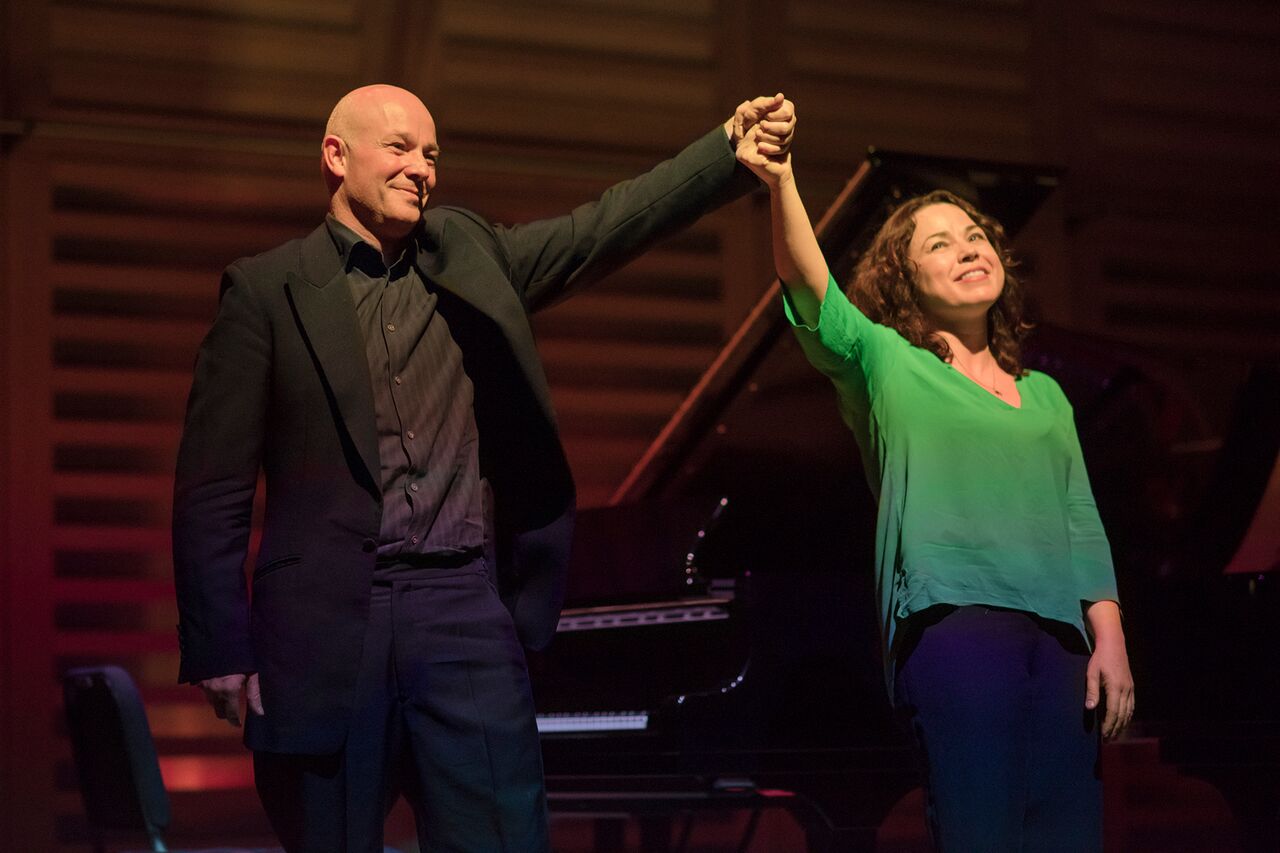 It’s no small ask to start a concert, indeed a whole festival, with something as inward as the Moments musicaux, but in the first two pieces she created an ideally rapt, hushed atmosphere that virtually commandeered the audience into stunned silence. Her Granados was impassioned, restive and dreamlike, the voicing wonderfully delineated, and the Ginastera with its spicy harmonies and folksy rhythms loped and galloped irresistibly along.
Owen’s Ravel inhabited a different planet, one of cool air and elusive fairy-tale narrative. He has a wonderful way with Ravel’s translucent sonorities, making the most of "Ondine"’s wild mystery with the Kings Place new Steinway – a welcome addition to the hall – serving him beautifully as he created haloes of pedal around the eloquent melodic lines. "Le Gibet" had a suitable inexorability, and the demoniac "Scarbo" – far from the hammer-and-tongs with which so many pianists attack its technical challenges and headache-inducing repeated notes – had a lightness of touch that more resembled a Mendelssohnian scherzo.
Put them together and what have you got? Well, if two pianists were to create the self-same sound, the combination might be one-dimensional. But if one of them provides the strings and brass and the other the woodwind and percussion, you’ve got a whole orchestra in two keyboards. This is, of course, a massive generalisation – there’s plenty more than that to each – but together the pair have a simply spectacular range of colour at their fingertips. Debussy’s Nocturnes – the mysterious swirlings of "Nuages", the pounding Petrushka scene (it must have influenced Stravinsky two years later) of "Fêtes" and the seductive, hypnotic "Sirènes" are reimagined by Ravel with splendid detail and wonderfully pianistic effects; this proved the indubitable highlight of a very special evening. The high spirits of Scaramouche, plus a twinkly encore of Jamaican Rumba, set the festival on its way with a real spring in its step.











