

The Royal Northern College of Music was in celebratory mood last night for the opening of its new season, in a joint promotion with Manchester Camerata that marked the 50th anniversary of the start of the RNCM’s Junior Fellowship programme.
For Benjamin Huth, it was his final performance as the 2024/25 Mills Williams Junior Fellow in Conducting, and with him were three soloists moving on from their time on the RNCM International Artists Diploma, the highest performance accolade the college offers. What better way for a violinist, cellist and pianist to celebrate together than in Beethoven’s Triple Concerto?
There was a sense of joy in the music-making that the RNCM fosters so well, and the concerto performance itself was marked by insight, imagination and unanimity that are rare in the busy world of music-making and, I guess, stem from the experience of study in the collegiate setting.
Huth and the Camerata, led by Bradley Creswick, began with a bit of fun in the shape of Caroline Shaw’s Entr’acte: A Minuet & Trio. It’s a re-shaping of ideas from the second movement of Haydn’s last string quartet: if he could do a few cute things with a minuet there, it seems she decided, she could do a whole lot more with the concept. There were times when his pure classical harmony was warmly created, but they never lasted long before the piece goes cheerfully off-piste, with some jolly leaps and bumps, ingenious effects such as near-soundless bowing and finger-board pizzicato, a weird excursion to make the transition to the opening’s return, and finally a pizzicato solo in cadenza style for the principal cello, Hannah Roberts – after which it’s all over.
The Beethoven, though, was both more serious and more uplifting. Krystof Kohout (violin), Findlay Spence (cello) and Susanna Braun (piano), were playing as if controlled by a single mind, with a delightfully varied range of tone from each of them contributing to the sound palette of the solo group. The string players began with some ferocity, and intensity was never far away, while the piano sound flowed and sparkled alongside them.
 The concerto is a fusion of two different, full-compass sound worlds, one the piano trio and the other the classical orchestra, and the constant variety of textures it offers is its chief delight, fully realized in this performance. The first movement development brought a sequence of moods, from awe through anxiety to relaxation, in a mini-drama of its own, and its final bars were rapped out with gusto. The slow movement brought sweet cantabile from Findlay Spence’s cello solo, and a lovely, self-effacing subtlety from Krystof Kohout’s violin melody, and a clever handling of the transition to the attacca finale. Here there were brilliance and touches of humour, ringing high notes from Susanna Braun’s piano, and an enthusiasm which, with Benjamin Huth’s assistance, was shared by the orchestra. They hit a rumbustious, almost swaggering style before the helter-skelter Presto, the soloists still revealing moments of amazing gentleness before the end. I heard each of these three IAD performers in their solo showcase concerts with the BBC Philharmonic in June, and each has surely far to go in their careers from now on. It was an inspiration to witness them making music together.
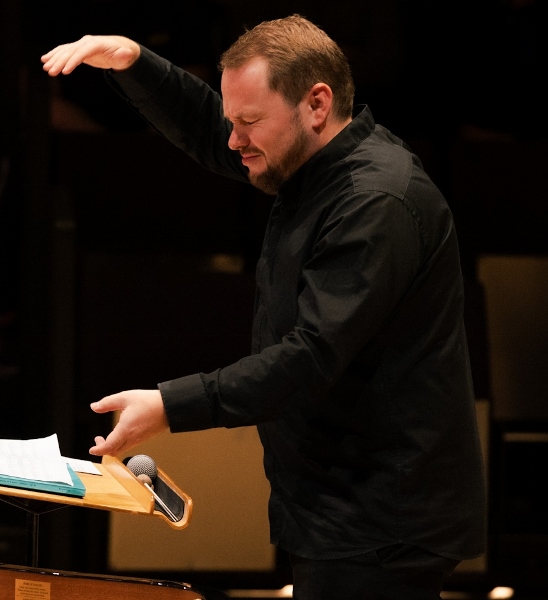
Rejoicing continued in the performance of Mendelssohn’s “Italian” Symphony, No. 4. Under Benjamin Huth’s unobtrusive direction (pictured above) it was alive and alert from the start, the brass punctuations of the textures pointed and effective and the string articulation clean and varied in dynamic. Rachael Clegg’s oboe solo made the transition to the first movement’s recapitulation memorable, and the bouncy fresh theme from the development that dominates the coda was given its own extra impetus. Not one to hang about, Huth’s pace for the Pilgrim’s Song second movement was that of a pretty brisk Nordic walking bass, but the hymn above it was all the more flowing, and its close beautifully faded. There was a nice contrast in the third movement between its graceful principal theme and perky trio, and the finale, called a Saltarello and ultimately racing like a tarantella, was played with elegant precision, stemming from Amina Hussain’s principal flute’s lead, and built to an exciting climax.











