

Like the fountains that sprang up in the desert during the Holy Family's flight into Egypt - according to a charming episode in the Gospel of Pseudo-Matthew - Berlioz's new-found creativity in the 1850s flowed from a couple of bars of organ music he inscribed in a friend's visitors book. That became the Shepherd's Farewell to Mary, Joseph and Jesus as they depart from Bethlehem, loveliest of all Christmas carols; then Berlioz added two movements around it, and later two low-level dramatic sequences either side of "The Flight into Egypt" (the scene pictured below by Carpaccio).

He had exceptionally dedicated musicians around him, too. The solo line up needs special qualities, embodied above all in the Marie of Karen Cargill, the great Berlioz singer of our time (that the idiomatic French style seems so innate in a Glaswegian is one of music's many intuitive mysteries). She sang the same role with the BBC Symphony Orchestra and Chorus this time five years ago - an equally fine performance conducted by François-Xaxier Roth - and the colours in the stupendous mezzo voice, with its contralto lower register, remain a wonder.
The tenderness with which Cargill stole into the woodwind textures of the 6/8 lullaby to the infant Jesus, both instruments and voice stressing Berlioz's idiosyncratic sharpened note which adds pain to potential placidity, was emblematic of the serene stretches in this mostly lightly-scored work. BBCSO principal oboe Richard Simpson mirrored her concerns to restrained perfection, while Gardner kept the underlying pulse going even in the most ethereal, air-treading passages. Though less vivid, Cargill's Joseph, Étienne Dupuis, rose to the anguish of the outcast father seeking refuge in exile. 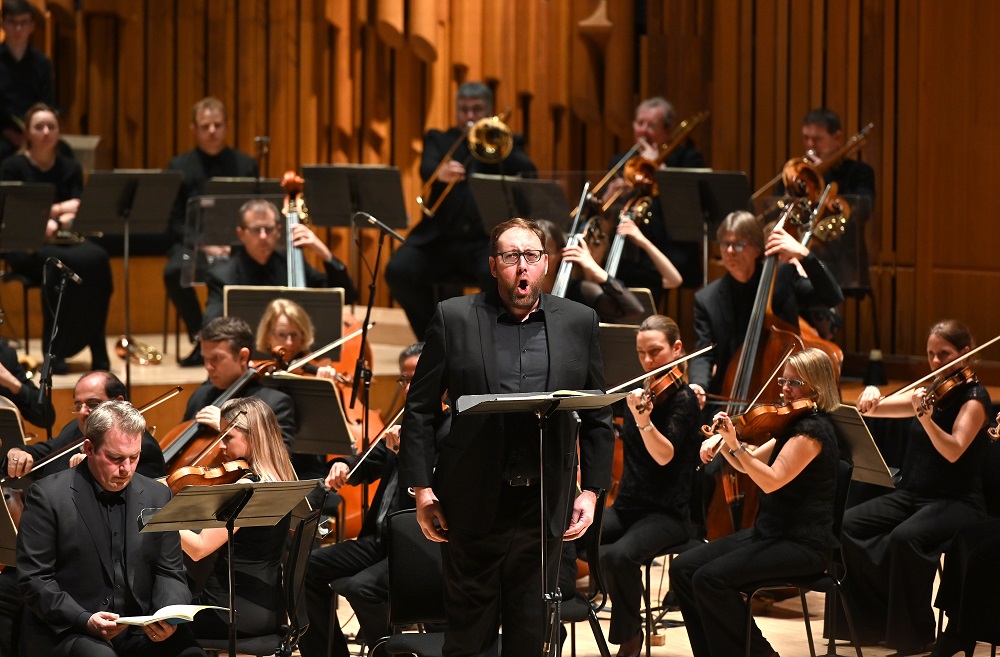 Matthew Rose (pictured above) had the hardest task: to characterise both the dream-haunted Herod, heavy-headed under the weight of his crown - Berlioz knew his Shakespeare, of course - and the Father of the Family who appears as the ruler's polar opposite, all generosity and compassion, in Part Three. Casting the same singer in both roles is, I think, essential to Berlioz's symmetry. Rose brought generous tone and instant characterisation of suffering to the big Part One aria, underlined by the trombones who exit the stage, along with the trumpets and cornets who play only a couple of fanfare-notes, once the scene shifts cinematically from nocturnal Jerusalem to the Bethlehem manger. But it was with the Ishmaelite carpenter's tenderness to the refugee family, rejected by two other households in Egyptian Sais as "vile Jews", that Rose brought tears to the eyes.
The lightness of this scene, inevitably the one that has most resonance with us today, is almost unbearably beautiful, with the little choral fugue and its counterpart in the orchestral bustle to welcome the exhausted family followed by the dance-music for two flutes and harp (Michael Cox, Kathleen Stevenson and Louise Martin, consummate in providing bewitching entertainment for everyone else in the hall, pictured below). 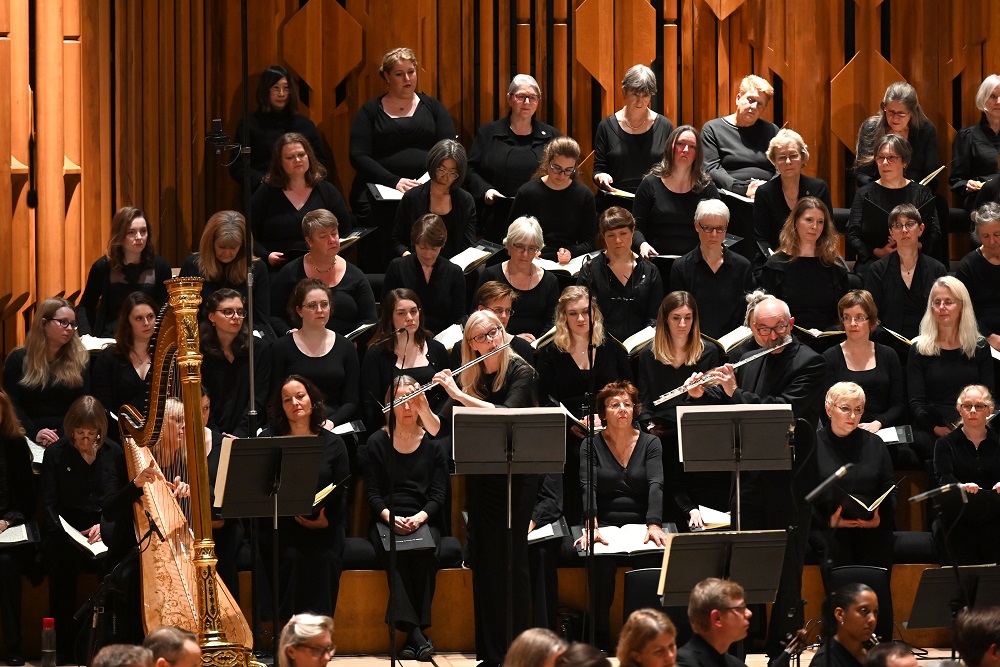 Berlioz caps it by shifting to the metaphysical plane, the silence loud around the single notes of strings and wind with pregnant pauses as Gardner commanded the necessary magic, the unaccompanied chorus so movingly heightened by the angelic consort at the upper back of the hall (a handful of voices from the BBC Singers). Could anything be more magical than the scale of the "Amen" they launch, as completed by tenor Robert Murray in hallowed mode and a BBC Symphony Chorus on top form? In this, whether religious or not, we all had our seasonal vision.











