

Igor Levit is a master of the unorthodox marathon, one he was happy to share last night with 24-year-old Austrian Lukas Sternath, his student in Hanover. Not only did Sternath get the obvious stunner of two Prokofiev sonatas in the first half; he also had all the best tunes and phrases as the right-hand man, so to speak, in Shostakovich’s piano arrangement of his towering Tenth Symphony. The best, as in absolutely no holds barred, came at the very end.
Had Prokofiev's Ninth Piano Sonata received a more straightforward interpretation, it should have followed the Seventh, not begun the concert: the redemption of romance, Shakespeare style, after the turbulent tragedy of the Seventh. As Sviatoslav Richter, for whom Prokofiev wrote it, pointed out, the Ninth is not as simple as it seems; but with surprisingly liberal use of the sustaining pedal, Levit (pictured below), his facial expressions as volatile as his interpretation of the work itself, took dynamic liberties to disturb its sweet surface far more often than the composer does in his subtle late style. This was more in line with the Eighth Sonata's headlong meeting of bittersweet reverie and violence. The music can take it, but the alternative is perhaps more truthful to the composer's intention. 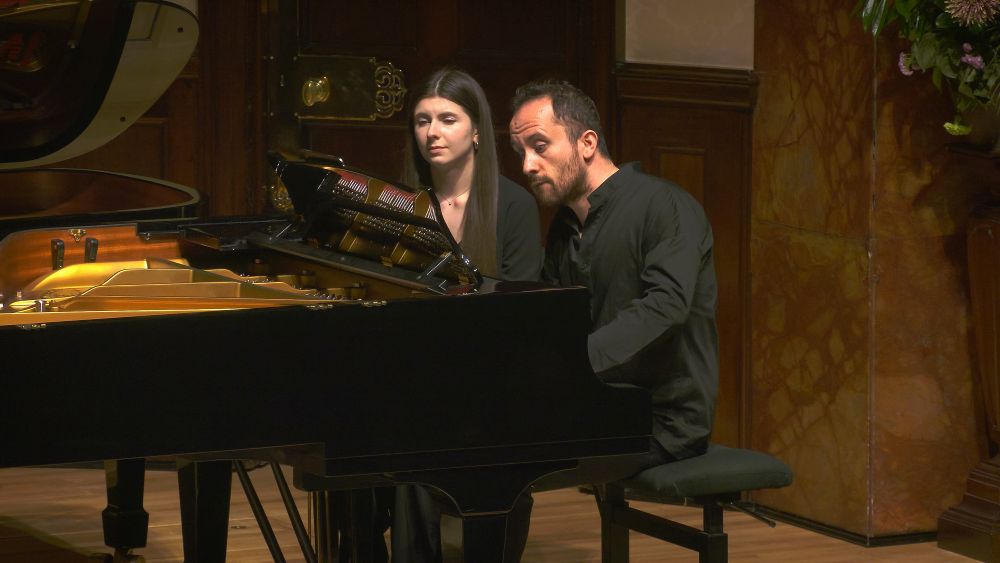 After that, there was total focus from Sternath in the central hard-hitter of the three so-called "War" sonatas. The evocation of cosmic destruction at the heart of the Seventh's Andante caloroso, starting from Prokofiev's homage to Schumann's "Widmung" ("I can often sing as though I were happy... but no-one feels the deep sadness in the song") was majestic and devastatingly clear, not just the tolling bells but all the frenetic piano writing around them. If, like his mentor, Sternath could sometimes have kept the dynamic level lower – it's best that the finale with its bluesy ostinato begins like a crouching tiger – he never dropped a stitch and, in an ultimate coda which has most pianists trying to cover up the almost unplayable, remained lucid to the last. Sternath's naively charming smile as he received rapturous applause belied the demons he'd evoked.
The four-hand piano version of Shostakovich's Tenth Symphony has long been known largely through a legendary recording by the composer and his acolyte Mieczyslaw Weinberg, made not long after the death of Stalin and not only a remarkable testament to two survivors – Weinberg had been jailed in the Lubyanka shortly before the leader's demise – but a performance of searing intensity. Not note-perfect, of course: neither was Levit last night. But in nobly giving the upper part to Sternath (pictured below) – the original is to be played at one piano, but the Wigmore furnished the luxury of its two, facing each other – he gave him an essential limelight. 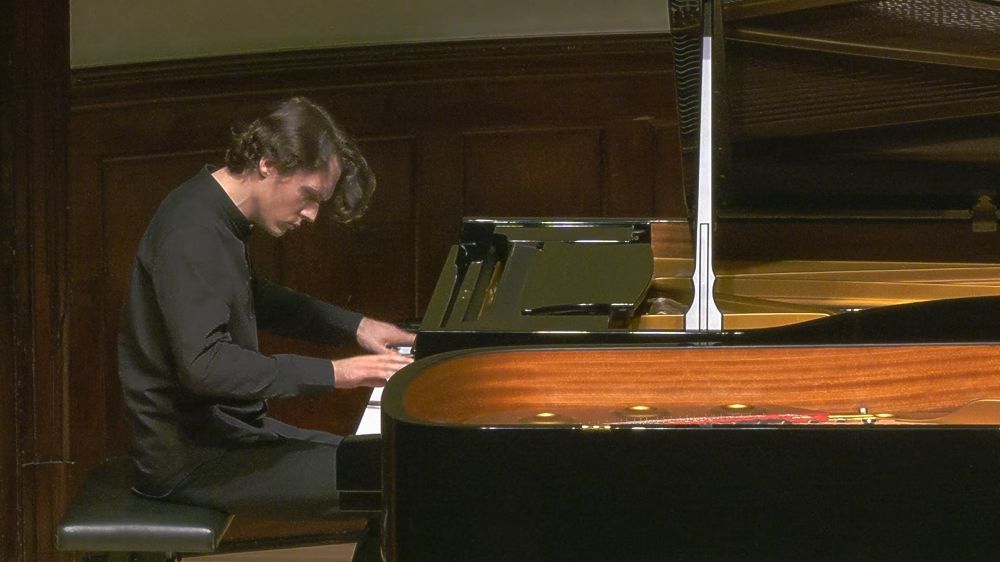 Of course, while you learn a lot from piano arrangements of great symphonies, there's no substitute for the colourings of the original; the limping clarinet waltz in the opening Moderato comes too much out of the shadows on keyboards, for instance. But Sternath managed somehow to evoke with perfect phrasing the piccolos in the first-movement coda, the horn cry which brings Mahler's Song of the Earth into the purgatory of the third movement, and the anguished woodwind solos at the beginning of the finale. As for white heat, while both pianists kept the whirlwind scherzo under dogged control, the victory dance which eventually allows for one of Shostakovich's few unambiguous triumphs plunged into an awesome abyss before picking itself up again. These are the kind of moments we live for in live concerts, and they're rare enough to be treasured all the more.











