

The road to hell is paved with brilliant ideas in Berlioz's idiosyncratic take on the Faust legend. John Eliot Gardiner proved better than anyone in last night's Prom that this splendidly lopsided "dramatic legend" can only be weakened by its many stagings; all the drama is in the music, and especially in the orchestra, from rollicking country dances and fanfaring Hungarians through to the shrieking night birds on the ride to the abyss and the six harps dappling the plains of heaven in what for modern tastes is a quite unnecessary "Epilogue in Heaven" for redeemed Marguerite.
Gardiner is a leaping, rather than walking, advertisement for the adage that age only makes you younger; he tore through the livelier scenes with the sharpest of edges from his Orchestre Révolutionnaire et Romantique. Youth was mostly an advantage for the many choruses, stage-managed presumably by the conductor but ostensibly by Laurent Naouri's charismatic Mephistopheles (pictured below). With the young men from the National Youth Choir of Scotland - following on from the GB equivalent in the previous evening's Prom - the drunken fugal "Amen" for the death of a rat sounded splendidly like a laugh-out-loud football chorus. And what a great idea to have them as "Students" contrasting with the "Soldiers" of the Monteverdi Choir in what is usually - but not here - an anticlimactic ending to Part Two.
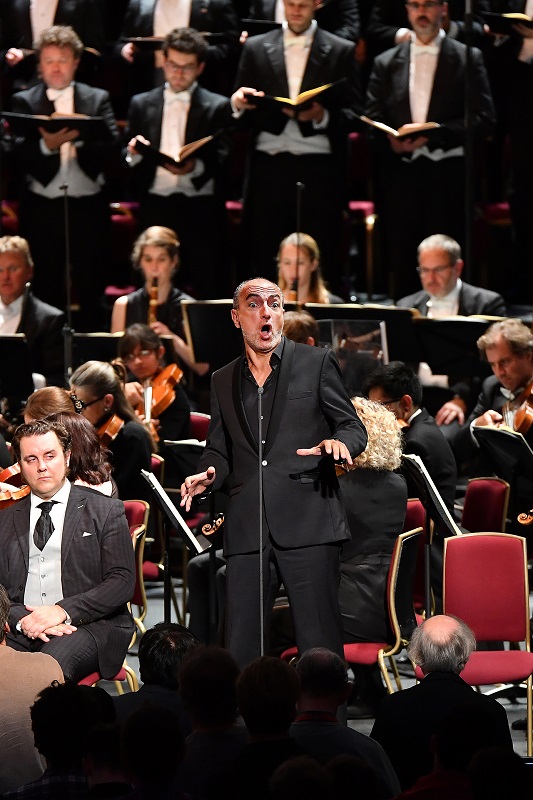 Only the rollicking Pandemonium of Mephistopheles' reception in hell could have done with a few more mature voices to bolster it, but it had an agility as rare as Naouri's high-speed delivery of the leering Serenade - a payoff in having a baritone rather than a bass for the devil, a singular gesticulator at that. Ashley Riches could sing the part anon, too, on the evidence of his chorus-leader Brander.
In Michael Spyres we have a great tenor stylist for the French repertoire, as his earlier appearance with Chelsea Opera Group in Massenet's Le Roi de Lahore and his more recent evening with Joyce El-Khoury and Carlo Rizzi already told us (someone had better book him for Massenet's Le Cid soonest). His intelligence and colour brought significance to every phrase - just as well, because we'd gone back to the bad Proms habit of no supertitles after the false dawn of Sunday's Khovanshchina; who could doubt the meaning of "je souffre" as Faust prepares to take his own life? And if the "Invocation to Nature" usually calls for a heftier kind of of tenor, he got round that one with focused tone-colour, too, promising a long and useful vocal life.
It was also a huge pleasure to hear mezzo Ann Hallenberg out of Handelian trouser-roles - a feminine and youthful object of desire, perhaps lacking some sensuality and the ultimate poignancy in the great Lament - who can forget Christine Rice at ENO? - but blending well with Spyres in the love duet and always graceful of stage presence. Of the many orchestral solo partners for the singers, standing Bach Passion-style, Michael Niesemann's cor anglais sounded more like a ghost behind Marguerite than another human voice, but that's the period instrument for you. Will-o-the-wisp piccolos at one end of the scale and galumphing ophicleides - early tubas - at the other made their mark; the strings were always elegant, portamento often making a nice substitute for vibrato.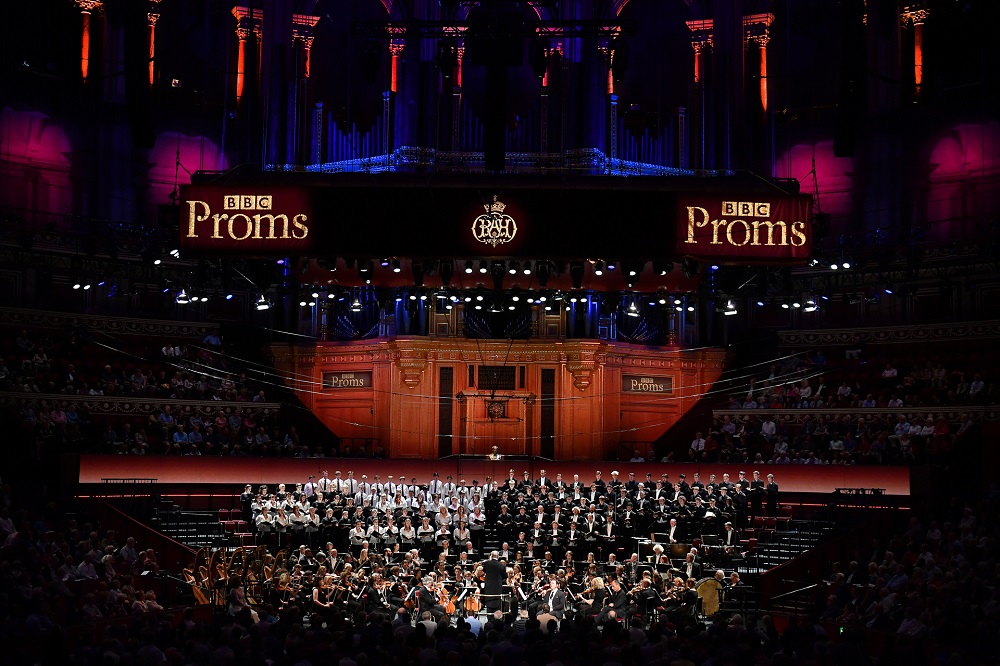 If the first half was unalloyed pleasure, the second had just a few moments where comparisons with performances more moving and more apocalyptic in turn might not have helped it. But the final let-down, the wet acceptance of Marguerite into heaven, is Berlioz's.It glided and shone as well as it could, and the Albert Hall with its halo around the sound was still the best possible place to hear it. But Mahler in the Faust-finale of his Eighth Symphony does it so much better (and, like Goethe, unlike Berlioz, he allows his Faust to be redeemed by the "eternal feminine"). Otherwise, Berlioz remains the king of novelty and poetry incarnate.











