

And we’re off! This concert marked the beginning not just of the 2023 Edinburgh International Festival but, perhaps more importantly, of Nicola Benedetti’s tenure in charge as the EIF’s Director. She came onstage for a chat before a note of music was played. Part of her mission as director appears to be to make the arts more accessible, and if her introductory chat wasn’t much more than a gentle hello then it still did the job. Any aim to demystify classical music has to be welcomed.
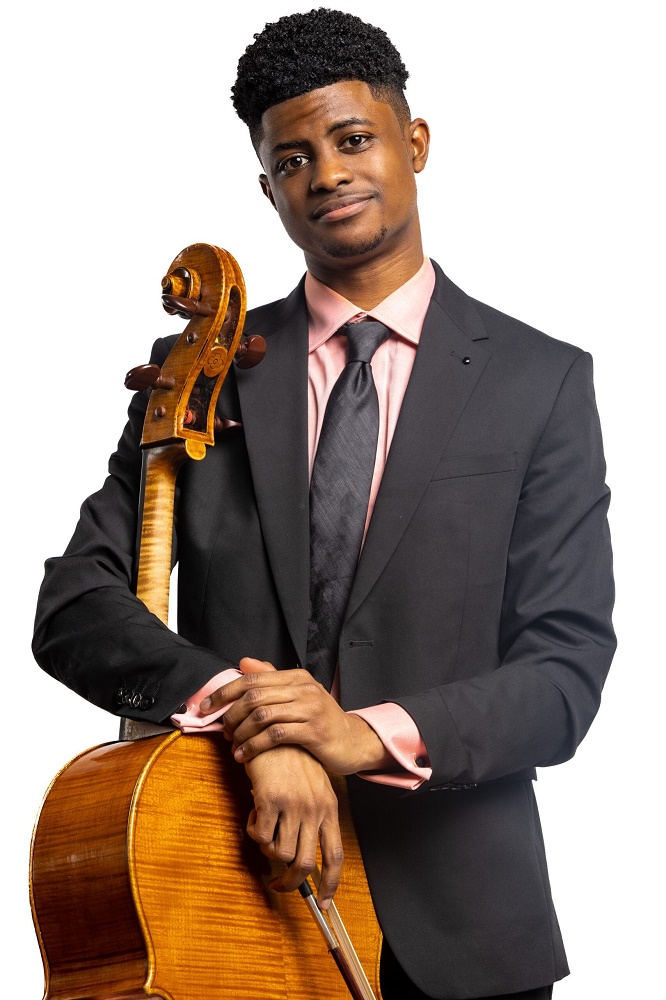
That brief seems to have been passed on to violinist Stefan Jackiw, the artist around whom this programme centred, because he preceded the performance of Charles Ives’ Piano Trio with a brief chat about Ives’ background and musical priorities. That served as the perfect way in, because it focused on the collision of musical styles that is so central to Ives’ musical identity and, in fact, shows up so repeatedly in this work. 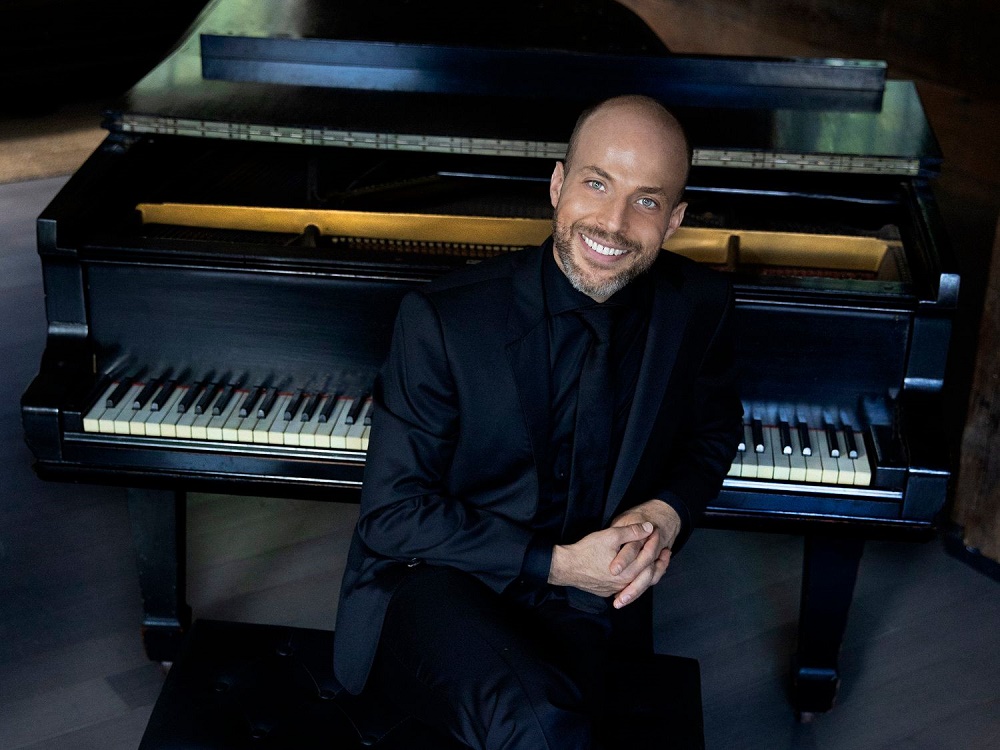 Jackiw, together with pianist Orion Weiss (pictured above) and cellist Sterling Elliott (pictured below), enjoyed slamming down the musical contrasts that occurred throughout this piece, most obviously in the gloriously exuberant cacophony of the second movement, where Ives tears his way through dozens of the tunes that defined his time at Yale University. All three musicians played it with electric virtuosity, Elliott permitting himself a wry smile at the sheer zaniness of the juxtapositions while Weiss’s piano line underpinned the whole thing with rock-like focus, something that extended into the gentle nostalgia of the lyrical finale.
Jackiw and Weiss began the concert with James MacMillan’s Violin Sonata Before The Tryst, a work influenced by folk music but bearing all the hallmarks of MacMillan’s own forensic style. Throughout there was always a sense of violinist and pianist listening acutely to one another, even when their instruments seemed to be saying completely different things, sometimes lyrical and wistful, sometimes teeth-grittingly determined, literally so in the case of Weiss at the piano. The ballad style always drifted through, though, and Jackiw embraced the extremes of both dynamics and technique in order to do it justice.
 Jessica Bodner joined them on viola for their performance of Brahms’ G Minor Piano Quartet, a work in which Brahms manages to embrace an entire universe within only four instruments. If Jackiw seemed to take charge in the earlier pieces then, as in the Ives, Weiss’s piano seemed the key player in the Brahms, with beautifully grounded tone around which the string instruments focused themselves. Their vision of the first movement was dark and introverted, only just lightened by the Intermezzo before the molten lyricism of the third movement. What little restraint there was got thrown to the winds in the harum scarum of the finale, with incisive bite in the outer sections and terrific swagger to the central section. The final moments had so much kinetic energy that they seemed to be on the cusp of taking off, which might help explain the roar of the crowd when they finished.
The only thing that bothered me was the size of the audience in the hall. Normally the first Queen’s Hall concert is red-letter event that packs the Queen’s Hall’s pews, but the rows of empty seats for this concert were a worrying sign. It can’t still be down to Covid, can it? Let’s hope it’s just a first-day-blip. The music programme is very strong this year, as you might expect from the new director. It deserves to do very well.











