

Can there be a conductor with a clearer and more affirming beat than Mariss Jansons with the Concertgebouw Orchestra when they're at their best? The listener can just marvel at his capacity to work in partnership with this fine orchestra, to underline and reinforce everything they do, to enable them to land cleanly, decisively and unanimously, to introduce new ideas with care, precision and beauty, to treat the end of phrases with respect, love and punctiliousnes.
Jansons can make the Concertgebouw sound in every respect and in every department a marvellous orchestra, even in a hall like the Barbican,which does them fewer favours than their home on the Musemplein in Amsterdam.
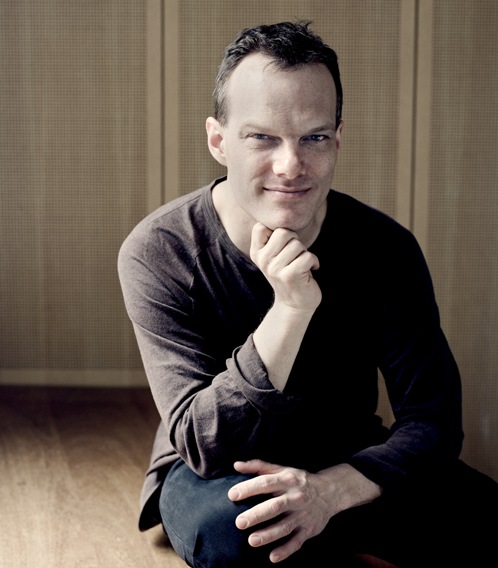 That sense was there in the Beethoven First Piano Concerto with soloist Lars Vogt (pictured right). He was being capricious. Sometimes he had the urge to chivvy the tempo on, sometimes the poetic instinct to broaden it. Jansons was alive to every nuance, rose to every challenge, was sympathetic and in lockstep with the pianist's instincts. The slow movement in A flat major was something special. The final swelling and dying of the three pairs of wind instruments, right at the end of this exquisite account, were perfection.
More of this sheer class, of this panache and positive energy was there, even with larger forces onstage, in the first movement of the evening's main work, Bruckner's great, unfinished Ninth Symphony. It is a vast structure, over twenty minutes in length, entirely built out of tiny melodic cells. Jansons shaped it, drove it, kept a strong narrative going throughout.
But then, in the second and third movements, tiredness crept in. Whether it was thoughts of the return journey, or the accumulation of earlier endeavour, the performance just came off the boil. Reports of the first two nights have been positive, so maybe a slight slippage from grace is understandableand also forgiveable.
The first sign came near the beginning of the Scherzo, when Jansons seemed intent on pulling the tempo back, giving it leaden feet, even conducting one phrase in three rather than one to a bar. The Adagio also had its untidinesses. Mercifully the final chords on horns and Wagner tubas were impeccable, and a virtually full Barbican went away happy and fulfilled.











