Lance Armstrong is a Hollywood villain who just happens to be real. He bullies, lies, manipulates, cheats and destroys lives until righteous crusaders hunt him down and drive a stake through his heart. And that, more or less, will be the plot of the movie Stephen Frears is working on now. Popcorn munchers demand nothing less than a comeuppance for the bad guy. To cite Oscar Wilde, the good end happily, the bad unhappily: that’s what fiction means. It’s not quite what happens in The Armstrong Lie.
Alex Gibney, who has made uncompromising films about Enron and WikiLeaks, was the ideal director to bring his gimlet eye to the sporting comeback of the century. Armstrong had survived testicular cancer and won seven Tours de France in a row when he retired in 2005, having eluded every drug test and come up smelling of roses. He made his grand return to the Tour in 2009, and on camera not even he can convincingly explain why. To continue raising awareness for his cancer charity, shoulder to shoulder with that other slick liar Bill Clinton, is the most charitable spin you could put on it. Hubris is not a big word in the cyclist’s dictionary.
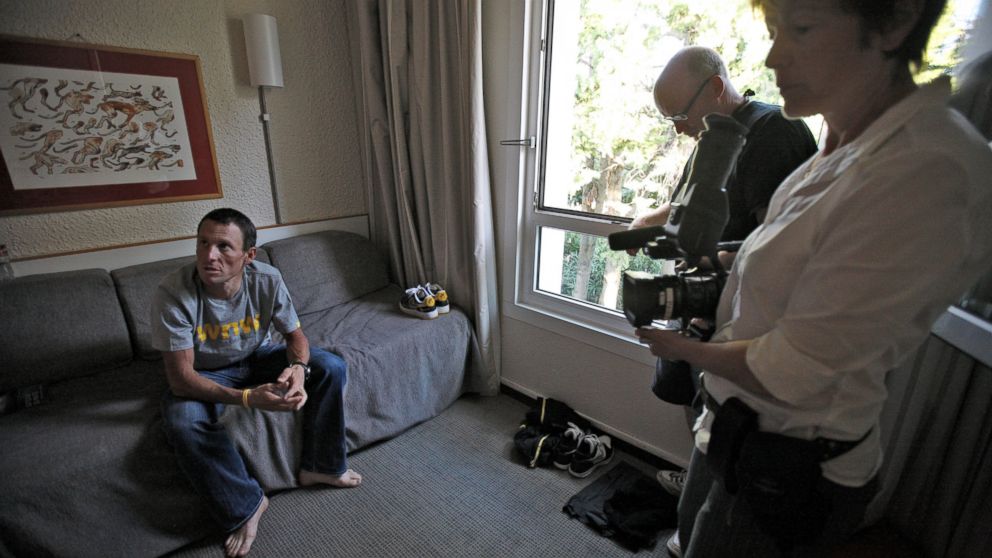 Gibney was given intimate access to Armstrong’s every movement. The only sanctum he didn’t penetrate was the toilet where the drugs tester watches him supply a sample. For first-time visitors to the Tour on film, it’s a fascinating and properly cinematic account. Armstrong runs in a respectable third (with apologies for the plot spoiler if you weren’t reading the sports pages back then). It’s not the victory his internal scriptwriter craves, and he apologises on camera to Gibney for screwing up his movie. But the bigger screw-up was to come.
In post-production the story came out. Cyclists were subpoenaed and, where they’d happily hoodwinked the press, they weren’t going to lie under oath. Armstrong was exposed and went on Oprah to make his mealy-mouthed mea culpas. Gibney had to start again, this time piecing together the story of the epic lie that everyone in and around cycling had invested in for so many years.
In this rebooted story, hindsight casts a fresh light on Armstrong’s breathtaking narcissism. As he peddles the barefaced syllogism - I wasn’t caught therefore I can’t have doped - it’s like watching The Sixth Sense the second time round: you can’t believe you missed the clues. Gibney, who supplies the voiceover, is honest enough to be ashamed that he too bought into the legend and hollered like a roadside cheerleader. So this is as much about his redemption as a reliable narrator.
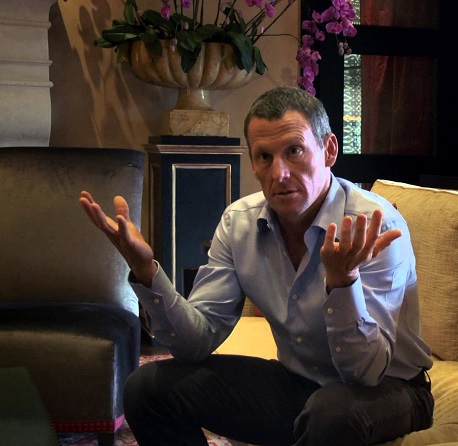 The infrastructure of doping is explained in forensic detail. The testimony of witnesses fill the gaps – various teammates whose lives Armstrong casually destroyed; the sinister Dottore Ferrari who built the cyclist's post-cancer bionic body with blood-boosting supplements; Armstrong’s nemesis David Walsh of the Sunday Times (from whose book the Frears film is adapted). And there at the heart is Armstrong before and Armstrong after.
In Hollywood there would be clear blue water between the liar and the penitent. The lines are more blurred in reality. What’s finally to the detriment of the film is that Gibney cannot quite land the killer punch. “The doping’s bad,” says Betsy Andreu, who with her cyclist husband testified against Armstrong, “but Lance’s abuse of power is worse.” There is no more than superficial acceptance from Armstrong that he mercilessly caused collateral damage in his quest to be the best cheat. Perhaps it's part of his dreadful pathology that he too is seduced by his own charisma. If The Armstrong Lie had produced that confession, it would have deserved le maillot jaune. But the camera looks into the eyes of a plausible monster, and waits in vain for them to blink. For proof watch the clip overleaf.
Overleaf: 'I am one of the greatest riders of all time'