The Battle for Lakipia is a beautifully filmed and thoughtfully directed documentary that was made over a two-year period. Its focus is the conflicting claim to Kenyan land made by white ranch owners of English descent and the indigenous pastoralist people. In the 60 years since Kenya gained independence from Britain, tensions between the descendants of colonial Europeans and Kenyans have flared up periodically, and in recent years climate change has added fuel to the fire.
Global warming has led to longer and more terrible droughts that scorch the grasslands and make it impossible for the pastoralists’ herds of cows, sheep, and goats to survive on the land they traditionally navigate.The white farmers, who have turned their own acres into highly cultivated land and also run luxury safaris for tourists, do not want the pastoralists bringing their starving, dehydrated herds to graze on their lush acres. It’s one thing to offer Instagram-perfect scenes of endangered zebras roaming freely to wealthy travellers, another to allow hundreds of skeletal cows to spoil the view from the safari jeep. Maintaining the biodiversity of threatened animals that appeal to tourists and zoologists trumps the survival needs of the Samburu people, at least in the eyes of one of the ranch owners.
Directors Peter Murimi and Daphne Matziaraki have crafted their documentary to be as seemingly balanced as possible. We follow white families who have lived in the Lakipia region for generations, and hear their rationale for their intensive farming methods. There is no doubt that, after so many decades of ownership and graft, they feel entitled to call Kenya home.
 We also get to know several families from the semi-nomadic Samburu people, who follow an ancient tradition of moving their herds to graze according to season. There is no narration by the filmmakers, who prefer to let their subjects and news footage – from the 1950s Mau Mau uprising to the present day – do a lot of the narrative exposition.
Without a commentary to guide us and with a slow pace that leaves time for thought, the audience is asked to make its own judgement on who is right. Is it the white landowners, who believe that the pastoralists' way of life is dying and that they should join the modern world of farming and tourism instead? Or is it the Samburu people, who maintain that “no matter our level of education, cows define our lives” and insist that they are not bandits but have an inalienable right to graze their herds on the land.
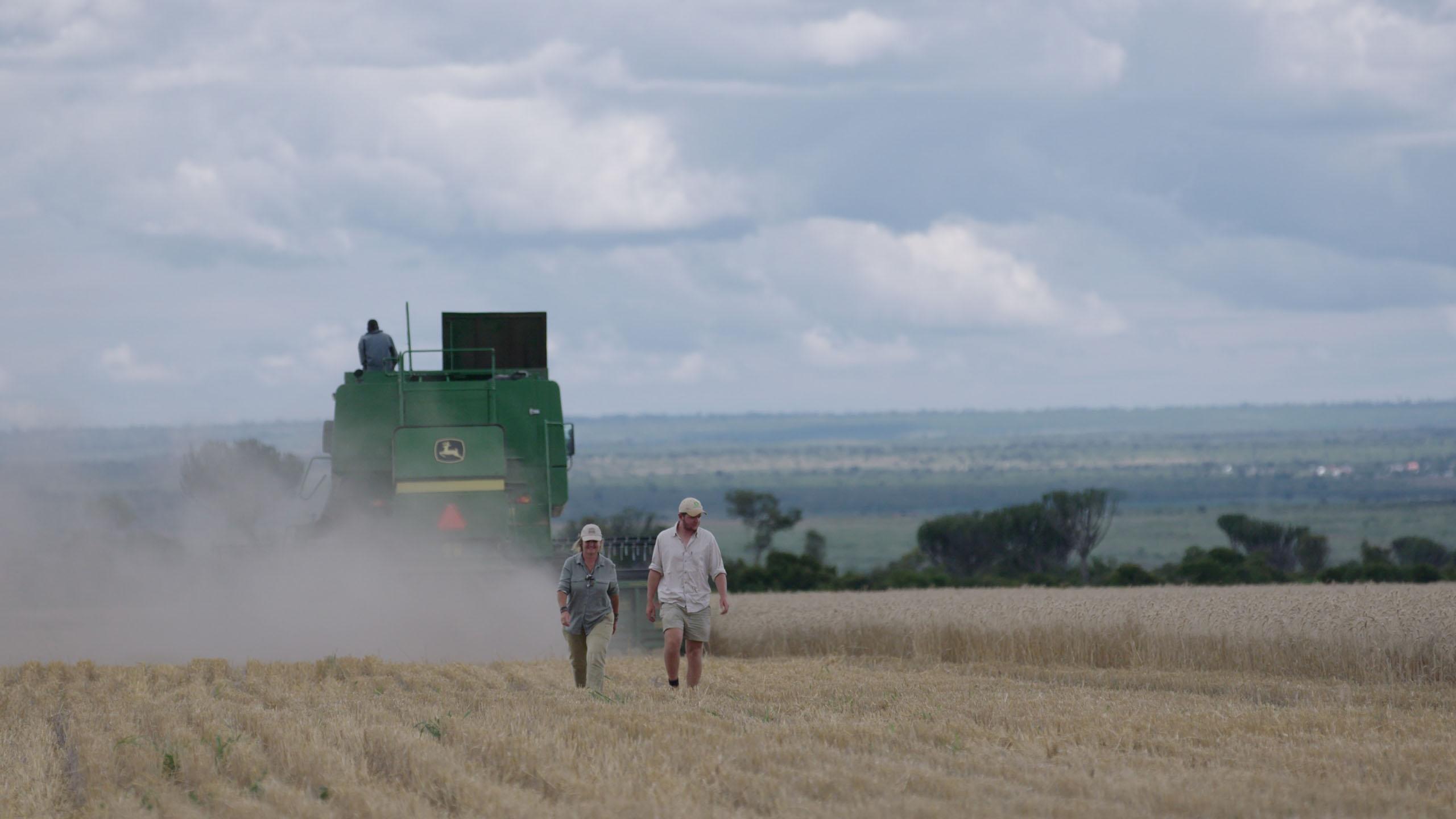
The scenes where the white landowners chat on iPads with their neighbours about rumoured threats from their black neighbours, or host lavish barbecues, contrast with the scenes of the hard life led by the Samburu pastoralists. The access granted to the filmmakers and the openness with which both black and white interviewees discuss their conflicts and prejudices is impressive. One white owner, Maria Dodds (pictured above with her son), maintains that hers is not a racial clash but one instigated by local politics (an election runs through the film).
But it’s hard not to see the patronising seam that runs through the landowners' arguments. Ultimately, the blame for climate change, which is devastating the Samburu semi-nomadic way of life, lies with developed countries and the colonial legacy. Murimi and Matziaraki have made a carefully calibrated documentary that nevertheless packs a punch.
- More film reviews on theartsdesk