It wasn’t quite Ali vs Frazier. But the 1968 debates between William F Buckley, Jr and Gore Vidal were as bruising (nearly literally) as TV had seen, and haunted the protagonists for the rest of their lives. Morgan Neville and Robert Gordan’s documentary claims its aftershocks also damaged TV and America in ways we’re still suffering through.
In 1968, Vidal’s ribald, transsexual comic novel Myra Breckinridge, waspish essays puncturing the follies of what he termed the American Empire, and a conviction that “there are two things you don’t turn down: sex and TV,” made him a notorious liberal. Buckley edited the influential hard-right magazine New Republic, and was a strikingly mannered, forthright TV debate favourite. Both men were patrician intellectuals in their middle-aged prime, respectively familiar with Democrat and Republican inner circles (Jackie Kennedy was Vidal’s half-stepsister). Each thought the other loathsome and dangerous. Just like the Ali-Frazier bouts, this was personal.
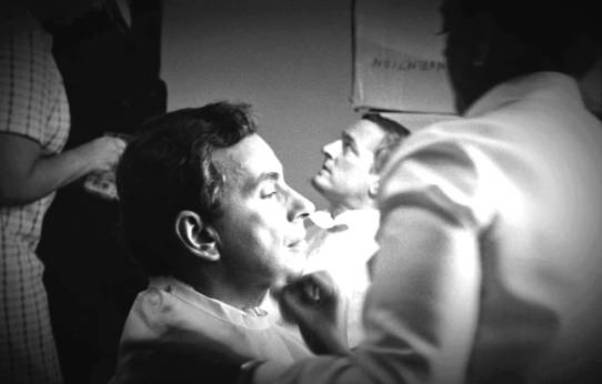 ABC TV brought them together as a cost-cutting measure. The very poor relation of NBC and CBS couldn’t afford their blanket coverage of 1968’s political conventions, instead using Vidal and Buckley to comment on each day’s events. US TV news then is described as “a big, bland centre,” the likes of Walter Cronkite providing a homely consensus watched by most Americans each evening. Vietnam was shaking that. The Republican convention in Miami and, especially, the Democrats’ in Chicago became flashpoints revealing a nation being ripped apart by the war. Buckley and Vidal stepped into this febrile environment wanting to destroy each other.
Vidal, knowing Buckley never bothered to research, came to Miami armed with damning quotes. Buckley retaliated in Chicago by passing Vidal a hand-written letter from the just-assassinated Bobby Kennedy, declaring Vidal worse than the Viet Cong. Best of Enemies’ pacey editing focuses on the key exchanges. The body language is electrically charged, each man trying to maintain their superior veneer, Buckley’s twitching, lupine grins met by Vidal’s pitying amusement, as their elaborate command of language finds fine points to pierce the others’ hide.
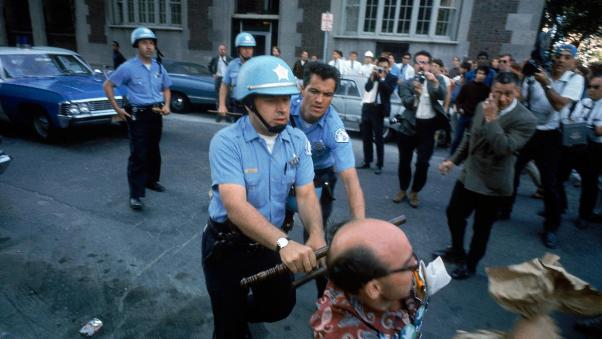 Finally, the infamous Chicago police riot, pictured left, during which protestors, delegates and journalists were clubbed, removed all finesse. Footage shows a nervous Arthur Miller and Paul Newman in the hours leading up to it, followed by stills of Vidal watching with appalled attentiveness, after all three men have passed through tear-gas clouds. In the debate that follows, Buckley defends the police; Vidal calls him a “crypto-fascist”. Buckley, fists bunching, leaning almost out of his chair, calls his enemy a “queer,” and threatens to beat him up.
Vidal declared back then that a “cultural war” was being fought in America. That final exchange, with Buckley’s repulsion at his sexuality laid bare, helped describe the terms of engagement. Buckley regretted losing control for the rest of his life. Vidal rewatched videos of the debate obsessively, and referred to them daily. Both men came to feel they’d lost.
It’s easy to feel nostalgic about a time when American chat shows starred Vidal, Norman Mailer and Truman Capote, watched by mass audiences as they bickered and sparred. Best of Enemies spools forward to the ’68 debates’ offspring: Fox News’s intellectually barren blood-sports. As this sharp, exciting film contends, many unpredictable genies smashed free of their bottles in 1968.