Liz Taylor’s blowsy late-period persona is finessed to its finest point in this 1974 Muriel Spark adaptation, boldly plugging into the mains of her fragile talent.
Lise (Taylor) travels from Hamburg to Rome after a mental breakdown, sporting black Medusa hair and a coat of many colours. Arriving onset a day after divorce from Richard Burton, who had dragged his own latest production to Italy to attempt a boozy rapprochement, Taylor makes Lise imperious and damaged, moving in somnolent reverie then stirring to hostilely engage with the world. Moments alone are spent in masturbatory fugues, or cosmetically perfecting that Taylor face in the bathroom mirror – maturely beautiful at 42, yet here a weak warrior’s defiant mask. Lise’s wet-lipped longing sends one bloke fleeing, as she approaches awful men including a would-be rapist in enigmatic pursuit of her “type”. She mostly unnerves and bullies women, and receives abuse and ridicule.
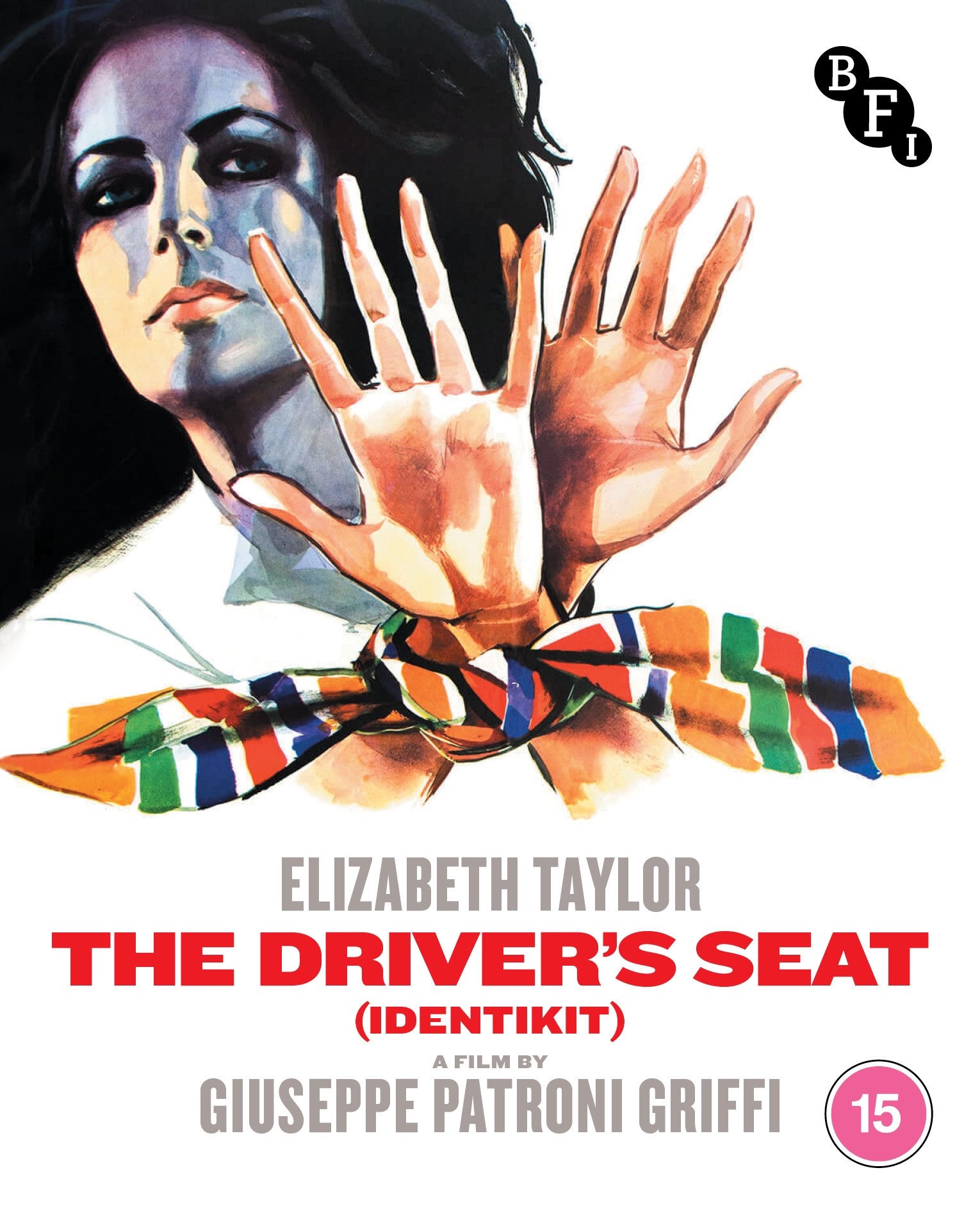 There was “something unseemly…something of the prostitute in her”, a female writer tells the police later. “Something came out of her… some force that all women feel latent in themselves, stifled… some potential for catastrophe. In her it was terrible, terrifying… it was as if she wanted to leave some sort of impression of herself.” Taylor keeps this untamed edge quivering under her performance’s skin. “Do you carry a revolver?” Lise asks a concierge, sweetly. “Because if you did, you could shoot me.”
Director Guiseppe Patroni Griffi fits Lise’s disturbance into Italy’s Years of Lead. Police chase and shoot a man at the airport, silhouettes racing. Lise wanders mystified through an eerily empty department store the day after a bomb, and a Middle Eastern coup plays out on banks of TVs then the streets. Vittorio Storaro, cinematographer to Bertolucci (and, later, Coppola, Beatty and Woody Allen’s last gorgeous films), suggests late afternoon, the sunlight hot but faded, shadows contrasting with deep golden hues, before descending towards dusk and full night in a fairy-tale park where, pieced by moonlight, Lise reaches her self-assigned destiny.
Production design is Seventies Fascist, modernist and alienating, all hard whites and dissecting grids, Franco Mannino’s cool piano score subtly ominous. In a mildly fragmented narrative true to Spark’s novel, the police investigate Lise’s case with customary violence. It’s as if Taylor has wandered out of Hollywood’s gossip columns into a conspiratorial Elio Petri film (a passing Andy Warhol materialises from the former as a dubbed English lord). Her perfectly ill at ease character transmits her condition to everyone she meets.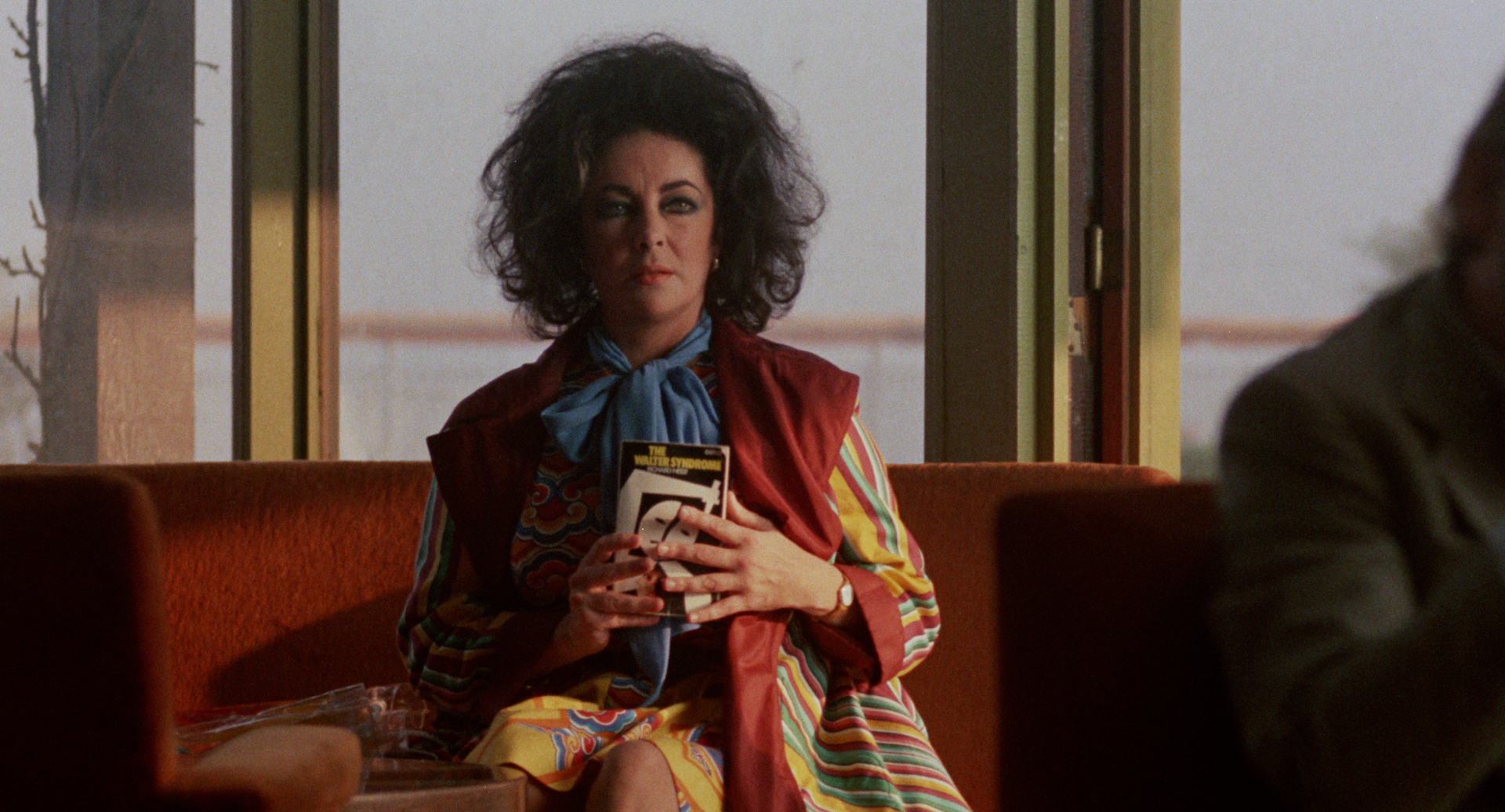 Taylor was the rebel child film star who survived better than Judy Garland – imperiously sexy but wounded, a double Oscar-winning Tennessee Williams regular rarely taken entirely seriously, hanging on for her last 30 years in a philanthropic celebrity half-life she invented. The Driver’s Seat ends a phase of flop experiments begun by Joseph Losey’s Boom! (1968), marrying her talent to a fading woman who won’t be ignored. It significantly elevates her art.
Extras include an analysis of The Driver’s Seat in the context of Muriel Spark and her “unremarkable” sexual violence, commentary, and thematically associated, unexciting shorts: Germaine Greer lustfully stalking a man in Kabuki make-up in Darling, Do You Love Me? (1968), a three-minute Chris Petit film about a woman’s vengeful long-distance call, The Telephone (1981), and a clumsy, satirical docudrama from an “ordinary” young woman’s perspective, Anne Basser’s Waiting For… (1970).