Comedian Tony Hancock’s vertiginous rise and fall is neatly traced in the two films he completed in the early 1960s. The warning signs were already present when 1961’s The Rebel (★★★★) was released. Hancock’s BBC career had been enormously successful, his eponymous radio series featuring him sparring with a talented supporting cast. The brilliant scripts were supplied by Ray Galton and Alan Simpson. Despite the show's popular and critical success, Hancock's own insecurities were already taking root and led him to make the final season of the show's TV incarnation without regular partner Sid James, the star worried that he was perceived merely as one half of a double act.
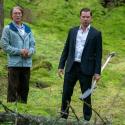
 Galton and Simpson wrote the screenplay for 1961’s The Rebel, directed by Robert Day, Hancock playing a lowly clerk and terrible amateur artist who quits his office job and decamps to Paris to pursue an artistic career. It’s initially disconcerting to see him onscreen in vibrant colour, looking so youthful and healthy, though his character is essentially the familiar “lad from East Cheam” and the script contains plenty of quotable zingers. When paintings by talented flatmate (Paul Massie) are mistakenly thought to be Hancock’s own, he becomes the toast of artistic high society, telling journalists who ask him how he mixes his paints that he does it “in a bucket, with a big stick”, and he later orders “snails, eggs and chips with a cup of tea” in a Parisian salon when discussing his next exhibition with art dealer George Sanders. Galton and Simpson later reported that Lucian Freud described The Rebel as the best film made about modern art, the screenplay’s digs at the cultural establishment more affectionate than barbed.
Look out for Nanette Newman’s turn as a blue-lipped beatnik, and giggle at Irene Handl’s mispronunciation of the word ‘miscellaneous’. Though overlong, The Rebel seems far funnier now than I remember, and I’d not previously clocked that the early scenes of Hancock doodling in a ledger at the HQ of United International Transatlantic Consolidated Amalgamation Ltd are a nod to the elaborate office set constructed by Billy Wilder for The Apartment. Bonus features include a commentary by Galton, Simpson and comedian Paul Merton, plus a delightful appreciation by Diane Morgan, a huge Hancock fan who nonetheless admits that he “didn’t look right in colour”.
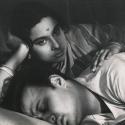
Retitled Call Me Genius, the film flopped in the US, Hancock’s desire for international fame out of reach. Six months after its UK release, Hancock dissolved his partnership with Galton and Simpson. They moved on to create Steptoe and Son while Hancock starred in a moderately successful ITV series, unfavourably compared to his earlier work. The Punch and Judy Man (★★★) (pictured, above) directed by Jeremy Summers, was released in 1963, its screenplay cowritten by Hancock and Philip Oakes. This black and white follow-up is completely different in tone, a dour bittersweet comedy set in a shabby seaside town, Hancock’s Wally Pinder a struggling seafront entertainer married, rather improbably, to a radiant Sylvia Sims. Merton’s suggestion that Jacques Tati’s Les Vacances de Monsieur Hulot was an influence rings true, though Tati’s humour is warmer and more sharply choreographed. Hancock was drinking heavily at this point and several sequences, notably one where he consumes ice cream with a young boy (Nicholas Webb, Sims’s nephew) are hopelessly overextended. Knowing that Hancock was sipping vodka between takes to wash away the sweet taste makes it even harder to watch, and the near-silent breakfast scene with the two leads is unbearably sad.
 Still, cinematographer Gilbert Taylor makes a faded Bognor Regis look alluring and there are some funny moments, notable when Hancock unintentionally disrupts the town’s illuminations. John Le Mesurier and Peter Vaughan are among the supporting cast, and the ending is surprisingly upbeat, Hancock and Sims seemingly reconciled. A downbeat but interesting curio, then, in a gleaming restored print. Studio Canal provide generous extras. I’d recommend Merton’s brief introduction to the film but would advise against watching more than a few minutes of Hancock in his role as a variety show compère in a 1966 episode of ITV’s The Blackpool Show, the great man looking tired and flustered, now reduced to introducing the likes of Bob Monkhouse and Birmingham beat combo The Rockin’ Berries.