The 400 Blows (1959) and Jules et Jim (1962) established François Truffaut as an outstanding and original director. His next film, The Soft Skin (La peau douce) from 1964, was not in the same league.
Although it displays many of his story-telling skills, not least a gift for suspense, the film feels dated, the characters are not quite as interesting as in his earlier hits, and the plot – a middle-aged married man has an affair with an air hostess, and his worn-out marriage falls apart – is a little formulaic. It is by no means a bad film, but it is certainly not among Truffaut’s best.
The two main characters – the writer and editor Pierre Lachenay (Jean Desailly) and the air hostess (Françoise Dorléac, Catherine Deneuve’s less successful but equally beautiful sister) are a little dull and one-dimensional. It is not clear whether this is a weakness in the script (by Truffaut and Jean-Louis Richard) or in the casting – perhaps it is a bit of both. Desailly attempts to evoke the mid-life crisis malaise of the writer with expressions of doubt that seem hackneyed rather than authentic or emotionally engaging. If anything, he just seems a little absent, his supposed passion barely believable. Dorléac does not manage better: she seems all too predictable as the innocent young woman fascinated by her worldly literary lover. Lachenay’s wife Franca (Nelly Benedetti), torn between fury at her husband’s behaviour and a desperate need to hold onto him, is a good deal more believable. She is indeed the only character who displays any real passion.
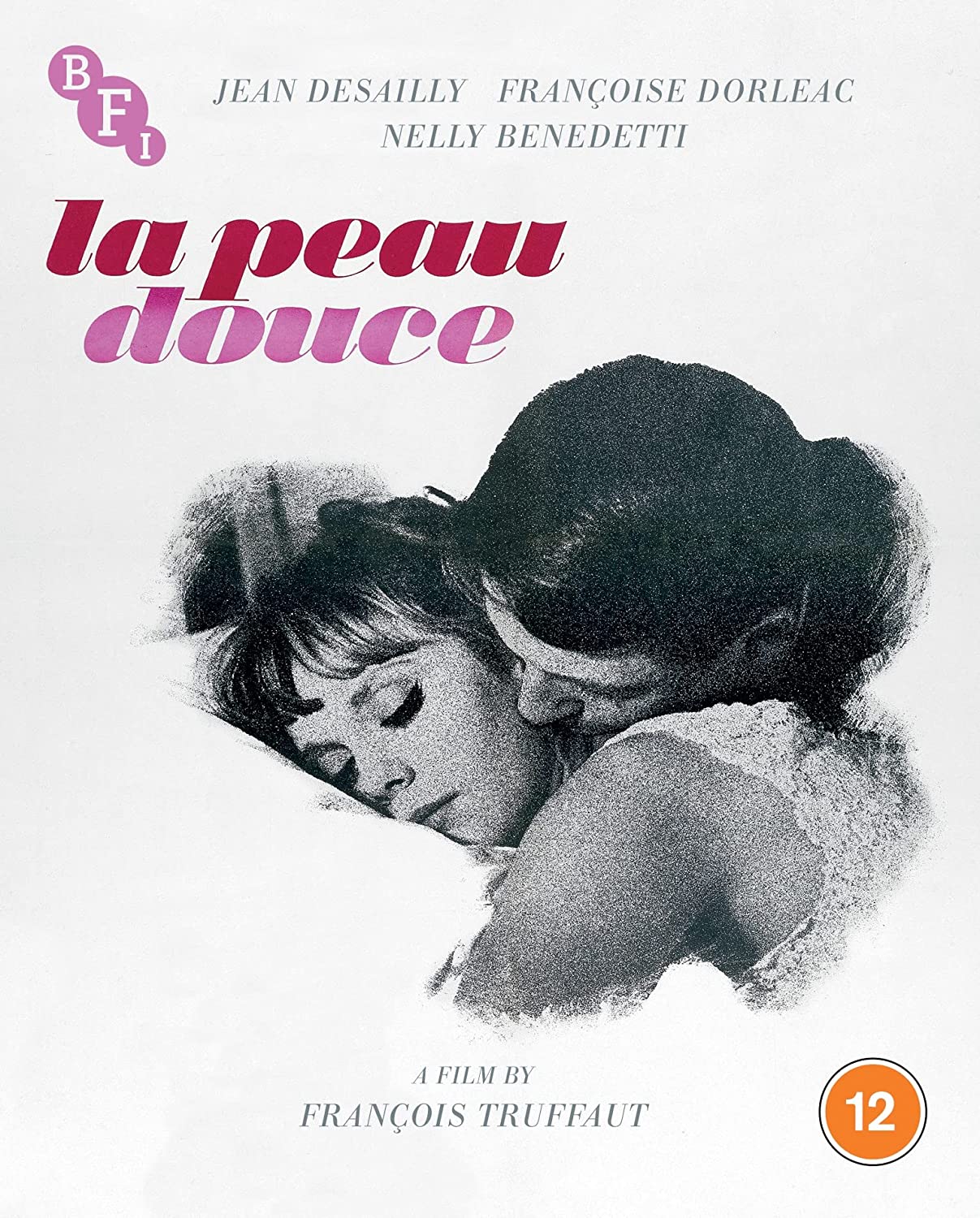 There are pluses: not least Raoul Coutard’s imaginative work as director of photography. He was a key figure in the French New Wave, and associated in particular with Godard. He is inventive with his angles, a never-gratuitous use of tracking shots, and the film always looks good without showing off. There is an immediacy and an evocation of movement which helped to create a greater visual fluidity in 1960s cinema.
Lachenay is invited to Reims to introduce Marc Allégret’s documentary about André Gide, a typical cinephile’s reference to the movies – we should never forget that Truffaut and most of the other nouvelle vague directors started out as film critics and were steeped in the history of cinema. The writer secretly takes his young mistress with him, and the reluctant adulterer is thrust into a ghastly world of provincial fans, all of them monstrous in their sycophantic efforts at being interesting and with a rapacious appetite for the attention of the Paris celebrity. Here, the film comes alive, and these caricatured supporting figures stand out, more believable than the main protagonists.
Could it be that Truffaut intentionally kept the passion of the two lovers low-key? The most erotic moment in the film comes when Lachenay finds Nicole asleep in bed, pulls her skirt up, revealing her legs and thighs, and carefully unclasps one of her suspenders, as he strokes her skin. As an example of "less is more", the moment is reminiscent of an irresistibly sensuous scene in Truffaut's light comedy Stolen Kisses (Baisers volés, 1968) when the director's alter ego Antoine Doinel, working in a shop, has to delicately fit a high-heel shoe onto the foot of an older woman (played to perfection by Delphine Seyrig) who is intent on seducing him.
The passion in La peau douce comes at the end of the story, which in many ways unfolds as a classic tragedy. We watch Franca, Lachenay’s wife, driven by mad and vengeful fury, prepare and carry out the murder of her unfaithful husband as, in French bourgeois style, he lunches alone at his favourite restaurant. Echoing the gripping unfolding of the finale of Jules et Jim, the sequence makes watching the film worth some of the tedium that precedes it.
Bonuses on this BFI Blu-ray are nothing special: some slightly irrelevant early silent footage of Paris and Lisbon, along with an audio commentary by co-writer Jean-Louis Richard, and a rather academic Zoom talk by film historian Pasquale Iannone, which discusses the influence on Truffaut of Rossellini and Hitchcock.