“You know what they say: where there’s livestock, there’s dead stock,” says Jack (a brilliant Barry Keoghan). Never a truer word. There’s an awful lot of dead and maimed stock – sheep, to be precise – in Christopher Andrews’ gory, gloom-ridden directorial debut. Animal lovers will want to avert their eyes. The film is undeniably powerful, with fine performances, but the unremitting violence ends up feeling cartoonish and empty.
Set in the west of Ireland, the mountainous landscape is magnificent. Its sheep-farming inhabitants, not so much. In the first scene, a flashback, Michael (Christopher Abbott; Poor Things, pictured below with Nora-Jane Noone and Keoghan) is driving excessively fast along country roads. His mother has told him that she’s leaving his father. “Slow down, Mikey,” she implores, echoed by his girlfriend, Caroline, who’s in the back seat. Inevitably, the car crashes.
Switching to the present day, 20 years later, it transpires that Michael’s mother was killed in the crash, so he’s consumed with guilt, and Caroline (an impressive Nora-Jane Noone) is now married to Gary (Paul Ready; The Terror, Kevin in Motherland). The unpredictable, recalcitrant Jack is their 20-year-old son.
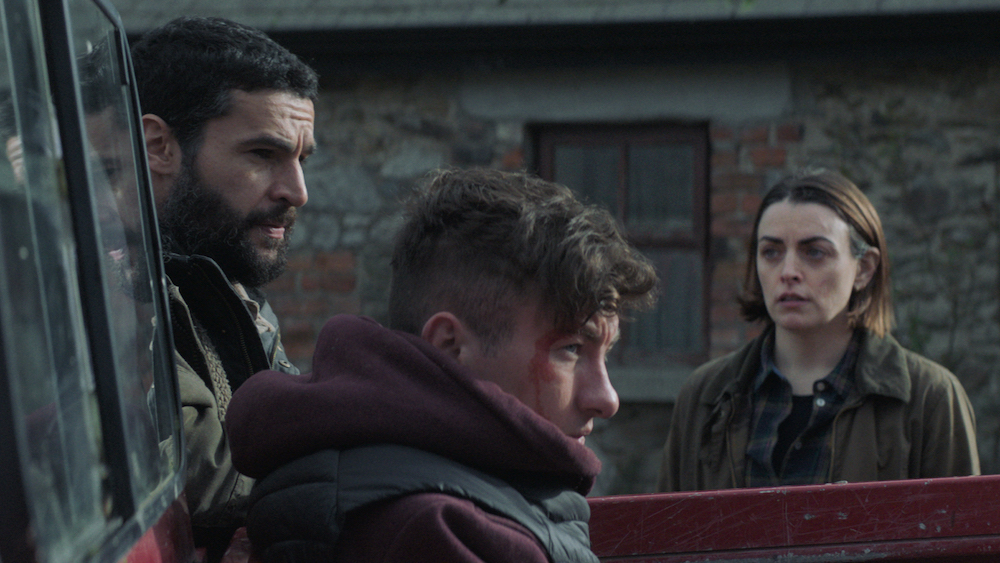 They own the sheep farm that’s next to that of Michael and his furious, half-paralysed father Ray (the renowned Colm Meaney), who is “waiting on new knees” and delights in saying cruel things to his son. “I thought she’d leave you for someone better than that,” he says of Caroline. The two speak Irish together, unlike Gary and family. “You need to drink more water,” says Michael. “Water is for washing in,” responds Ray.
A bitter feud breaks out between the two families over stolen, or rustled, rams. Gary (Paul Ready, pictured below left) hates Ray and Michael because of Michael’s relationship with Caroline – she still seems to harbour kind feelings towards him and he looks at her longingly – and because they won’t sell him part of their land, which he wants for building holiday homes. Toxic masculinity and repressed trauma are pervasive themes and Andrews has said that his childhood experiences of violence, growing up in Cumbria, as well as the inescapability of men’s dependence on the land, inform the movie – but his characters feel rather incomplete.
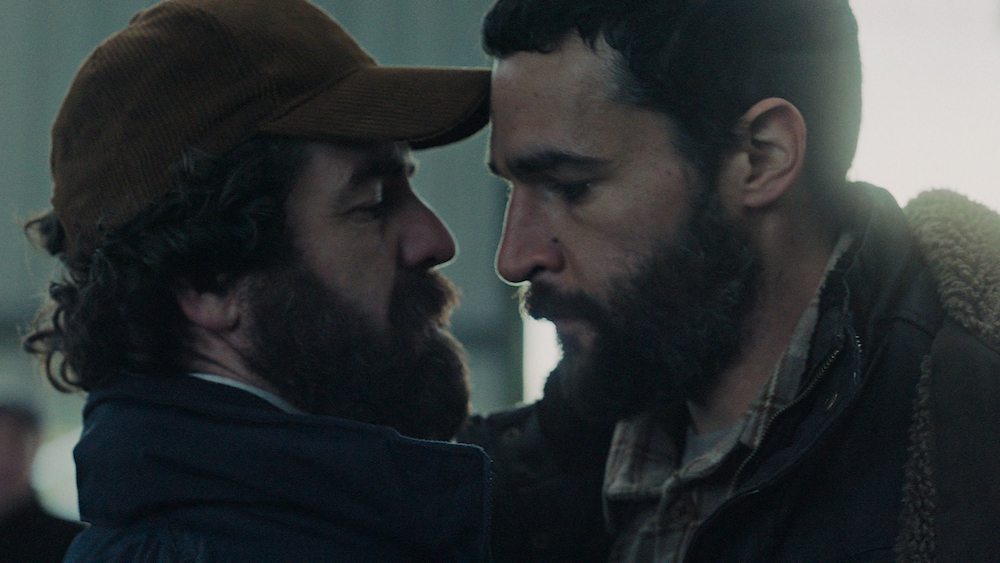 Caroline has little patience with her husband, who’s a bully, but he crumples easily and doesn’t retaliate much when she hits him. “Pull yourself together. Don’t let Jack see you crying, “ she tells him. She plans to get away, like Michael’s mother did, and has a job in Cork lined up. “I just can’t breathe,” she tells her son, who is still a child in many ways.
Michael decides to take the sheep from the mountain top, where he sits and tends them with his sheepdog, to lower pastures – to bring them down, in fact. His father is horrified – this hasn’t been done for 500 years, he remonstrates from his chair by the stove. Objects are often thrown. A phone is broken.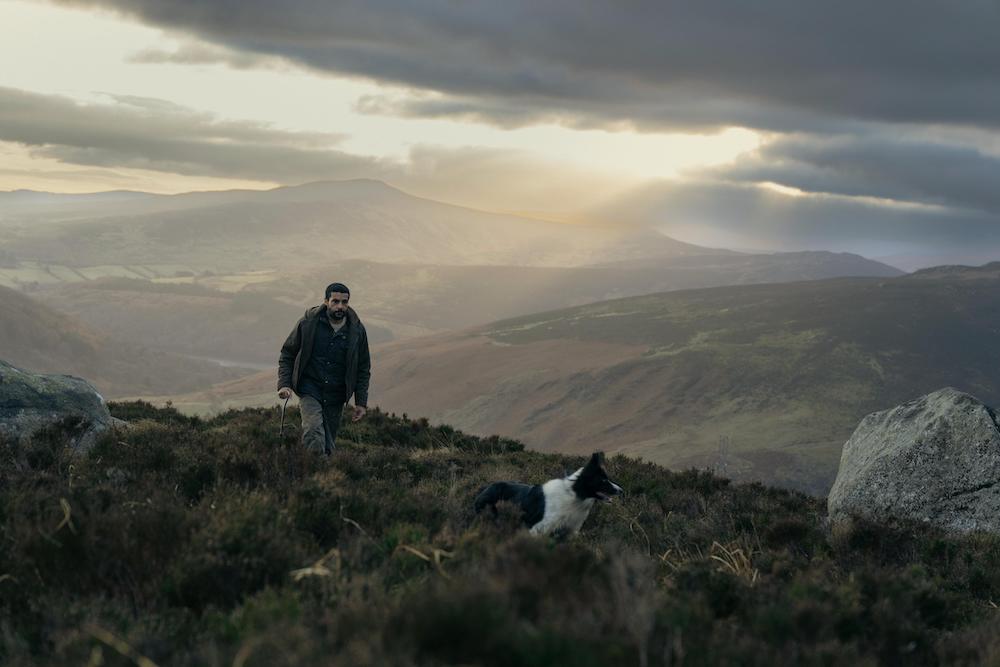 In a wonderful scene, Michael, a torch strapped to his head, lifts a ram on to his shoulders and struggles over the hills by night with it. But more taxing trials await. Jack and his nasty friend Lee (Aaron Heffernan), high on pills, mutilate the flock horribly one night – it’s almost unwatchable – aiming to sell sheep legs to an interested party. “We’re rich now, Jackie boy,” says Lee. But Jack is more complicated than he seems. “I don’t ever want to see you again,” he tells Lee. His half-smiling expression, later turning into guilt and fear, is wonderfully subtle. If only the horrific denouement had employed equal restraint.