Dennis Villeneuve’s Dune sequel is a sombre science-fiction spectacle that insists on the scale of cinema: erupting sandworms are Cecil B. DeMille colossal, the sound design centred on Hans Zimmer’s score thunderously enveloping. In a genre once jokingly called space opera, its grand aristocratic dynasties and passions justify the term.
It also treats its 1965 Frank Herbert source as a classic novel, teasing out abiding themes from its proto-hippie era. Vietnam-style aerial gunships hover, and atomic warfare, religious faith and extremism, ecology and colonialism give the narrative sinew.
We last saw boyish hero Paul Atreides (Timothée Chalamet) and his ferociously loyal mother Lady Jessica (Rebecca Ferguson) on the desert planet Arrakis, in the company of its indigenous, Bedouin-like nomad warriors the Fremen. The house of Atreides has been otherwise massacred in a sneak attack by the forces of slug-like, bloated Baron Vladimir Harkonnen (Stellan Skarsgård), with the secret blessing of Emperor Shaddam (Christopher Walken). Arrakis is the source of the Spice trade the Empire relies on, now mined by the Harkonnens under threat from mammoth sandworms and Fremen guerillas.
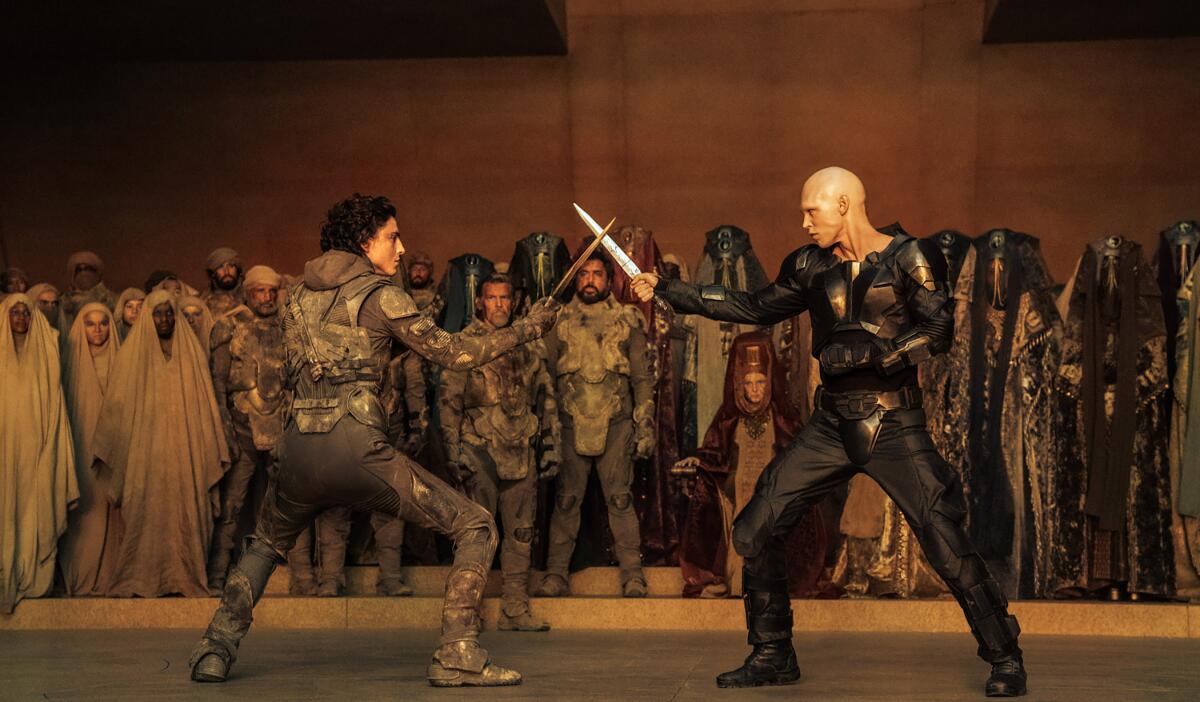 Paul riding a sandworm deserves a giant screen for its roaring sound and vision, and he’s accepted by some Fremen as a promised messiah, a faith Jessica cynically encourages with her own new psychic powers. Paul and his Fremen beloved Chani (Zendaya) meanwhile waltz in the dunes at dusk like Astaire and Rogers, but nightmare visions of holy war slaughter in his name make Paul resist his calling, till it consumes him.
Javier Bardem ekes rare humour from his Fremen leader Stilgar’s credulous faith in this kid messiah. Levity isn’t, though, Villeneuve’s gig. From the punishing child kidnap hit Prisoners (2013) to the philosophical, moving sf of Arrival (2016) and Blade Runner 2049 (2017), he increasingly rivals Christopher Nolan in serious ideas at epic scale. His imagery has more fluid poetry than Nolan’s sometimes clunky grandeur, and there’s a sense here of moving through shifting dunes on a planet where all is dust, bar bone-white caverns where ice-blue liquids transmute souls. Haddoken colonists meanwhile deploy squat, gun-metal black, Gigeresque machines. Tight close-ups of actors filmed in the fabled magic hour add warmly human elements to the digital splendour and intricate, thrusting narrative.
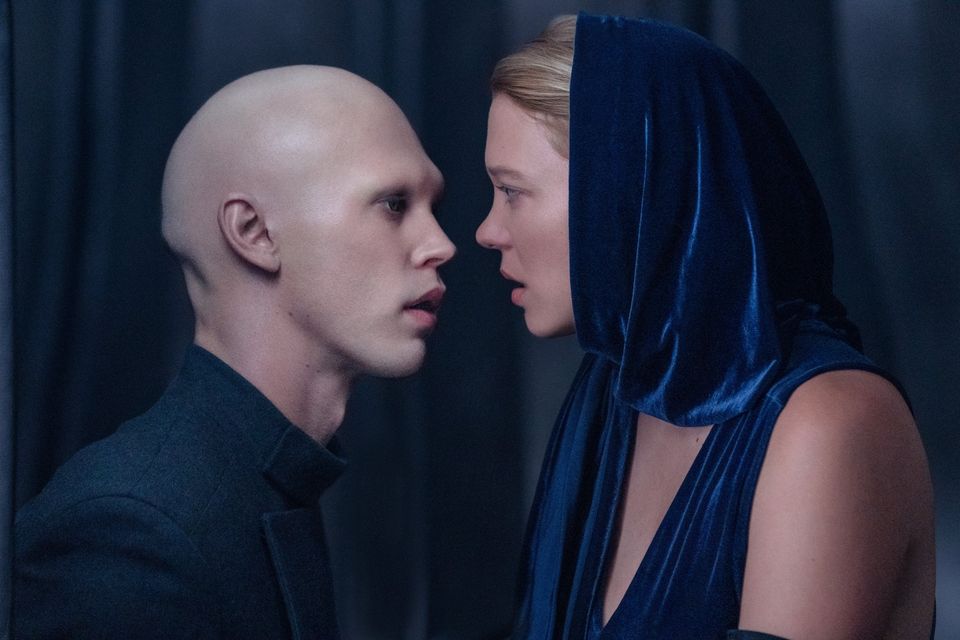 Elsewhere, the Emperor’s daughter Princess Irulan (Florence Pugh) plots her own survival, and Charlotte Rampling’s Reverend Mother pits her machinations against Jessica’s, each ruthlessly deploying acolytes resembling Christians and Muslims. This Dune’s female balance includes Zendaya’s rough-edged Fremen heroine and Lea Séydoux’s Lady Margot, effortless seductress of new villain Feyd-Rautha Harkonnen (Elvis’s unrecognisable Austin Butler, pictured above left with Seydoux), a psychopathic pawn in bigger games. Seen together, Séydoux and Butler could be Eros and Thanatos.
Only Peter Jackson’s The Lord of the Rings compares as a saga, and at 5½ hours to date (more is planned), Dune has the virtue of relative brevity – a climactic battle Jackson would wallow in is swiftly tactical here. You can debate Villeneuve’s po-faced, unfashionably reverent attitude, and mourn Jodorowsky’s madly impossible, abandoned Seventies Dune dream (David Lynch’s 1984 version meanwhile remains serviceably strange).
This Dune doesn’t lodge long in the heart. Villeneuve has though built a remarkable world filled with timely ideas. Prophecy devastatingly shadows pageantry, in the grimly triumphal end.