DVD: Timbuktu

Aberrahmane Sissoko's essential reflection on the occupation of the Malian desert town

share this article

A fatal struggle on the river in 'Timbuktu'

A heartbreaking, inexorable tragedy served by one stupendous visual composition after another, Abderrahmane Sissako’s Timbuktu is a masterpiece. The Mauritanian locations are a plausible stand-in for Malian Timbuktu and the desert around it – yes, I went there before it became a no-go zone -  with luminous cinematography by Sofian El Fani, but the human interest is never secondary.

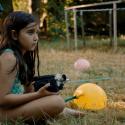
Sissako gets magnetic performances from the actors playing the beautiful Bedouin family at the heart of the film (pictured below), but he also manages to make the men of Ansar Dine, the jihadist extremist occupiers of Timbuktu, if not entirely sympathetic, then at least comprehensible. Everything feels natural, unforced; the expected – in the shape, for instance, of what might happen to the protagonist’s beautiful wife (Toulou Kiki) after an unwelcome visit – rarely happens.

Family scene in Bamako

The slowly unfolding disaster that enfolds central character Kidane (Ibrahim Ahmed dit Pinto), made all the more poignant by the fact that a manslaughter does demand some kind of justice and reparation, is powerfully counterpointed by the already famous set-pieces: a football match without a ball, a singer who is lashed for her “crime” turning her wailing into a stupendous vocalise, the stoning of a “sinful” couple, a Cassandra-like outsider who speaks truth to power.

It’s all the more remarkable that Sissako’s moral fable follows the more leisurely and sometimes opaque Bamako; one wonders what a third instalment in an essential trilogy about Mali might be like. There’s more to be said about the pride of Mali’s women and its music, both coming together in the all-too-brief extra which interweaves filming of Fatoumata Diawara in the recording studio with clips from the film, more of a trailer than a decent supplement.  
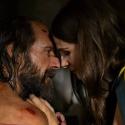
Everything feels natural, unforced; the expected rarely happens

rating

5

explore topics

share this article

Support the future of arts journalism

Subscribe to theartsdesk.com

Thanks so much for choosing genuinely independent arts journalism theartsdesk’s mission has never been more important – in an age of relentless algorithmic recommendation, sponsored content and unreliable AI, the expertise and discernment of individual critics deeply embedded in their specialist areas is absolutely vital.

If you want more of that in your life, why not subscribe now?

If you do this before the 31st August, you’ll be able to keep at this “founders rate” for life: your subs will never increase! You can choose to subscribe annually for just £40 simply click here
or monthly for £5 per month simply click here.

Not ready to subscribe?

If you want to support with a little extra or aren’t ready to subscribe just yet, there’s also the option to give direct to our crowdfunder to support our imminent redesign and exciting expansion with new features and collaborations Simply contribute here: https://gofund.me/c3f6033d.

However you choose to be involved, you can proudly say that you are picking the right side in the battle for truth and humanity in the modern information landscape. And we will be very glad to have you on board!

more film

Dip your toes into these Homeric movies before Christopher Nolan’s 'The Odyssey' ties us to its mast
A Bellocchio classic is retooled as a stifllng rich-brats' revenge story
A potential camera in every hand: SMart celebrates smartphone directors
Hitchcockian black comedy from Luis Buñuel’s Mexican period
Olivia Wilde's snappy comedy on the perennial subject of reviving a failing marriage
Kiss kiss, bang bang in a moving Middle East documentary
David Vann's acclaimed novella transposed to the screen with mixed results
The most important 'how-to video' you are ever likely to see
Satyajit Ray's poignant, thoughtful drama, set in 1960s Calcutta
Superman's party girl cousin earns her stripes underwhelmingly
Convoluted drama takes on Fab Four delusions, brotherly trauma and ultraviolence
Sophy Romvari's atmospheric first feature looks back at a tortured family dynamic