The myth of Modigliani, the archetypal tortured artist, was set in train while he was still alive and remains potent almost a century after his death. Every so often a few game academics try to put things straight, and now Tate Modern’s exhibition reappraises his considerable output not through the broken lens of his addiction, but in the sober daylight of his influences and milieu. The tragic glamour of Modigliani’s life proves endlessly hard to resist though, and critics and scholars alike continue to conflate his life with his work, his paintings treated as fatally biographical, to be judged as the beautiful but ultimately damaged product of a life misspent.
This tendency is distilled into a perfectly pure essence in the 1958 film Montparnasse 19 (also known as Les Amants de Montparnasse), confected as it is of all the many tantalising morsels of half-truth and rumour that make the myth of the artist so alluring. Beset by conflict and tragedy, the film itself succumbed to the curse of “Modi”, a nickname that in French is heavy with the double meaning of its homonym, maudit – damned. The original director, Max Ophuls, died during filming, and the death aged 37 of leading man Gérard Philipe, just a year after the film was released, resonated uncannily with the demise of Modigliani himself. When he fell ill, Ophuls handed the mantle to the younger Jacques Becker, a respected friend and colleague, but a director with a markedly different approach.
 By 1957, Becker had shot several films in colour, the decision to use black and white here in keeping with the film’s bleak austerity, which reflects Becker’s preference for stories of ordinary people, so evidently at odds with Montparnasse 19’s extraordinary subject. Even so, Becker’s fondness for scenes of streets and bars animated with the day-to-day activities of ordinary people provide the only reliable source of enjoyment in this grimly fatalistic film. A night-time bar scene opens with a wonderful, single shot that pans down from a mirrored ceiling before weaving through crowds of dancing couples, to finally rest on the face of Gérard Philipe’s Modigliani.
Although the title implies a more condensed timeframe, the film (original poster, above) purports to cover the final years of Modigliani’s life, as he is consumed by drug and alcohol addiction, stalked by death, which appears in the sinister form of a fictional art dealer, Morel. Reeling from bar to bar, Modigliani is attended by a procession of devoted women, all equally indulgent towards him, regardless of age or temperament. Barmaid Katherine whips out a needle and thread to sew a button back onto his jacket, while harassed old landlady Mme Salomon chastises him in a motherly sort of way, before handing him his freshly laundered shirts.
The women are all to varying degrees victims, bending to the will of Modigliani’s self-absorbed tyrant, and his most important muses, the English writer Beatrice Hastings, and the young painter Jeanne Hébuterne are sorely misrepresented. Hastings is a moneyed idler, who endures Modigliani’s violence with masochistic indifference, issuing the mild reproof, “One doesn’t beat a woman senseless and leave without saying goodbye.”
For all its bombast, 'Montparnasse 19' occasionally sparks with insight
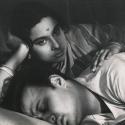
In looks alone, Anouk Aimée is a superb Jeanne Hébuterne, the deep bond between them intensified by the omission of the child they had together, and the second pregnancy that was almost to term at the time of Modigliani’s death from tubercular meningitis. While Hébuterne is an adoring doormat, patiently bearing Modigliani’s increasingly erratic and unreasonable behaviour, some glimpse of grit is seen in her defiance of her father, as she escapes from the family home to follow Modigliani as he recuperates in Nice after a bout of illness. Back in Paris, his condition worsens, and she paints postcards as he sleeps, saving money so that she can buy a bag of rice.
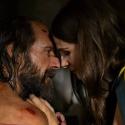
Gérard Séty plays Modigliani’s devoted friend and dealer Zborowski with considerable empathy, vainly attempting in the film’s most affecting scene (main picture) to broker a deal between an American collector and an obstinate and alarmingly sweaty Modigliani. For all its bombast, Montparnasse 19 occasionally sparks with insight, and the predatory Morel, who personifies the dealers who tried to manipulate the artist’s value as he was dying, serves to underline how readily vultures gather around talent. In a hallucinatory scene, fog and lights swim as Morel walks the artist towards his miserable end, before visiting Jeanne Hébuterne, not to tell her of Modigliani’s death, but to buy up as many paintings as he can before the news sends their value soaring.
Re-released on DVD and Blu-ray, with a new appreciation of the film by cinema historian Ginette Vincendeau, and a 55-minute documentary on its making, Montparnasse 19 is if nothing else a beautifully crafted piece of cinematography, and a monument to the enduring myth of the artist.