Hungarian director Ildikó Enyedi’s 1989 debut feature My 20th Century (Az én XX. Századom) opens on a grandiose scene depicting the first public demonstration of Thomas Edison’s electric light-bulb. We see the wonder of onlookers as they witness the new phenomenon, the brightness of light contrasting with surrounding darkness. The discovery would, in due course, give rise to cinema itself.
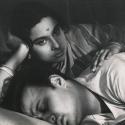
Enyedi’s film is shot in glorious black and white (by master cinematographer Tibor Máthé, who with the director supervised this luminous HD restoration), and in the course of its complex, non-linear plot pays ample tribute to the art of the moving image itself. Attempts to summarise the story only emphasise what a fantastically ambitious film My 20th Century is, all the more remarkable given that the director was only in her early thirties, a woman telling an effervescently feminine story in a rigid, male-dominated industry (just how much so, we learn from the extra on this Second Run release, a fascinating interview Enyedi gave to Peter Strickland last year).
 On top of everything, Enyedi had been refused a diploma for her final student film, which was banned for political reasons. Only chance support from the Hamburg Film Board got this expensive, complicated period project off the ground, with Hungarian backing following, and most remarkably there were no intrusions by the authorities during the production process. With the old Communist structures collapsing, Enyedi was lucky: backing for this kind of film simply would not have been there a few years later. Presumably, official contacts also played a benign part in the great Russian actor Oleg Yankovsky (best known outside his native land for Tarkovsky’s Nostalghia) taking the lead male role for a director the world had never heard of.
Yankovsky plays an enigmatic character known only as Z, whose various encounters with identical twins Dóra and Lili, and their related stories, provide the germ of a plot that is never afraid of the delight of detour. Their birth in 1880 in a Budapest slum follows directly after the wonders of Edison’s light-bulb (the Polish actress Dorotha Segda plays both characters, and their mother too). There’s a silent film-fairytale crossover style here, part of its fantasy effect coming from some scenes being told by the stars in the night sky. Separated in childhood, the girls' paths diverge: one flourishes exploiting capitalism (as well as her own beauty), the other engages with revolution.
Alongside a whole variety of bigger themes, there are diversions aplenty. Two brief scenes, both involving animals, stand out: in one, a laboratory dog (released by the stars) witnesses a whole series of events from the future; the other has a zoo chimpanzee telling the story of its capture (an object lesson about the dangers of curiosity). The film’s sense of discovery is rich, relating to Enyedi’s conviction that the early years of the titular 20th century opened up a new universe of knowledge, together with an optimism that would be duly abused as its decades passed.
There's such a sense of sheer fecund imagination at work, as well as an aesthetic that feels distinctly Eastern European in flavour. It was an illustrious beginning for Enyedi, winning the Golden Camera award (for best debut) at Cannes in 1989. Some hiatuses may have followed in her directing career, but the director now looks back on form: her new film On Body and Soul took the Golden Bear at this year’s Berlinale.