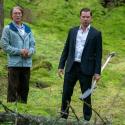
Iceland’s soul lies in its interior, a forbidding heartland which overwhelms 19th century Danish priest Lucas (Elliott Crosset Hove) on his ill-considered posting to this colonial backwater.
Director Hlynur Pálmason showed his talent for snapping unbending male psyches in a country of physical extremes in A White, White Day, a film as visceral as Scorsese in its riven machismo, Malick-like in its vaporous, uncanny landscapes, and wholly Icelandic in its saga-resembling trials and consequences.
Simmering masculine conflict sharpens the brew here too, though both films are laced with humour. The earlier work's bonily imposing Ingvar Sigurðsson returns as Ragnar, pictured below, an Icelandic guide unimpressed by “Danish devil” Lucas as he shepherds him through fast-running rivers and mountain passes. His absurdly dark folk songs are matched by his skill on harmonica, played at a wedding’s summer ease along with dancing and wrestling, the latter an initially comic excuse to take Lucas down a peg. But even the priest’s grappling proves stubborn. The antagonists represent Denmark and Iceland, colony and colonised, city and country. The loss of a translator strands both men. Lucas’s unwillingness to learn Icelandic casts Ragnar as a dumb brute every time he speaks it, and Lucas as an arrogant colonist when he won’t listen.
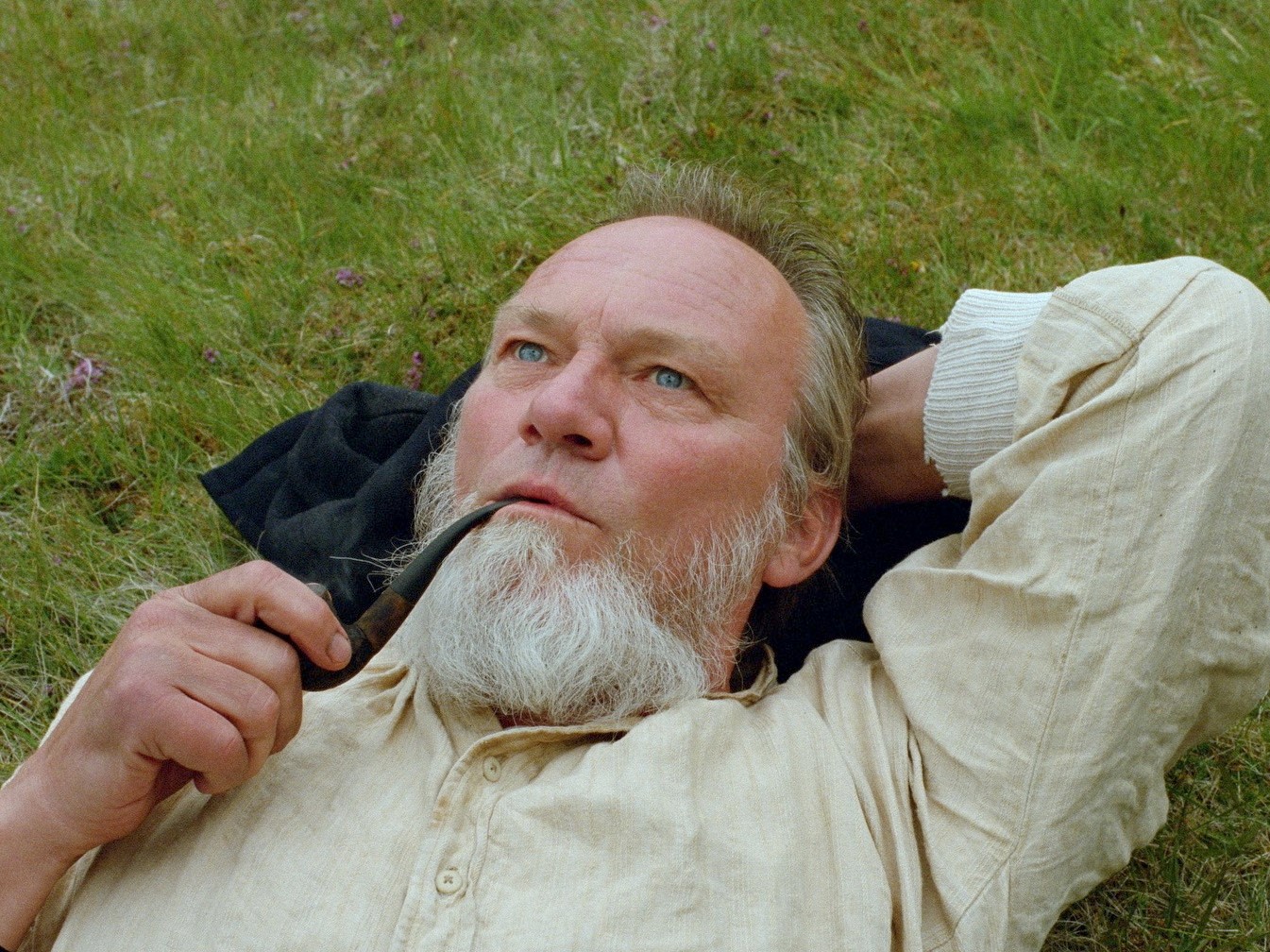 Lucas’s fanaticism isn’t in Christ – his faith is typically faulty – but his sense of superiority to his native flock. His dangerous ignorance finds expression in arduously photographing his harsh new home while staying aloof from its people, carrying his camera's tripod like spears. Carl (Jacob Hauberg Lohmann), the Danish dignitary at his village destination, partly shares this mindset, condescendingly laughing at native table manners. His beautiful Danish-Icelandic daughter Anna (Vic Carmen Sonne), though, seduces Lucas, desperately seeing him as an escape from country limits. She meanwhile flies free of earthly bonds on horseback.
Godland is a true epic, filmed with the sort of real-world endurance which made Apocalypse Now and early Herzog so gripping. Pálmason grew up and still lives in its territory, catching some scenes – a rotting horse, a volcano’s glowing flow – over years, filming and living inseparable. The camera’s momentous crawl down a waterfall to the insignificant humans at its foot, and the springy, sodden green of a place with a whole vocabulary for rain, portrays a divine, indifferent land. References to Western pioneers include a nod to John Wayne’s iconic screen-door exit in The Searchers, but Pálmason contends this is equally Iceland’s history, making Godland its own Northern thing.
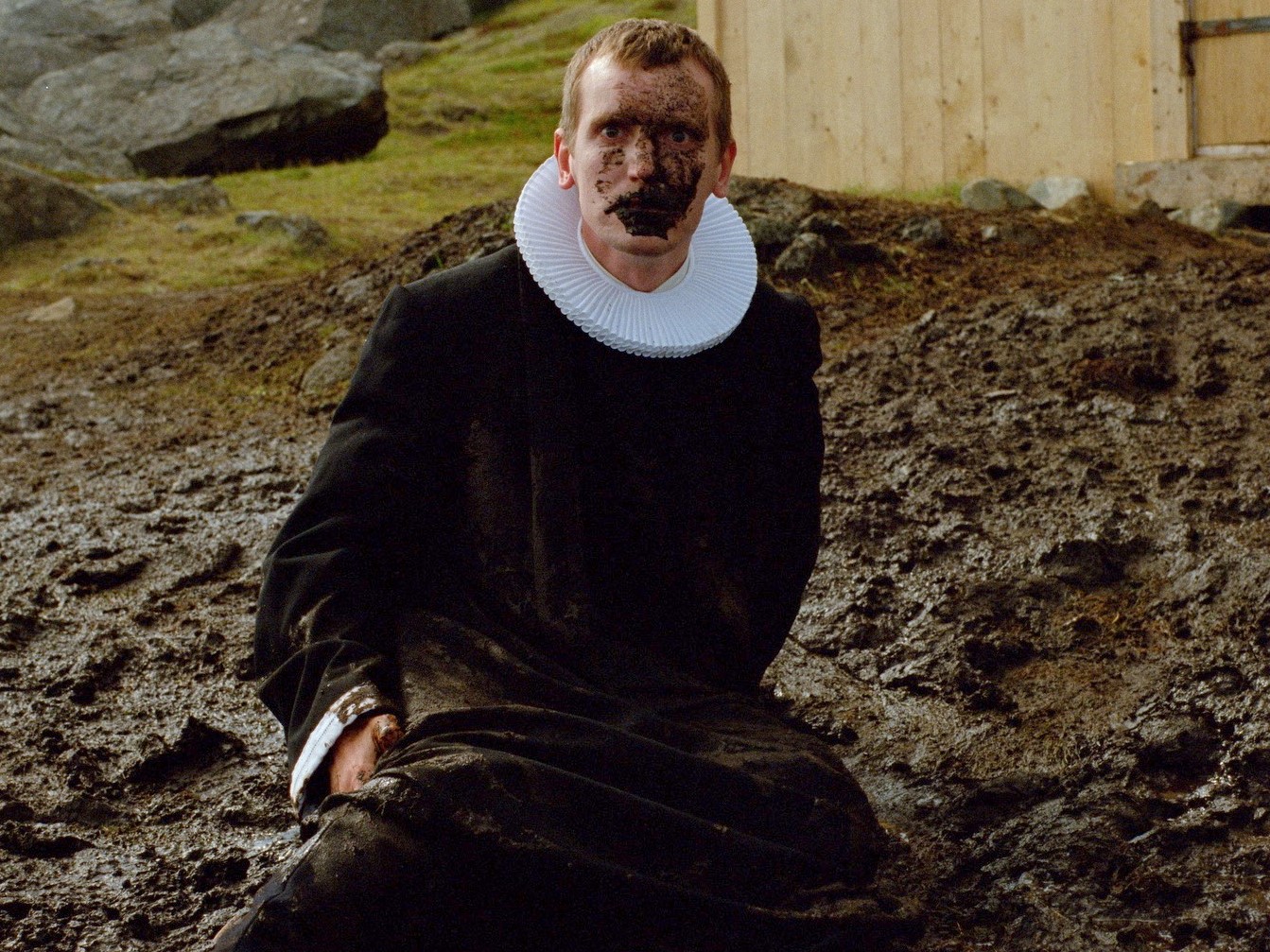 His characters are slippery, partly or wholly pining for another’s state, for escape or acceptance between worlds. This reflects Pálmason himself, born and raised in Godland’s terrain, but educated in Copenhagen, and so viewing both backgrounds critically. Godland is a horror comedy of Icelandic brutishness and Danish arrogance.
Ragnar’s final confession to Lucas is one a true man of God would welcome, despite its stinging conclusion, showing Pálmason’s understanding of faith. Lucas, though, is by now beyond such entreaties, broken and half-mad. Godland’s eventual violence is short and nasty and true to the sagas, but too neat, the only misstep in its satisfyingly subtle, shifting balance.