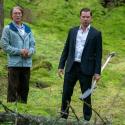
The Israel-Palestine conflict aptly infuses a haunted house in Muayad Alayan’s story of layered loss. The Shapiro family home in Jerusalem which grieving British-Jewish husband Michael (Johnny Harris) and daughter Rebecca (Rebecca Calder) retreat to as a sanctuary already bears the pain of past Palestinian owners, as ghost stories multiply.
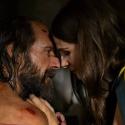
This is a girl’s adventure story from 10-year-old Rebecca’s perspective, as she longs for her mum, dead in a car crash in which Rebecca was a passenger, hurt repressed by her dad. “I keep trying to hide everything that might trigger her past,” he tells a school psychiatrist. Rebecca meanwhile glimpses another girl, Rasha (Sheherazade Makhoul Farrell, pictured below left with Calder), who flits through the house, invisible to Michael, and lives down its well.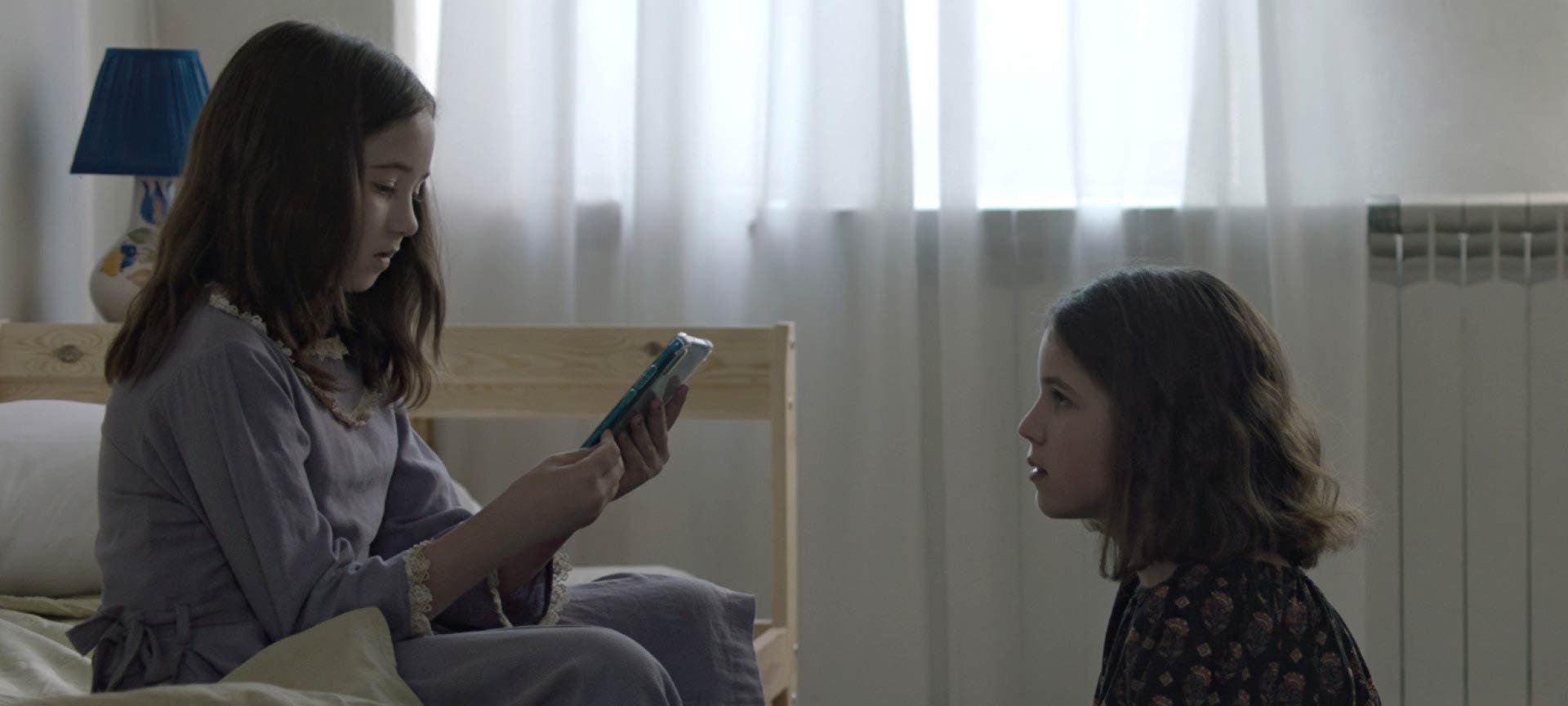 Michael, given muscular presence by Shane Meadows regular Harris and very English in Jerusalem’s more daunting milieu, seeks to move on with a new romance, and remains blind to Rebecca’s haunting. Curiously wandering this strange terrain, his daughter moves ghost-like through the city, innocently impervious to its shibboleths and borders. Seeking Rasha’s lost family, she slips by bus into the West Bank’s Bethlehem, smuggling herself through checkpoints with Christian pilgrims, and is welcomed as a child, not a Jew.
Palestinian Alayan and regular, sibling co-writer Rami Alayan offer a sympathetic but searching perspective on a place where the past is both national rationale and necessarily buried. The trapdoor over Rasha’s well is padlocked and concreted over, but its deep waters won’t be denied. Michael’s Israeli relatives discuss his dad’s lucky purchase of such a grand home when “the empty houses” were sold in the Sixties. But this domicile in the Valley of Ghosts was emptied by the 1948 Nakba, when Rasha hid underground. She still awaits her family’s return. Rebecca’s own English loss adds a parallel example of traumatised child ghosts held in place.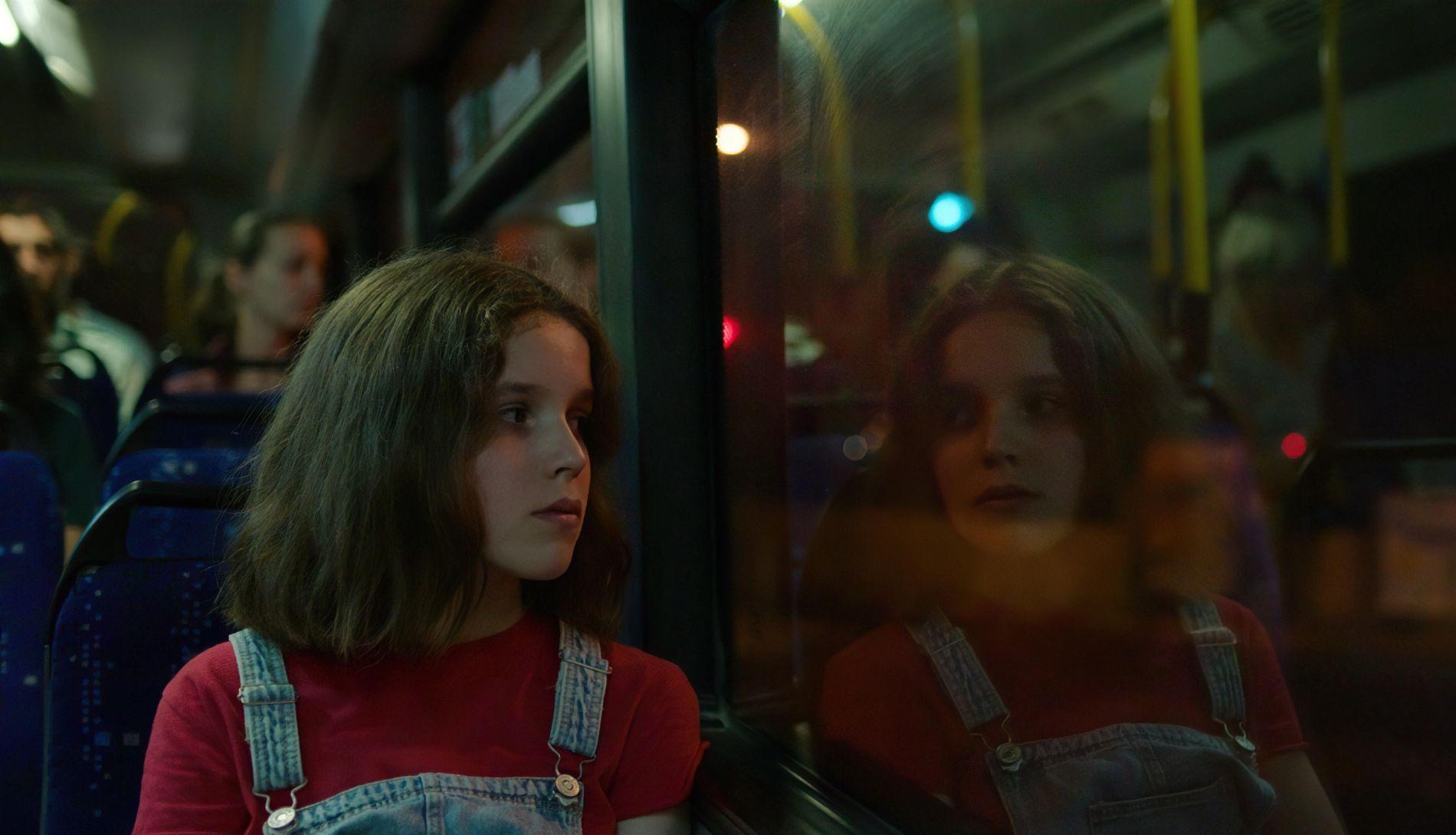 An appealing middle-class Israeli life of wine-lubricated dinner parties and good schools, superficially familiar to the Shapiros, operates in sometimes ancient streets, like the crepuscular alleys and regular shops and families of Bethlehem’s forbidden zone. The act of forgetting such Israeli comfort requires, with the Occupied Territories as unquiet, walled-off Id, shadows Alayan’s film, without demonising individual beneficiaries. Attitudes to police also shift, first greeted by Michael as dutiful respondents to an apparent crime much as he would in the UK, only for Rebecca’s transgressions and Rasha’s memories of murder to harden their complexion. In Alayan’s wry, humane telling, the police have their problems too, run ragged by this pesky kid.
The six million Holocaust ghosts which spurred Israel’s existence are a horror left for other films. A House in Jerusalem finds its sometimes reproachful soul in Rebecca’s bond with an elderly Bethlehem woman (veteran Souad Faress). The girl’s threading of a needle for her extends a hand across time. “The past hurts my head,” the woman anyway says.
Alayan wears her metaphorical conceit lightly, setting it in service of a broad yet intimate story of unresolved tragedy. The apocalyptic scale of inhumanity since October 7 doesn’t discount her quietly resonant tale.