LFF 2014: Goodbye to Language

Godard goes 3D, dazzlingly

share this article

Here's looking at you: Zoe Bruneau in film noir mode

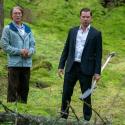
Jean-Luc Godard is still masterfully riding new waves, more than 50 years after Breathless. Following Film Socialisme’s epic engagement with digital cinema, here 3D becomes a dazzling illusionist’s trick. Goodbye to Language drew laughs when I saw it for sheer chutzpah, but also in the way Georges Melies elicited gasps at cinema’s birth. The sleight of hand of moving one 3D lens and not the other makes a man and woman overlap and morph, and our eyes scrabble for coordinates on a screen that’s restored as a blank slate of possibility, scrawled on by Godard the 83-year-old conjuror. Ravishing images in sometimes saturated colour – hands sinking themselves clean in a leaf-strewn pool, the snout of Godard’s dog looming out at us, a river, a breast – meanwhile couldn’t look more real.

This ancien terrible has retained a cinematic sense of wonder Spielberg would envy and a fascination with the moving image’s evolution, tempered by the political, social and romantic ennui of a May ’68 veteran staring gloomily at 2014.

Philosophical aphorisms fly like bullets, while bullets fly around Zoe Bruneau’s girl in a fedora and trench-coat, who could have stepped out of Casablanca, or Alphaville. Godard rails against the state’s totalitarian power (a bit rich from a Maoist), declaring “Hitler’s second victory”, and wonders what thumbs were for before they hit smartphones. “What they call images are becoming the murder of the present,” he declares, justly. But where Film Socialisme boiled with anger at iniquity, Goodbye to Language is more intimate, and sometimes desultory and slight, as it focuses on a man and a woman: her mostly nude, him often nude and noisily, ridiculously shitting as they debate their alienation. Not many revolutionary veterans are so impish, or still so able to sensually provoke.
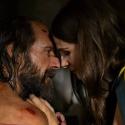
Not many revolutionary veterans are so impish, or still so able to sensually provoke

rating

4

share this article

Support the future of arts journalism

Subscribe to theartsdesk.com

Thanks so much for choosing genuinely independent arts journalism theartsdesk’s mission has never been more important – in an age of relentless algorithmic recommendation, sponsored content and unreliable AI, the expertise and discernment of individual critics deeply embedded in their specialist areas is absolutely vital.

If you want more of that in your life, why not subscribe now?

If you do this before the 31st August, you’ll be able to keep at this “founders rate” for life: your subs will never increase! You can choose to subscribe annually for just £40 simply click here
or monthly for £5 per month simply click here.

Not ready to subscribe?

If you want to support with a little extra or aren’t ready to subscribe just yet, there’s also the option to give direct to our crowdfunder to support our imminent redesign and exciting expansion with new features and collaborations Simply contribute here: https://gofund.me/c3f6033d.

However you choose to be involved, you can proudly say that you are picking the right side in the battle for truth and humanity in the modern information landscape. And we will be very glad to have you on board!

more film

Dip your toes into these Homeric movies before Christopher Nolan’s 'The Odyssey' ties us to its mast
A Bellocchio classic is retooled as a stifllng rich-brats' revenge story
A potential camera in every hand: SMart celebrates smartphone directors
Hitchcockian black comedy from Luis Buñuel’s Mexican period
Olivia Wilde's snappy comedy on the perennial subject of reviving a failing marriage
Kiss kiss, bang bang in a moving Middle East documentary
David Vann's acclaimed novella transposed to the screen with mixed results
The most important 'how-to video' you are ever likely to see
Satyajit Ray's poignant, thoughtful drama, set in 1960s Calcutta
Superman's party girl cousin earns her stripes underwhelmingly
Convoluted drama takes on Fab Four delusions, brotherly trauma and ultraviolence
Sophy Romvari's atmospheric first feature looks back at a tortured family dynamic