This movie has a couple of key advantages - it doesn't have any serial killers or zombies in it. It also pays the audience the compliment of assuming that it has a certain amount of intelligence, enough at least to appreciate being bamboozled by its relentless cleverness and convoluted trickery.
It's a strange beast, though. I thoroughly enjoyed about 70 per cent of it as it took off on a whirling thrill-ride which seemed to defy the laws of physics and probability. But perhaps inevitably, all those spinning plates came crashing back to earth as director Louis Leterrier struggled to tie together plot, character, technical gimmicks and some last-minutes surprises. It's like Wile E. Coyote suddenly finding himself running in space above a mile-deep canyon. You know he can only go one way.
The set up is fairly straightforward. We meet four magicians - Daniel Atlas (Jesse Eisenberg) who does spectacular card tricks; street mentalist Merritt McKinney (a leering Woody Harrelson), who uses his hypnotic powers to scam punters for cash; Jack Wilder (Dave Franco), who bets his audiences that they can't work out how he does his tricks but still steals their money if they do; and Henley Reeves (Isla Fisher), who does magician-in-peril stunts like getting trapped in a tank of piranhas.
 A mysterious stranger summons the foursome to a New York apartment, treats them to a mesmerising holographic display, and before you can say "Derren Brown" they're playing giant gigs in Las Vegas as The Four Horsemen. Even though one of them's a woman and they don't ride horses.
The Horsemen are bent on creating events sensational enough to stun the world, and their Vegas show is filmed like a giant rock gig with swooping, diving camerawork which makes you feel seasick. They somehow convince the crowd that they've transported a Frenchman to a bank vault in Paris, from which millions of Euros are siphoned and come cascading down from the ceiling in Vegas.
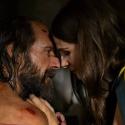
FBI agent Mark Rhodes (a pleasantly rumpled Mark Ruffalo) is assigned to investigate the theft, and he's joined by slinky French Interpol agent Alma Vargas (Mélanie Laurent), but there's not enough evidence to arrest the Horsemen (Laurent and Ruffalo pictured above). Atlas goads Rhodes with bombastic declarations of his own insuperable cleverness, which makes you wonder if Jesse Eisenberg's ambition really is to be typecast as the world's most obnoxious geek.
For round two, the crew go to New Orleans, where we get a glimpse of a Robin Hood-style agenda. The troupe are being sponsored by billionaire insurance magnate Arthur Tressler (Michael Caine), but the relationship turns sour when the magicians magically empty Tressler's bank account to compensate victims of Hurrican Katrina, who thought they were covered by Tressler's company.
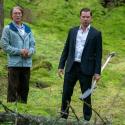
 To say more might be too much (though it's so complicated I'm not sure I could even describe it), but included in the mix is an annoyingly smug Morgan Freeman as Thaddeus (pictured left), a former star magician who now debunks other magicians. He thinks he knows what the Horsemen are up to, and the Feds want his help.
At its slickest and smartest, Now You See Me suggests a fizzy cocktail of Ocean's Eleven and The Prestige. At its incoherent worst, it forces you to remember that director Leterrier's last flick was Clash of the Titans. He basically runs out of road, hiding the Horsemen's big secret until it's too late, and fatally squashing it in just before the final credits with a congealed dumpling of back story and a dodgy punchline. The film is nearly two hours long, but for once a little more running time might have brought a lot more clarity.
Watch the opening sequence of Now You See Me