Ulrich Seidl claims there’s a simple reason he goes easier on young teenager Melanie’s stumble through 21st-century sexual desire and disaster than he did with her mum and aunt in Paradise: Love and Paradise: Faith. Going further with her requited crush on an adult would have involved exploiting his young star Melanie Lenz. So a director known for his provocations dutifully pulls up short. There’s nothing here to compare with mum Margarethe’s morally unmoored buying of male prostitutes in Mobasa in Love, or militant Catholic aunt Maria’s masturbation with a crucifix in Faith. But Seidl’s restraint isn’t just legalistic. He seems to care about all his protagonists, and young Melanie most of all.
Glimpsed in the first two films of a trilogy which mainly deals with the commodification and difficulty of sex, we follow Melanie at a US-style diet boot camp, a holiday as bizarre as her mum’s as a lustful “sugar mamma” in Kenya, and her aunt’s evangelising in Viennese suburbs. But Melanie is amiable, with a ready grin, and swiftly adapts to her young teenage dorm-mates’ midnight raids for sweets and beer, listening wide-eyed to a 13-year-old new friend’s voice of supposed sexual experience. It’s the silver fox of a camp doctor (Austrian stage veteran Joseph Lorenz) who Melanie decides she wants. The latter’s urbane veneer cracks into something more sleazily furtive as their “medical” contact grows.
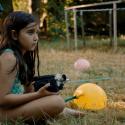
 The interaction between the teenagers and their adult wardens is more obviously, gently comic than the trilogy’s been before. The moment where you worry Melanie (pictured on the right) has fallen among the wolves is her foray with her friend into the local village’s barely alive bar, where we hear the sometimes brutal-sounding commentary of two older boys, before one moves in on Melanie on a dare. Our heroine is delighted at the dance-floor attention, and her keeling over in a stupor doesn’t stop the boy’s mobile-filmed attentions, but Seidl doesn’t condemn this clumsy predator much more than his innocently willing victim. Observing realistically intrepid teenage kicks is the idea here.
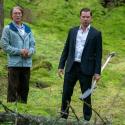
Seidl’s apparently dispassionate camera frames scenes with little inflection. Exceptions are the Doctor’s two trips into the woods, first following Melanie by foot and later with her drunkenly comatose in his car, suggesting dark, fairy tale danger. But it’s the adult who’s most knowingly fearful. After the conscious Melanie signals him to follow then lets him catch up, her usually lively face becomes gloomily serious and unsure, a sacrificial lamb tying herself to half-understood sexual mores.
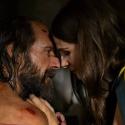
 The scene finishes with her childishly hugging the adult, whose response hesitates between appropriate and amorous. When she’s safely unconscious, he crawls and sniffs around her in a weird woodland tableau (pictured above) – a hyena, not a wolf, wanting carrion, not prey. There’s something pathetically comical, it turns out, about a potential paedophile lacking the nerve to act (so far as we see, before Seidl’s discreet shots stop).
You could say Melanie is in training wheels to follow her overweight, sexually foolish mum. But any judgement Seidl passes is softened by admiration that they press on. His relentless sympathy, and three brave actresses, keep you watching this strange trilogy.