“No one can say you didn’t try,” shipyard worker Maurice Flitcroft (Mark Rylance) is told, shortly before bluffing his way aged 46 into the 1976 British Open, having never played golf before. The British love of the underdog is our popular cinema’s most appealing trait, valuing dreamers and chancers over power and glory, and the real life Maurice certainly fits the bill. Rylance makes him slow-talking but not quite slow-witted, a sometimes wry, sometimes naïve holy fool, eccentric but always moral; his speech patterns seem to calmly navigate constant unseen obstacles, much like his stoically abysmal rounds of golf. Inverting much of sport’s real appeal, he’s heroically incompetent.
Young Welsh director Craig Roberts uses golf-based fantasy sequences to expand Maurice’s drab world, but it’s golf itself, with its class-bound codes, garish clothes and green expanses, that really entices this constitutional escapist, who had previously dabbled in faux-Picasso painting, songwriting and acrobatic diving. He’s aided and abetted by adoringly sympathetic wife Jean (Sally Hawkins, pictured bottom left with Rylance) and their similarly enthusiastic, would-be disco-dancing champion twins Gene and James (Christian and Jonah Lees). Stepson Michael (Jake Davies), climbing the shipyard’s corporate ladder despite mortifying Maurice, and Royal and Ancient club secretary Keith Mackenzie (an uncharacteristically uptight, blazered Rhys Ifans, pictured below right) are the killjoy antagonists.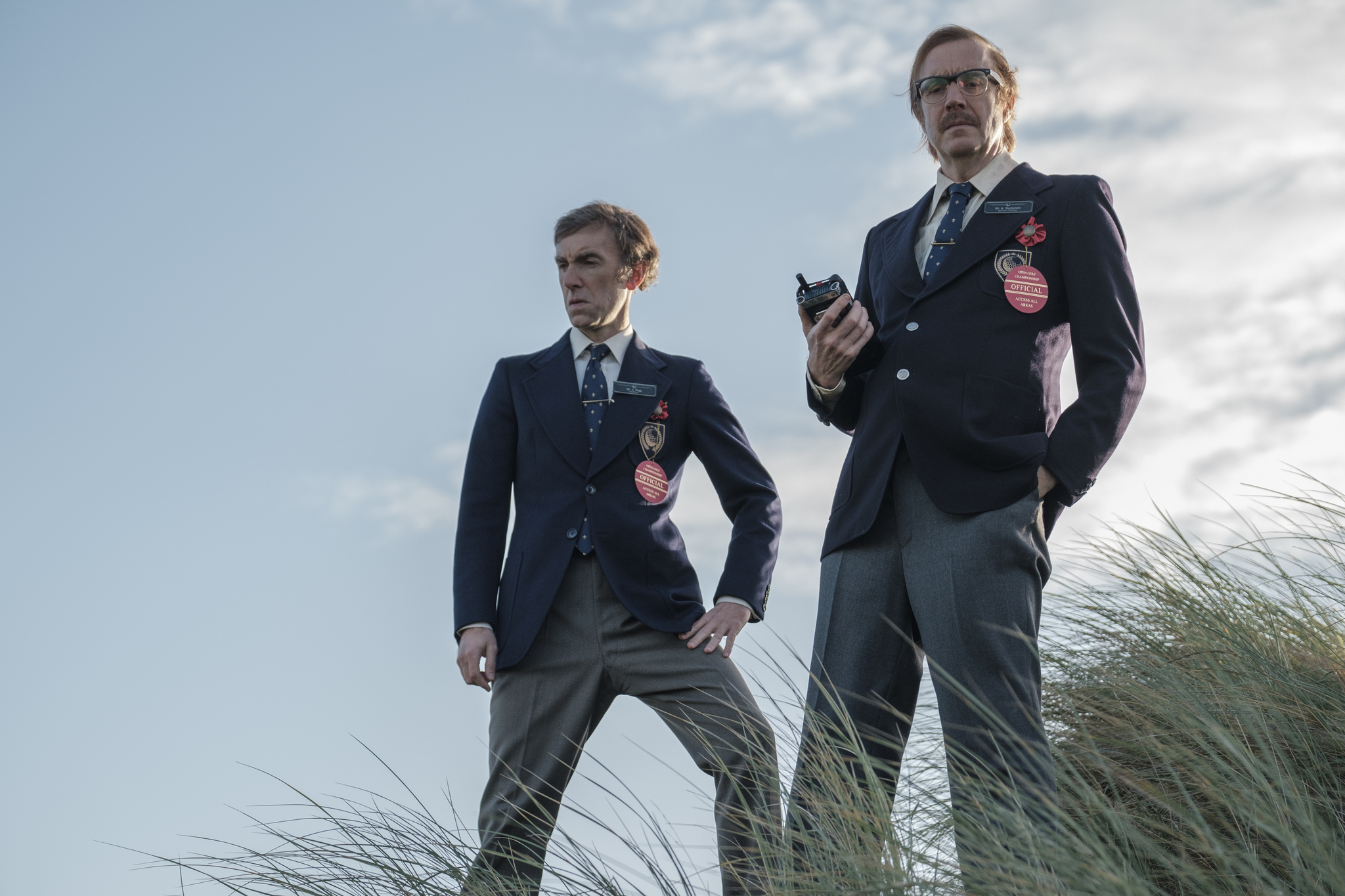 This is a very gentle, soft-focus film, going a long way on Rylance’s comic timing and bedrock humanity. Roberts and screenwriter Simon Farnaby (co-writer of Flitcroft’s biography and Paddington 2) combine the slapstick of camera-cracking scuffed shots with Seventies commentators’ meditatively raised cigarettes as Maurice’s anti-record-shattering scoreboard carnage mounts. The twins’ disco endeavours, matched by a period soundtrack, reinforce the near camp can-do spirit. A dressing-room encounter with young Seve Ballesteros, given tips by Maurice prior to realising his own dreams in more conventionally spectacular style, is choicely absurd.
Ron Shelton once specialised in more thoroughgoing, semi-comic examinations of flawed sporting heroes, including Kevin Costner’s self-destructive, hard-blasting golfer in Tin Cup (1996). The Phantom of the Open instead splices the Ealing and kitchen-sink traditions. “Don’t let the bastards grind you down,” a workmate yells, quoting Saturday Night and Sunday Morning’s Arthur Seaton. Wider currents are vaguely alluded to, as the infamous Thatcher-era Westland defence deal is somehow threatened by Michael’s embarrassing dad. But this is a much smaller story than that.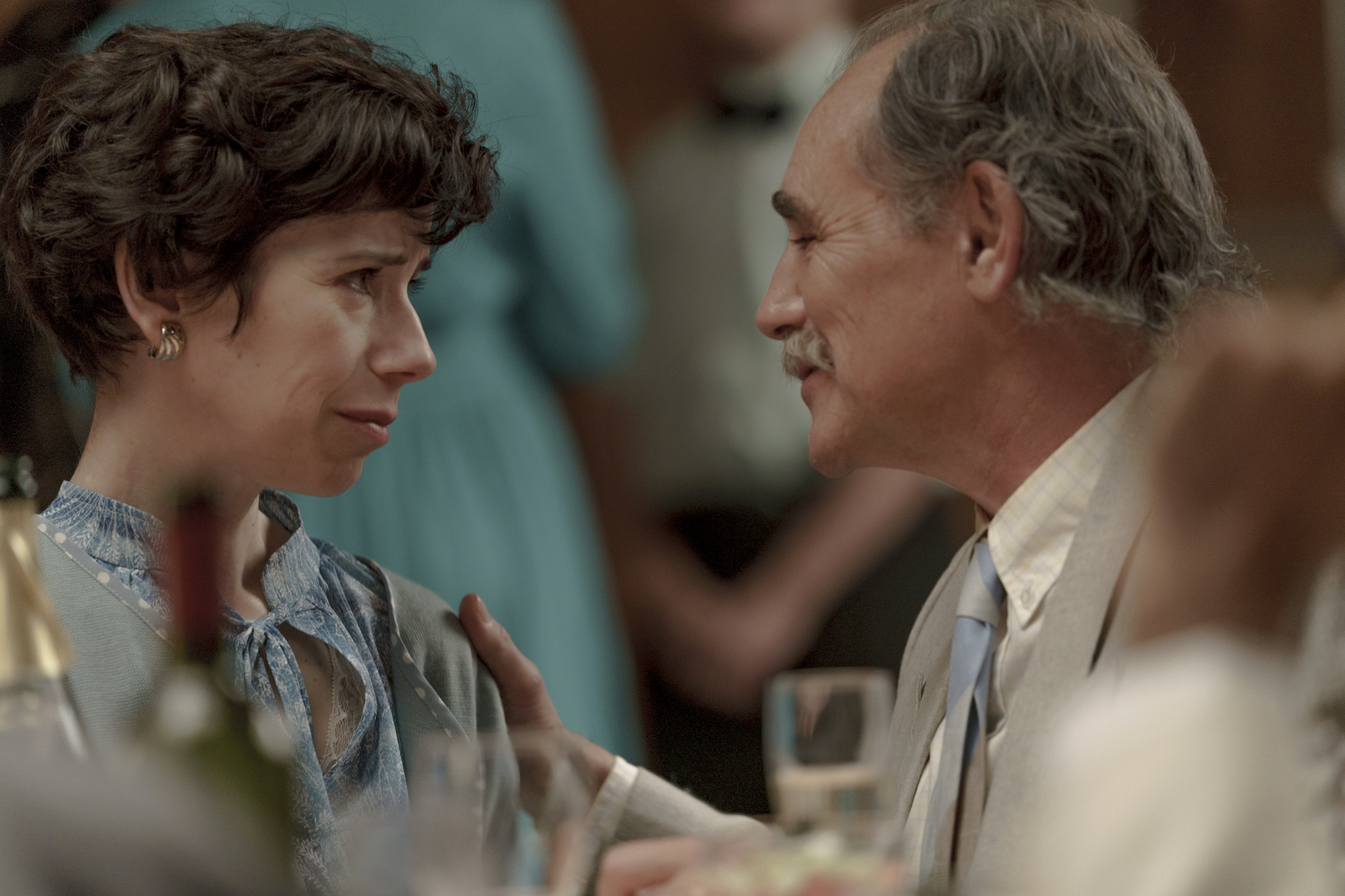 Following 1976’s farce, the Eighties finds greying Maurice out of shipyard work and living in a caravan, with the twins also scuppered after the disco boom. He still talks vaguely of “living the dream”. “Depends what the dream is,” Michael acidly retorts. Fantastical thinking’s practical pitfalls are suddenly plain. So too the nonsense of admiring an Eddie the Eagle (a considerably more hard-working, adept skier than golf hack Maurice) over the similarly improbable, wonderland genius of a Seve or Shane Warne. The Phantom of the Open bypasses that logic thanks to Rylance’s winning conviction. Equally, Sally Hawkins’ miraculous capacity for ordinary decency makes this the story of a very long love affair. Playing straight down the middle of expectations more competently than Maurice ever could, this is a sufficiently charming entry in a long British tradition.