The decades-long stage relationship between Judi Dench and Trevor Nunn translates to surprisingly little with Red Joan. This is veteran theatre director Nunn's first film since Twelfth Night in 1996. Top-billed in a supporting role, Dench brings her customary rigour and a continually fretful mien to this semi-fictionalised retelling of the plight of the so-called "granny spy", Melita Norwood, who was charged in 1999 with passing secrets to the Russians in their efforts to build an atomic bomb. (The film's actual source is Jennie Rooney's 2013 novel of the same name.)
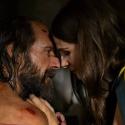
Caught unawares by the authorities one day whilst doing (you guessed it) some gardening, the ordinary-seeming OAP Joan Stanley, as the putative traitor is here called, is whisked off for interrogation. Her arrest occurs much to the shock of her son Nick (Ben Miles), a grim-faced barrister who takes a while to come to mum's defence. But the bulk of Lindsay Shapero's screenplay is in fact given over to those Cambridge days during the late 1930s when the young physics student Joan (a sweet-faced Sophie Cookson) gets swept up in a politicized world that leads to her newfound moniker as "little comrade". Not to mention, on this evidence, to lots of sex, which makes collaborating with the reds into the best pretext for rumpy-pumpy. (That and a recitation from The Tale of Two Cities that really is too hokey to be believed.) Her principal bedmate is a German-Jewish member of the Komintern called Leo (Tom Hughes), who dips in and out of Joan's life, wreaking emotional havoc along the way. The undergraduate Joan also falls under the sway of an unhappily married prof called Max (Stephen Campbell Moore), who argues a need for a bomb this side of the Atlantic so as to keep pace with the US. Sashaying into periodic view to impart equal measures intrigue and gossip is Sonya (the charismatic Tereza Srbova), who propels the apparent naif that is Joan towards a life of adventure and advocacy embarked upon entirely in good faith. Joan believes that a Russian bomb will quite simply serve the greater societal good, even if history, and the authorities, begged to differ.
The juice of the story, however melodramatically presented, resides in the flashbacks, and Nunn must have surely enjoyed anatomising goings-on at the university he attended, albeit 20 years or so after events depicted here. But the dynamics between Joan and the men in her orbit rarely rise above the pulpy, and one can't help but feel after a while as if her character is being as insistently patronised by the material as she is by those who insist on calling her "the little lady". What happened to Joan between the war and May, 2000, where the film begins? We get shards of information here and there alongside the sense that the real drama has somehow been relegated to the wings: a person living with a past that at any minute threatens to do her in. Nick, too, remains a total cipher, and Miles under the circumstance can't do much more than glare.
Dench, hair tousled and eyes brimming with fear, moves from disbelief to a full-on awareness of the disarray that she has brought upon her son and herself, but the part still seems to be missing a scene or two to justify the participation of so distinguished a player of it. The younger actors for the most part look very fine-cheeked and pretty (the men most of all) and leave the impression that spying was once just a byword for sex. If MI6 is looking for a recruitment slogan, that might not be such a bad one with which to start.