The British writer and Africa specialist Michela Wrong recently wrote a whistle-stop summary of the upheavals that afflicted Congo in the early 1960s:
“A botched independence swiftly followed by army mutinies and attempted secession by two renegade provinces, egged on by a colonial power. A charismatic black leader who comes to a sticky end, aged just 35. A first-of-its-kind UN military operation climaxing in a mysterious plane crash and the secretary-general’s death. Cold War skullduggery of the most nefarious kind, with a poison vial stowed in a safe. Not one, but two, coup d’états.”
These are the raw materials that the documentarist Johan Grimonprez shaped into Soundtrack to a Coup d'Etat, his new film about Congo's political strife. They might be more than enough to be getting on with, one could argue, but Grimonprez has other enthusiasms, personal imperatives, and versions of the story that he wanted to relay in his exhaustive documentary.
First, there is the fact that, as a Belgian, Grimonprez has the perspective of his country’s often shameful involvement in the Congo to deal with and work through, just as his fellow director Thierry Michel did in Mobutu, Roi du Zaïre (1999), a chilling portrait of the dictator, Joseph Mobuto, who seized power in 1965. Grimonprez's film doesn’t have a character whose vividness matches that of the brutal Mobutu. One character who does leave a strong impression through his frequent and brief appearances is a tub-thumping Nikita Krushchev.
 Second, Grimonprez uses jazz music as a crucial thread. There are two key places in the film where jazz converges with the true story of the 1960-1 crisis. The CIA was hyperactively involved across the strategically important and uranium-rich Congo, to the extent that it played a role in instigating a visit to the country by the State Department’s “Jazz Ambassador” Louis Armstrong. His visit would be a smokescreen for the agency’s devious false flag activities.
Then there was the protest made by the singer and activist Abbey Lincoln and the drummer Max Roach, who were a couple at the time. Lincoln – alongside Maya Angelou and others – had formed the Cultural Association of Women of African Heritage, which in February 1961 burst into the United Nations building in New York to protest the Belgium-assisted assassination the month before of Patrice Lumumba, Congo's democratically elected prime minister. The unforgettable moment when Lincoln’s powerful voice can be heard in the UN's Security Council Chamber, about two hours into the film, is one of its high points.
Grimonprez also makes the jazz of the period reflect and comment on the story. The music of John Coltrane, Ornette Coleman, and other jazz luminaries provides a "soundtrack" to the film as the frame moves back and forth from their performances to historical events. It has been described by the New York Times as "propulsive", but the inclusion of rhythmically assertive music doesn't always disguise the film's discontinuity and bittiness.
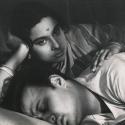
Grimonprez broadens the movie's perspectives further by introducing the important but enigmatic figure of Andrée Blouin (pictured above centre), the late socialist political activist who was Lumumba's chief of protocol. We hear extracts from her book My Country, Africa: Autobiography of a Black Pasionaria (which she disowned), as well as from Koli Jean Bofane's Congo Inc.: Bismarck's Testament and Conor Cruise O’Brien's To Katanga and Back: A UN Case History.
I remember a jazz documentary-maker telling me that the cross he had to bear was that no television company would let him pursue a conversation about any film that was longer than 52 minutes. There are resonant stories and great music to be heard in Soundtrack to a Coup d'Etat, but its 150-minute running time is too demanding for anyone who isn't already a student of decolonialism in Africa.