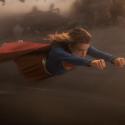
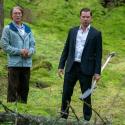
Ella Glendining has made an impressive documentary debut with the autobiographical essay, Is There Anybody Out There? Born without hip joints and very short thigh bones, we first encounter her as a perky, confident little girl walking in the woods near her home, in video footage filmed by her parents. They were aware from the first pregnancy scan that she was different and have done an exemplary job of ensuring that she had as happy a childhood as possible.
As an adult Glendining’s confidence shines through and it informs her approach to the medical establishment throughout her documentary. When she herself falls pregnant with her non-disabled boyfriend, she is determined to deliver her baby without surgery, and finds a open-minded obstetrician keen to explore that option. When it becomes clear that Glendining’s physical differences mean that she will need a C-section, she pragmatically accepts it and makes sure that the delivery is filmed on her terms.
But even with great parents, a partner, child and supportive friends, Glendining feels an element of loneliness and longs to meet other people who look like her. It’s one of the upsides of the internet that no matter how rare a condition is, one can usually find other people who share it online. Glendining travels to America and meets a charming young man with similar limb anomalies who wants to work as a comedian and a feisty young woman who doesn’t let her physical difference get in the way of her career as a make up artist. The scenes with these two are warm and funny and give depth to the documentary.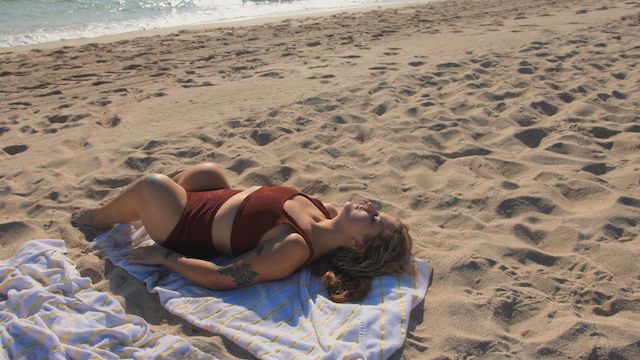 But the downside of Glendining’s internet research is that she also finds a surgeon, Dr Dror Paley, who has made an excellent business out of his pioneering limb-lengthening procedures. Parents contact him to give their young children, through surgery, the chance to have their legs straightened and extended. Meeting Dr Paley, Glendining is told it’s too late for her, the optimum age for surgery is three-years-old.
Aware that if her parents had gone down this route, much of her childhood would have been spent in and out of hospitals, with a degree of pain or discomfort for long stretches of time – all to ensure straighter, slightly longer legs, Glendining is adamant that this is not the right approach. She argues very persuasively from the perspective of the social model of disability which contends that it’s the way the world puts up barriers – for example in her case, insufficient ramps for wheelchairs, standard kitchen cabinets and light switch positions placed out of reach – that is disabling rather than the impairment itself. It would also help if the general public were less patronising (at best) and insulting (at worst) when they encounter people who are different.
The social model has been instrumental in changing attitudes for the better and documentaries like this with joyous, positive on screen portraits of disabled people leading happy lives are hugely influential. They promote a positive message that acceptance of people’s differences is key to improving the lot of everyone in society, not just those born with conditions like Glendining's – as we age we all become disabled to a degree.
But we should be wary of dismissing all medical intervention as coming from a blinkered, ableist standpoint. While surgeon Dr Paley comes over in Glendining’s documentary as a smooth-talking evangelist convincing parents of the aesthetics of longer limbs per se, it would have been good to have heard the balancing argument from disabled people who have benefitted in terms of pain reduction and overall health through a range of surgical interventions in childhood.