It’s an odd enough statistic that only four of Alan Ayckbourn’s plays have been made into films. Odder still that, of those, three are the work of Alain Resnais, the grand old man of the nouvelle vague. Yes, it was a curious moment when the director of Last Year in Marienbad got into bed with the author of Bedroom Farce. The last of those films, Coeurs, was no more than a mildly engaging romantic roundelay, but it was freighted with Anglo-Saxon certainties. Things like plot, meaning, a vague interest in the needs of the audience. Not far shy of 90, Resnais has for the first time adapted a French novel. You can sort of imagine the results.
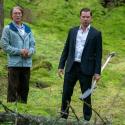
Last year Wild Grass – Les Herbes Folles, to use its French title – was shown at Cannes (Resnais and the cast pictured below right), where no one could quite bring themselves to give the film itself an award, but Resnais was the deserving recipient of a lifetime achievement gong. The film’s narrative is taken – almost word for word, at some points – from a book called L’Incident by Christian Gailly. If you’ve read much contemporary French fiction you’ll not be astonished to hear that you have to sift through much impressionistic flummery to get to the eponymous incident. Maddening opacity and unfettered navel-gazing are the dish of the day.
 The set-up, such as it is, is that a middle-aged woman has her bag snatched. A man finds her purse and returns it via the police. This all takes about half an hour, as Resnais explores a new novelistic way of transferring character and motive from the page to the screen. In practice, that means an awful lot of voiceover. It puts you in mind of the many other films celebrated for keeping plates spinning through a daredevil opening – Touch of Evil (the long uncut shot), Once Upon a Time in the West (no dialogue for 15 minutes), Saving Private Ryan (a lot of bullets for 20 exhausting minutes). Resnais dares to have his male lead simply read out the novel he may or may not be working on for what feels like forever. It was like Granada’s Brideshead Revisited, without the sex, or the snobbery, or the exteriors, or any of the sweet sorrow.
This being France, a fantastical relationship sprouts from the random connection offered by the purse. The woman’s papers reveal that she has a private pilot’s licence. Of course she has. Which mysterious French heroine wouldn’t? (However she doesn’t, from the evidence of her electric red fright hair, own a comb.) From this unpromising topsoil a dilemma sprouts. Should the writer call directly to return the purse? No. Yes. No. Should he leave his name with the police? Yes. No. Yes. Then when she thanks him by phone for returning her purse, can he, might he, should he continue contact? Please!
The French have a gift for agonising over such decisions. The woman, Marguerite, is played by Resnais’s wife and muse Sabine Azéma, while André Dussollier plays her admirer Georges. At one point a policeman (played by Mathieu Amalric from The Diving Bell and the Butterfly) supposes he is around 50. Is this a function of the film's delusions or vanity? Because Dussollier has got to be well north of 60, and looks more. Such questions are ceaselessly posed, almost invariably unanswered.
In due course, Marguerite, who is also a dentist, decides to court her stalker only after he has slashed her tyres. (Nothing so exciting as this happens on screen, of course. Nor, by the way, are we permitted to witness the climactic resolving incident.) The need for a married man to commune with a mysterious female stranger without the wife batting an eyelid is of course one of the baffling things about France. Our nearest neighbours and oldest enemies, with their opaque motivations and maddening parade of self-absorption, really are the most perfect strangers. It’s little wonder that story-driven British fiction is so vastly popular in France (much more than French fiction is here), and why Alain Resnais came knocking on Alan Ayckbourn’s rationalist door. Crossing the Channel is the only way they can slake a thirst for what in psychotherapy they call concrete thinking.
Watch the Wild Grass trailer