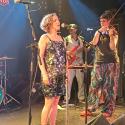
On the eve of recording an album at Real World Studios, guitarist Adrian Utley and the American trumpet player Eddie Henderson brought their “project” to the hallowed ground of Ronnie Scott’s in Soho, along with four other top-class British musicians.
In a set that included moody arrangements played from a score and freewheeling improvisation, they drew on their individual strengths and wandered between post-bop and free jazz, with touches of noise and rock, in a mix that was at times exciting and at others not entirely convincing, as if drawing on so many influences got in the way of their undoubted talent as adventurous and exploratory musicians.
It felt as if there was a quest here – the fact it was a “project” made that clear - a search for the weaving of individual voices that produced moments of magic and harmony, and yet succumbed to a quest that didn’t produce enough in the way of resolution. Could it be that the project hasn’t been sufficiently road-tested, or is the intention to remain continually poised on the edge of a sum greater than the parts?
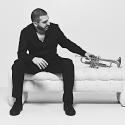
The evening started slow and moody, There were times when the textures and sonorities brought the low-key reserve displayed in the classic album Birth of the Cool (1957, though recorded 1949-51) – an early exploration of a kind of early post-bop, a reaction against the adrenaline-fuelled fury conjured by the pioneers of bebop. Eddie Henderson (pictured below) drew much inspiration from Miles Davis, who was one of the key players in those celebrated and much imitated sessions. And whether he is playing muted or not, he has not fully escaped the hold of that influence. As the evening went on, though, and the players loosened up, gathering tempo and energy, it was clear that Henderson has become freer today, in his 80’s than in the years he produced fusion and jazz disco with such great success. He played short solos, and every time, there showed undoubted eloquence, as he allowed himself to take risks, and be wholly himself.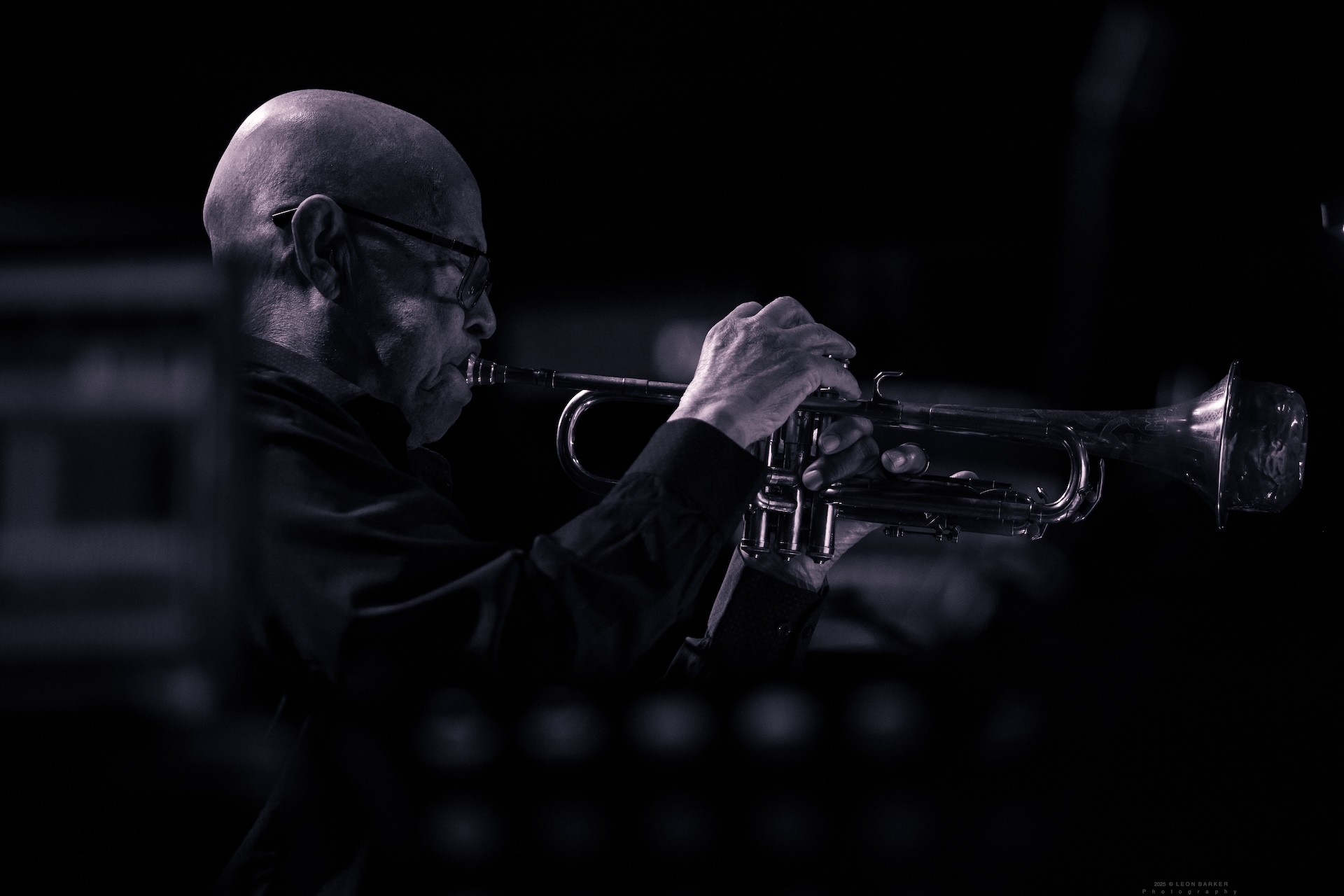 Adrian Utley, a jazz player long before he became involved with Portishead or worked as a sought-after producer, was as much at ease creating wonderfully well-constructed improvised solos – mostly towards the end of the set, as he was exploring the possibilities of his instrument, sometimes with a violin bow, at others with a metal implement and then a brush. He has a wonderful ear – which may account for his brilliance as a producer – and enough sensitivity and modesty not to let his experimentation go too far, or led by an ego that would place him centre stage.
What distinguished the ‘project’ was not just shared improvisatory talent, but a winning modesty. While they could individually make their presence felt, it was always in the service of a collective search, not seeking showcase brilliance. Arnie Somogyi – joined at the metaphorical hip with drummer Seb Rochford, kept a pulse, often deconstructed or syncopated that served the exploratory nature of the music. Both bass and drums were at the sensitive service of the more tonal voices, supporting and coaxing them along when the feeling was right. Mark Edwards, on keyboards, lyrical at times with cascades of notes on the acoustic grand and then modulating the notes of his electronic piano, twisting and turning them with a gizmo he used very creatively to un-temper an instrument which was built to play well-tempered scales. Paul Booth played tenor and soprano sax, with fluency, with elegant melodic lines as well as the sheets of sound pioneered by Coltrane, Archie Shepp and Eric Dolphy. He also had a bass clarinet, but disappointingly mostly used it as an extra texture in the written ensemble sections of certain pieces.
The set really took off at the end: it was as if the pussy-footing of the first pieces had been intended for these very individual voices to tune into each other’s frequencies, searching for common ground as well as playing with the contrasts that could produce epiphanies and moments of grace. Adrian Utley let loose, his guitar now more of a proverbial rock axe than a delicate six-stringed jazz instrument. Sparks flew, the conversation went from being tentative to explosive, taking the music beyond the occasionally intrusive tropes of fusion and producing a music that elevated the soul.