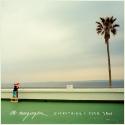
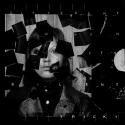
In European folklore, mélusine are woman from the waist up and fish or serpent below. The fabled character is first known in the 13th century. Mélusine dwell in inland water – rivers, wells and such.
For the concept driving US composer/singer Cécile McLorin Salvant’s seventh album, this mélusine is married. Integral to the union is the husband, Raymondin, agreeing to not see her on Saturdays when her usually cloaked snake-like lower half is exposed. Naturally, he breaks the rule, whereupon she turns into a dragon, flees and returns only to attend her descendants – the marriage's ten male children – on their deathbed. McLorin Salvant sees herself in the legend: a hybrid, a polyglot person of mixed cultures and race. Together, the album’s songs tell this version of the tale. Like others of her albums, cover versions are mixed with McLorin Salvant’s original material – astonishingly, one of the songs chosen to illustrate this story is from the Michel Berger and Luc Plamondon musical Starmania.
Mélusine initially sets itself up as a Chanson Française album. The first track is a version of the frequently covered “Est-ce ainsi que les hommes vivent?” which first appeared on the 1961 Léo Férre album Les chansons d'Aragon which set Louis Aragon poems to music. Next up is a version of “La route enchantée,” a Charles Trenet song from the 1938 film of the same name. However, despite its familiar aspects this album is stylistically slippery.
For the ninth track, McLorin Salvant’s 58-second “Wedo,” her voice is accompanied by oscillating keyboard patterns and a metallic electronic pulse like that of a clock’s alarm – a form of electronica. Next up, the 17th-century song “D’un feu secret” smoothes-out this approach with the help of some Wendy Carlos-style synth. Throughout, her voice is malleable, immediate and commanding. She sings in French (mostly), English, Haitian Kreyòl and Occitan. Regardless of the aesthetic shifts and disparate song sources, nothing jars.
Cécile McLorin Salvant is categorised as a jazz artist but the self-produced, Brooklyn-recorded Mélusine is uncategorisable. Notwithstanding the electronica and Kreyòl elements, all that springs to mind as a figurative touchtone is maverick chanson outsider Barbara’s 1970 L'aigle noir album. As the comparison indicates, the amazing Mélusine is that remarkable.