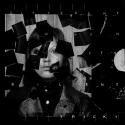
Just before the five-minute point, a Mellotron’s distinctive string sound is heard. Three minutes earlier, a guitar evokes Robert Fripp’s characteristic shimmer. Uniting these might result in King Crimson but, instead, these are just two elements of “I Cover the Mountain Top,” the wild, 22-minute opening track of Catching Fire, a studio-quality live album recorded on 20 January 2017 at Oslo’s Nasjonal Jazzscene.
At the show, a union of prodigious Norwegians, Elephant9 were collaborating with guitarist Terje Rypdal. As it has been since Nikolai Hængsle (bass), Torstein Lofthus (drums) and Ståle Storløkken (keyboards) merged in 2006, Catching Fire presents a breathless, head-spinning synthesis of all aspects of the jazz-rock interface that was dubbed fusion: the punk-like, hammer-it-into-the-floor energy is theirs, but the musical positioning nods to Colosseum, Miles Davis, Weather Report, and, indeed, King Crimson. Odd touches of 1969 to 1971 Pink Floyd too. Although Rypdal has taken many turns since first appearing on vinyl in 1965, the closest Catching Fire comes to his back catalogue are the high-octane facets of the 1970 album he made – while concurrently playing with Jan Garbarek – as part of the trio Min Bul, were it shorn of its free jazz components.
Catching Fire’s six tracks are drawn from the first three of the four studio albums Elephant9 had issued up to point they played this show (“I Cover the Mountain Top” was on the first, 2008’s Dodovoodoo, as were “Dodovoodoo” and “Skink”). Intriguingly, the final two of these studio albums and the ensuing pair of Psychedelic Backfire live albums (recorded in January 2019) featured another guest guitarist, Dungen’s Reine Fiske. Material revisited on Catching Fire had also cropped up on the Psychedelic Backfire sets – the performance captured on this new album dates from between the studio and live collaborations with Fiske.
This invites a comparison between the two guitarists. Oddly, considering he is embedded in the jazz world, Rypdal is harder edged than Fiske. The latter is as intense a player, but more sinuous. Here, Rypdal is angular, attacking – so much so, the opening phrases of “Psychedelic Backfire” evoke King Crimson at their c. 1969/1970 heaviest. Which generates a question – despite being recorded in 2017, does the tempestuous, thrilling Catching Fire represent a path Terje Rypdal could have taken in 1970 or 1971?