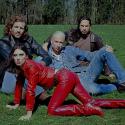
Named after the duo’s Woodland Sound Studios in Nashville, badly damaged in a 2020 tornado and restored by them, Woodland Studios is Gillian Welch and David Rawlings’ first album in four years, when All the Good Times won the Grammy for Best Folk Album. It’s their first album of all-original material since Poor David’s Almanack in 2017, and the second to be credited to them as a duo.
Its mix of the very traditional-sounding and the strikingly contemporary, evident from the outset as the opener, “Empty Trainload of Sky”, pedal steel making its presence felt before the vocals enter, gives way to “What We Had”, featuring a lavish string arrangement by Rawlings. There’s something faintly Seventies’ California easy listening about the song – the high harmonies perhaps, Rawlings singing almost in a falsetto – so more retro than contemporary. Nice, in its way, but kind of disconcerting. “Hashtag”, too, has lush strings, and a couple of horns, but the effect here is rather more pleasing, the arrangements more successful contextually.
But then we’re back to folkie minimalism with “Lawman”, just Welch and Rawlings’ tight harmonies supported by guitar and guitjo. A guitar tuned like a banjo seems an odd choice here – it’s usually a cop-out for musicians who want a banjo sound without actually playing a banjo. That’s followed by the tightly-wrought perfection of “The Bells and the Birds”, two voices and two guitars, delicate picking and gently ringing harmonics.
“The Day the Mississippi Died” takes us into more familiar terrain, good ol’ country harmonies and traditional fiddle from Ketch Secor in a song that ends up making fun of itself: “I’m thinking that this melody has lasted long enough / The subject’s entertaining but the rhymes are pretty rough.”
Then suddenly we’re deep in John Wesley Harding country! “Turf the Gambler”, Rawlings interpolating harmonica breaks into his vocal, would fit right in on Bob Dylan’s late 1960s album. Indeed, the song bears a striking resemblance to the title track. “Here Stands a Woman” is a real country peach, its lyrical preoccupations as traditional as the keening vocal, perfectly judged, and guitar. “Howdy Howdy” which closes the album is the kind of exquisite miniature that’s led to those numerous accolades.
At the end of it, O, Brother Where Art Thou? is spooling in my brain. And those lush quasi-production numbers seem even more out of place.