I really wanted to like this album – indeed, from a short sample, I thought I would love it. But while there are indeed some lovely moments, repeated listenings fail to persuade me of anything other than two good musicians with evident talents who have been too clever by half with a baker’s dozen of traditional and modern folk songs and fatally compromised the qualities that make such music unique – its glorious clarity and simplicity.
Sylvia Schmidt has a lovely voice, gossamer-light, and James Kitchman plays a mean jazz guitar. But they are each too tricksy and the sum of their tricksiness is an overcomplicated album that mars the natural beauty of these songs. The goal was a “layering” of jazz and chamber music on the folk songs of Appalachia, which of course came from these isles, and from Ireland, with the Pilgrim Fathers, and with those fleeing the Highland Clearances, the Irish famine and much besides. As the songs travelled, so they changed and evolved. Many reached a wider general public courtesy of the 1960s American folk revival. More recently Dolly Parton has dug deep into the songbook.
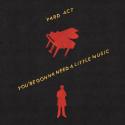
The album’s title is a line taken from “Go ‘Way from My Window”, one of seven songs here by composer-collector John Jacob Niles, whose own performances were characterised by his high, reedy voice. Many listeners will know the song from performances by Johnny Cash and Joan Baez, who supported Niles at her early gigs, and to whom it is clear Schmidt has listened carefully. But the jazz-inflected improvisations on this and other songs seem to me out of place, the microtones and scat at odds with the songs and their original “intention”. The dissonances created between voice and guitar often sound simply wrong. Jarring.
“Lowlands”, apparently inspired by an Anne Briggs performance, starts beautifully, mysteriously, Schmidt’s voice soaring over Kitchman’s at first beguiling ambient guitar work. But by two-thirds of the way through it’s all a bit too much. “Look Down That Lonesome Road” cries out for tonal resolution, which does eventually come in a sort-of coda.
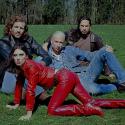
Both musicians have independent careers: Kitchman is a Northumbrian who played folk before studying jazz, while Schmidt grew up in Germany amid a folk-singing family before also studying jazz and classical voice. They met at a late-night London jam session and discovered a shared love for Appalachian folk music. The album is a crowd-funded labour of love, beautifully packaged. There are good intentions here, and promise, with two serious and talented musicians eager to show off their talents who perhaps should heed the old maxim to keep it simple on this sort of material. It will be interesting to see how they develop and where they go, separately and together.