Album: Linnéa Talp - Arch of Motion

Swedish minimalist induces introspection

share this article

Linnéa Talp's 'Arch of Motion': precise

Contrary to the title’s implication, there initially seems to be little movement in Arch of Motion. A note is held on an organ. Then another note comes in and is also held. Chords build up gradually. Maybe one or two ascending or descending notes come and go. And that seems to be it.

But when Track Five arrives, the mood brightens and the sonic pallete becomes more broad. The drone on “Mending (Light Pressure)” might be an analogue synth. Next, “Conversation” adds a breathy wordless voice – celestial, wraith-like. After this, the crepuscular “Inhale” features what seem to be actual words. In time, clarinet, flute, guitar, piano and trombone appear.

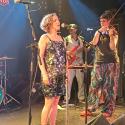
Linnéa Talp is Swedish, and her new album moves on from its similarly-inclined though more traditionally song-based Cochlea which was issued in 2020 under the name DEEREST. Arch of Motion places her as a fellow traveller to like-minded Swedish organ minimalists Ellen Arkbro and Kali Malone. Talp’s subtly dramatic take on this form of music is where Anna von Hausswolff could have gone after her second album Ceremony and its recorded-in-a-church follow-up Källan (Prototype). With Talp, the voice heard here is Wildbirds & Peacedrums vocalist Mariam Wallentin. Their Andreas Werliin mixed Arch of Motion. Arch of Motion arrives with context.

Though born from improvisation, Talp’s minimalism is very precise – musically and practically. Like von Hausswolff, she has sought out specific church organs as her instrument. Though the various contributors intertwine with what she plays on the organ, the clarinet is used to add further texture. Overall, experiencing the meticulous Arch of Motion is akin to being immersed in a flotation tank, with a soundtrack designed to induce a journey into interior worlds. Listen in one sitting. In the dark.

@MrKieronTyler

Listen to ‘Arch of Motion’ in the dark

rating

3

share this article

Support the future of arts journalism

Subscribe to theartsdesk.com

Thanks so much for choosing genuinely independent arts journalism theartsdesk’s mission has never been more important – in an age of relentless algorithmic recommendation, sponsored content and unreliable AI, the expertise and discernment of individual critics deeply embedded in their specialist areas is absolutely vital.

If you want more of that in your life, why not subscribe now?

If you do this before the 31st August, you’ll be able to keep at this “founders rate” for life: your subs will never increase! You can choose to subscribe annually for just £40 simply click here
or monthly for £5 per month simply click here.

Not ready to subscribe?

If you want to support with a little extra or aren’t ready to subscribe just yet, there’s also the option to give direct to our crowdfunder to support our imminent redesign and exciting expansion with new features and collaborations Simply contribute here: https://gofund.me/c3f6033d.

However you choose to be involved, you can proudly say that you are picking the right side in the battle for truth and humanity in the modern information landscape. And we will be very glad to have you on board!

more new music

Surrealism, social observation and more muscular sound from the Leeds quartet
A powerful personal outpouring of joy and pain - with a great beat
The London quartet have taken to playing large venues with ease, as this career-spanning set showed
The Lebanese-French musician's father was behind a unique musical innovation
The Philadelphia punk rockers continue to impress
A partial account of how Brit-punk absorbed an aspect of reggae
The Fez Festival Of World Sacred Music and the Fes Gathering bring the world together
Bristol band aren't happy but offer up the occasional sing-along
A new album is unveiled and old tunes are played for the last time