Album: Shirley Collins - Heart’s Ease

After comeback album ‘Lodestar’, English folk’s prime voice is composed and contemplative

share this article

Shirley Collins's 'Heart’s Ease' suggests she does not wish to be defined by her history

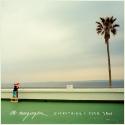
Heart’s Ease is about more than the music. Through its songs, it also chronicles a life lived. Shirley Collins learnt “Barbara Allen” at school. She first encountered “The Christmas Song” when it was sung by her early influence and inspiration The Copper Family. “Merry Golden Tree” was originally heard in 1959, in Arkansas. One song takes lyrics by her former husband, Austin John Marshall, and sets them to music. “Sweet Blues and Greens” draws from her 1964 collaboration with Davy Graham for the Folk Roots, New Routes album. “Locked in Ice” interprets a composition by her late nephew Buz Collins, the son of her sister Dolly, who she also lost.

However, the album concludes by entering a new world. “Crowlink” melds white-noise synthesiser, droning hurdy-gurdy, harmonium and recordings of birds and the wash of the ocean to create a discomfiting underpinning for Collins’s voice. Disembodied and distant, she sings only a few lines: about a ship travelling endlessly on a velvet sea. Although unlike anything else she has recorded before, its atmospheric kinship is with the most intense tracks she and Dolly made together.

By ending Heart’s Ease so surprisingly, Collins suggests she does not wish to be wholly defined by her history as the foremost exponent of England’s vocal folk tradition. Furthermore Heart’s Ease is less freighted with import than her last album, 2016’s comparatively darker Lodestar. Her first since 1978, it was made when she recovered her voice after suffering dysphonia, a condition which rendered her unable to sing. In contrast to Lodestar, she sounds more relaxed – recording in a studio this time rather than her home – than four years ago. Indeed, Shirley Collins’s heart would now appear to be at ease.

‘Heart’s Ease’ ends surprisingly, with the foremost exponent of England’s vocal folk tradition in a new world

rating

4

explore topics

share this article

Support the future of arts journalism

Subscribe to theartsdesk.com

Thanks so much for choosing genuinely independent arts journalism theartsdesk’s mission has never been more important – in an age of relentless algorithmic recommendation, sponsored content and unreliable AI, the expertise and discernment of individual critics deeply embedded in their specialist areas is absolutely vital.

If you want more of that in your life, why not subscribe now?

If you do this before the 31st August, you’ll be able to keep at this “founders rate” for life: your subs will never increase! You can choose to subscribe annually for just £40 simply click here
or monthly for £5 per month simply click here.

Not ready to subscribe?

If you want to support with a little extra or aren’t ready to subscribe just yet, there’s also the option to give direct to our crowdfunder to support our imminent redesign and exciting expansion with new features and collaborations Simply contribute here: https://gofund.me/c3f6033d.

However you choose to be involved, you can proudly say that you are picking the right side in the battle for truth and humanity in the modern information landscape. And we will be very glad to have you on board!

more new music

Surrealism, social observation and more muscular sound from the Leeds quartet
A powerful personal outpouring of joy and pain - with a great beat
The London quartet have taken to playing large venues with ease, as this career-spanning set showed
The Lebanese-French musician's father was behind a unique musical innovation
The Philadelphia punk rockers continue to impress
A partial account of how Brit-punk absorbed an aspect of reggae
The Fez Festival Of World Sacred Music and the Fes Gathering bring the world together
Bristol band aren't happy but offer up the occasional sing-along
A new album is unveiled and old tunes are played for the last time