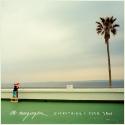
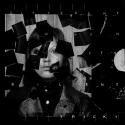
Certain Nordic countries are identified with particular forms of music. Norway and Finland are the home to various strands of metal. Sweden’s pop songwriters and producers are world-renowned, attracting the likes of Britney Spears to Scandinavia. Iceland homes individualists like Björk and Sigur Rõs. Denmark’s influential Mew and Efterklang capture mood like no one else. But you won’t find any of this on the new three-CD set Beginner's Guide to Scandinavia.
It’s a challenging remit. Beginner's Guide to Scandinavia is part of a series of Beginner's Guides, preceded by Beginner's Guide to African Blues, Americana, Bollywood, Celtic, France, Samba and so on. Edith Piaf and Juliette Gréco were on the French one. The Americana one included Merle Haggard and Wilco. The series is dominated by the well-known names – the landmarks - expected in a guide. Ane Brun and ex-ABBA man Benny Anderson with his Orkester are the most well-known names here. Finland’s Islaja and Kiila, and Norway’s Terje Isungset, are more obscure, but known to non-Nords. Otherwise, there’s little familiar to the non-Nordic, non-jazz world. Beginner's Guide to Scandinavia is about the internal landscape. More Ordnance Survey map than Rough Guide.
The guide-book aspect is to the fore. The back of the package declares “forests, lakes, mountains, fjords, archipelagos, glaciers, waterfalls and the occasional geyser... nature reigns supreme and the Beginner’s Guide shows how the landscape is the inspiration behind the music”. No Danish rap, Icelandic reggae or Finnish electronic experimenta then. A core joy in discovering Scandinavia’s music is not knowing what will crop up next, but each CD is themed: pop and contemporary; folk and roots; jazz, experimental and atmospheres.
Although reductive, music from the different countries is often lumped together - as is the case here. Last year I asked the Icelandic composer Ólafur Arnalds whether individual Nordic countries exhibit unique musical traits. He said: “I do not think there is a huge difference. The differences are like those from town to town, or from different provinces – nothing huge. Though Denmark is unique, pop culture is bigger than the other countries. For Sweden the pop culture is what in the UK you could call indie, perhaps Norway too. Making the connection with Finland is difficult for me as it is the farthest Nordic country from Iceland. As an insider I lose perspective. We can’t really see ourselves.”
The relationship with the environment has to be more complex than “the landscape” inspiring “the music’s spacious, organic and often dramatic qualities”. Nordic music has other characteristics too. In February this year, after attending Oslo's Nordic Music Prize ceremony I noted that “one of the hosts at the awards show said that the region’s music drew from the long periods of darkness, the climate. Fair enough for metal, but that neither goes far enough nor meets it head on. At its most affecting, Nordic music oscillates between the raw, unfiltered emotion of Susanne Sundfør and Jenny Hval, and the sheer joy in taking unlikely, disparate elements and sticking them together seamlessly. As the journey through this world continues, understanding might be reached. It might not be”. Beginner's Guide to Scandinavia represents part of a picture, not the picture. It doesn’t bring understanding.
Listen to Mari Boine's solo version of “Dás Aiggun Cuozzut”
What is does do is present a raft of unfamiliar acts. Some are terrific, striking and unusual. It’s great that English is largely absent. “Bak Vaker Verda” by Norway’s Unni Løvild is amazing, a drifting and spectral dream. “Dás Aiggun Cuozzut” by Norwegian-Sami singer Mari Boine (with Russian collaborators Inna Zhelannaya and Sergey Starostin) is mesmerising and oddly Celtic (listen to her original version above). “Mín Móðir” by the Faro Islands’ Eivør Pálsdóttir has even more extraordinary singing (listen to it below). There’s some clichéd glitchiness to the backing of Sanna Kurki Suonio’s (from Finland) ”Tuulen Nostatus” but it’s still witchily seductive. Annbjørg Lien’s (Norway) ”Korstog” is incredibly powerful.
Listen to Eivør Pálsdóttir's “Mín Móðir”
Beginner's Guide to Scandinavia is frustrating, and isn’t what it says it is. But it’s much more interesting and thought-provoking than its title implies. And it’s not the coffee-table compilation it could have been.