Figuratively, “Tselane” is Blk Jks’s “Stairway to Heaven.” Both songs begin quietly and move through passages of turbulence suggesting an impending tempest. Each has a command of dynamics which pulls the listener in, generating anticipation for what comes next. On stage, “Tselane” is introduced as a “lullaby.”
Musically – beyond them being a form of rock – little obviously connects “Tselane” and Led Zeppelin’s “Stairway to Heaven” but the association is there: it’s about the contrasts, the subtle union of drama and tranquillity.
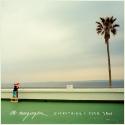
“Tselane” was first heard as the closing track of Blk Jks – said as “Black Jacks” – debut album, 2009’s After Robots. Back then, it began with a strummed acoustic guitar and had an arrangement implying an awareness of Radiohead. In London, live, with an electric guitar and over a decade on it is transmuted into an epic.
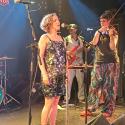
Following the release of After Robots, Johannesburg’s Blk Jks seemed to vanish. Last year they resurfaced with their second album Abantu/Before Humans. Vocalist Lindani Buthelezi departed after the first album and, now, the lead vocals are alternately shared by guitarist Mpumelelo Mcata and jazzy drummer Tshepang Ramoba. Trumpet player Tebogo Seitei is a recent recruit – he wears an After Robots T-shirt – as is bass player Sandile Mbatha.
Connections with the past are stressed by more than the presence of Mcata, Ramoba, the T-shirt and “Tselane.” Third up in the set is After Robots’s “Lakeside,” given a makeover similar to that of “Tselane.” The early Radiohead-isms are replaced by a rocky edge allowing space for spiralling guitar figures with a Mbaqanga/Township flavour local to the band.
Throughout the set, there’s a sense of reconfiguration and also of unfinished business being addressed. And, surprisingly, it’s the same with the songs from Abantu/Before Humans. The set begins with the recent album’s “Running/Asibaleki - Sheroes Theme.” Stripped of the production touches of its studio counterpart, it’s edgier, more post-punky and immediate.
In contrast, Abantu/Before Humans – despite its release date, the band said was a prequel to After Robots – is dense and hard to get a handle on. The band’s twisting, turning art rock was signposted by songs as portmanteau compositions. Over five or six minutes, Township styles were followed by passages of ambience and then dives into squalling dissonance or manic riffing. Their ever shape-shifting last album posited a form of prog rock. But live, things are more straightforward.
Even so, Blk Jks occupy a unique space. Their music is recognisably South African yet it has also become a post punk-informed rock. “Yo Yo,” from Abantu/Before Humans, cascades and tumbles effortlessly. It’s shorn of the album version’s jaggedness. Set closer “Mazabalazo” has a furious urgency and is introduced by Mcata as a song of revolution for “the youth of London, the youth of Johannesburg, people around the world. Organise and fuck shit up.” It ends with Ramoba battering his drum kit into submission.
The difference between the studio and the fiery live versions of Blk Jks suggests that the band is in a state of transition. A few of the compositions played were unfamiliar and seem not to have been issued on record so it’s clear they’re moving forward. The lengthy gap between the two albums has been put behind them. While the live Blk Jks are in the moment, they are also about the future. If there’s a chance, catch them in person are they are moving so fast. Who knows what’s next? Perhaps, in time, “Tselane” will become as familiar as “Stairway to Heaven.”