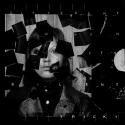
CD: The Callstore – Save No One

Compellingly dark debut album from transplanted Frenchman

share this article

The Callstore's 'Save No One': stygian

At first it seems akin to entering a world conjured by Efterlkang at their most elegiac. Strings swell and what sounds like a cimbalom chimes. A wordless vocal sighs. After the opening instrumental – titled “Intro” – “Lovers Lane” (sic) surges forward with cascading post-punk guitar recalling Manchester’s Chameleons and a deep, deep mumbled vocal which through the murky delivery seems to be concerned with trying to get the song’s subject to wake up and realise who the singer is. After that squall, the Mittel-European two-step rhythm of the acoustic “Come on Then” and more of those stygian vocals.

Save No One is compellingly dark. It is also remarkably cohesive for a first album, bluster-free and refreshingly idiosyncratic. Leonard Cohen – especially on the sparse “The Letting Go” – and The Tindersticks lurk, but in melding post-punk and a continental European outlook, The Callstore has fashioned a reflective, seductive debut which is, obstinately, hard to let go of. It wants to be heard repeatedly.

The Callstore is the Brittany born but London resident Simon Bertrand. Once the French origin of its creator is known, the context of Save No One becomes a line of deep-voiced Gallic talk-singers stretching back several decades. More recently, Benjamin Biolay has a high-gloss take on this approach, while Alain Souchon and Jacques Higelin were at it somewhat earlier. The mumbly, close-miked Serge Gainsbourg of 1968/69’s “Manon” is also a nodding acquaintance. The lineage isn’t immediately obvious as it isn’t explicit. Although underlying, it still exerts a pull on Bertrand. Seek this out. It fascinates.

Overleaf: watch The Callstore perform a stripped-down take of Save No One’s “The Departed”

Watch The Callstore perform a stripped-down take of Save No One’s “The Departed”

 

The context of 'Save No One' becomes a line of deep-voiced Gallic talk-singers stretching back several decades

rating

4

explore topics

share this article

Support the future of arts journalism

Subscribe to theartsdesk.com

Thanks so much for choosing genuinely independent arts journalism theartsdesk’s mission has never been more important – in an age of relentless algorithmic recommendation, sponsored content and unreliable AI, the expertise and discernment of individual critics deeply embedded in their specialist areas is absolutely vital.

If you want more of that in your life, why not subscribe now?

If you do this before the 31st August, you’ll be able to keep at this “founders rate” for life: your subs will never increase! You can choose to subscribe annually for just £40 simply click here
or monthly for £5 per month simply click here.

Not ready to subscribe?

If you want to support with a little extra or aren’t ready to subscribe just yet, there’s also the option to give direct to our crowdfunder to support our imminent redesign and exciting expansion with new features and collaborations Simply contribute here: https://gofund.me/c3f6033d.

However you choose to be involved, you can proudly say that you are picking the right side in the battle for truth and humanity in the modern information landscape. And we will be very glad to have you on board!

more new music

Surrealism, social observation and more muscular sound from the Leeds quartet
A powerful personal outpouring of joy and pain - with a great beat
The London quartet have taken to playing large venues with ease, as this career-spanning set showed
The Lebanese-French musician's father was behind a unique musical innovation
The Philadelphia punk rockers continue to impress
A partial account of how Brit-punk absorbed an aspect of reggae
The Fez Festival Of World Sacred Music and the Fes Gathering bring the world together
Bristol band aren't happy but offer up the occasional sing-along
A new album is unveiled and old tunes are played for the last time