Some things just don’t seem to belong in a pairing. The flute and the French horn both have their distinct sonic personality. It wouldn’t be going out on a limb to suggest that the average listener tends to lean towards one or the other. Even Mozart wrote for the horn out of love but trotted out his flute compositions for money. But opposites can and do attract and so it once more proves in a new recording featuring the horn and the flute and, discreetly chaperoning the pair of them, the piano.
The musicians responsible for this newly formed ensemble are horn player Dave Lee, flautist Andy Findon and pianist Geoff Eales. Taking the first letters of their surnames they have chosen to dub their trio ELF (though none of the three musicians would seem to answer to the description of elvish). Andy Findon is a prolific and highly regarded multi-instrumentalist whose main instrument is the flute. Lee has been principal horn of, among others, the London Philharmonic Orchestra and the Royal Opera House; in his groundbreaking CD Under the Influence he showed the horn in a searing and seductive new light. For many years both have been associated with two British composers with highly contrasting voices – Michael Nyman and Andrew Lloyd Webber – and it is these two who between them underpin the creation of ELF.
“There is a piece we recorded for Michael called ‘Wonderland’,” explains Dave. “One of the first pieces in the suite starts with a unison tune of the horn and the flute. We got used to playing it and then Michael started writing other stuff using that same colour, and he’s still writing them. He just said, ‘I really like the sound of that. It works really well together.’”
The piano reduction was an absolute heave-ho of a piano part
Armed with the knowledge that the two instruments could, as it were, get into bed with each other and make music, Lee approached Lloyd Webber and requested the sheet music for Phantasia, his Phantom of the Opera suite, a reduction originally created by Geoffrey Alexander for Julian Lloyd Webber on cello and Sarah Chang on violin. “The concept was for violin, horn and piano to make it a classical trio.” But then Findon, the distinguished flautist and multi-instrumentalist whom he’s worked with for years in both the Nyman band and on West End shows, suggested that the violin part be transplanted to the flute. Paul Bateman did the honours to turn the stringed parts to wind. All they needed was a pianist. They went to Geoff Eales, a session musician who in the 1990s took a conscious turn into composing, arranging and recording jazz. “Geoff was resistant,” recalls Dave. “The piano reduction was an absolute heave-ho of a piano part.” But he was persuaded.

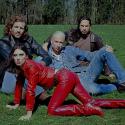
They made their first appearance at a lunchtime concert at St Martin’s Lane in 2009, then in Germany a few months later (pictured above). “There wasn’t an enormous repertoire,” says Findon. Lee corrects him. “There was no repertoire.” “But when Geoff is there it broadens things,” Findon continues. “It’s amazing what you can come up with. Then we all started looking at each other’s albums.”
 “It’s an unusual combination,” concedes Eales. “The natural reaction is that’s not going to work. But we proved that it can.” The CD Reflections has taken another two years, in which time they have indeed plundered Findon’s CD When the Boat Comes In and Lee’s Under the Influence. Eales has also composed new work for the trio, while they also gathered in other arrangements. The resulting repertoire is a complex and undefinable mulch of styles reflecting their mixture of musical backgrounds. “There are so many pigeonholes,” says Dave. “I have a funny feeling we don't fit into any. We’re bringing in aspects of jazz, aspects of classical. It’s a melting pot we pile into. Sometimes the way we play some of the stuff is not strictly kosher.”
They certainly display an intriguing and fearless will to flout musical orthodoxy. The centrepiece, slightly shortened from its original 32 minutes, is the Phantasia. Findon is unapologetic about shunting the violin out of the way. “I knew that it would work with the flute, better than with a violin. Both the lads thought, because I don't just play the flute and in Nyman I’m his baritone player, that I would use soprano sax. The problem is, to play to the level I want to be able to impersonate Sarah Chang you can’t have physically a saxophone going at the same time [as a flute]. You can’t do that if you’ve had a reed on your bottom lip in the middle of a concert at the level Dave is playing the horn.”
 So the flute it was. Findon’s flute takes the lead in the folky opening section of the CD. Later on, after the Phantasia, it’s Lee’s turn to put the horn through its jazz paces. When people think of jazz horns, they assume it’s anything but the French horn. In fact Julius Watkins recorded two albums of jazz on the French horn in the heyday of Blue Note, there are several American horn players who specialise in jazz while Jim Rattigan has made a name for himself doing it over here. Although he played a beautiful woozy solo on a track called “Daydream” in the London Horn Sound’s jazz recording Give It One!, Lee is ambivalent about the horn’s adaptability in the idiom. “My opinion is the horn is a little bit too long to play jazz. To have the fluidity I think the horn’s character changes and it starts to sound like another instrument. It’s a conical-bore instrument. In order to get the facility you lose the beauty of the sound.”
That said, he couldn’t have been working with a composer more sensitive to the horn’s attributes. Not that he knew that he was in safe hands. When Eales trained at Cardiff University under Professor Alan Hoddinott his second instrument was the horn (indeed he played it professionally as a dep on BBC Wales). “While I was a student they knew me more as a horn player than a pianist. I played for 15 years but there was no time to practise and I hardly ever got the instrument out of the case.”
I can’t ask resisting if they’ve thought of doing the Brahms Horn Trio and give the violin part to the flute? “Of course we could,” says Lee, “but why would we?” We’re trying to create a new format, have a musical experience for all three of us. We got together not knowing where this was going to lead.”