The Gloaming’s return to the Union Chapel in north London is a packed-out affair – and with good reason. Their British debut here, before the first album was released back in 2013, was a revelation. Few knew what to expect as Clare fiddler Martin Hayes, New York pianist Thomas Bartlett, Dublin-born viola and hardanger fiddle player Caoimhin O Raghallaigh, Sean Nos singer Iarla O Lionaird and Chicago guitarist Dennis Cahill launched into the epic "Opening Set" from that debut album.
Over the next 20 or so minutes they astonished all who were there with the space, dexterity, lightness and sureness of their group interplay, invention and touch. The quintet had singlehandedly raised up a completely new a kind of Irish music from the tradition, shorn of all those hoary old expat Irish pub clichés and craic, drawing more on minimalism, contemporary classical and improvisation than on the clapalong good times of audience participation.
Their second visit to Union Chapel came a year later, on the back of great acclaim, major gigs in Britain and Ireland, and five-star reviews. London’s Irish community were out in force that night, and loudly so – I recall talking to one eloquent audience member halfway through his pint of vodka, reeling off to his seat as time was called – and for that evening's "Opening Set", the pews soon resounded to an out-of-time footstomping that sounded like hooved livestock in the stalls – the kind of craic cliche The Gloaming go a long ways to avoid.
The Gloaming really listens down into itself and all its moving parts
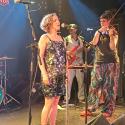
Friday night marked the release of the group’s second album, and here they are for their third visit to the Union Chapel, focusing on new tunes from The Gloaming II, and while on the surface not a great deal has changed between first and second album, you can hear the stronger defining influence of Bartlett’s piano, and a more cohesive ensemble feel, with Hayes peeling off into solo territory less often, more often interweaving with O'Raghallaigh's unique, five string viola d'Amore. Bartlett takes the reigns in terms of defining and guiding the music; in concert, his elastic, elongated body movements, a sort of hunched-over method-acting approach to the keyboard, is in dynamic contrast to the two rocking fiddlers on the other side of the stage, Hayes' right knee pumping up and down.
A guest appearance from hip young US composer Nico Muhly for a four-handed instrumental keyboard coda with Bartlett seeped into O Lionaird's lone voice leading off on "Fainleog (Wanderer)". O Lionaird introduces his songs with wit and a depth of learning, so that you get a good contextual setting for, say, "Oisin's Song", drawn from the legend of ancient Celtic superhero, Finn MacCool, or how the song collector and singer Seamus Ennis beat a path to his great-aunt's door, which serves as an introduction to "Cucanandy", the 'dangling song' he draws from her expansive family repertoire.
Instrumental highlights hit a peak with the likes of "The Rolling Wave" and the tremulous, exquisite "The Hare", led by Hayes' fiddle, after which you could hear a hair, let alone a pin drop. They're examples of how The Gloaming really listens down into itself and into all its moving parts, and then responds in kind, each part to each, so that all of us in the hushed Union Chapel audience – no stomping in the stalls from tonight's crowd – can feel themselves at the centre of a conversation in music, one that's worth having and repeating and passing on.